Flow-Form
Spatula
Timeline
Sep 2025 - Oct 2025
Role
Industrial Design
Work
Product
Tools
Solidworks
Wood Machines
Flow-Form
Spatula
Flow-Form
Spatula
Timeline
Timeline
Sep 2025
- Oct 2025
Sep 2025
- Oct 2025
Role
Role
Industrial Design
Industrial Design
Work
Work
School Project
School Project
Tools
Tools
Solidworks
Solidworks
Wood Machines
Wood Machines
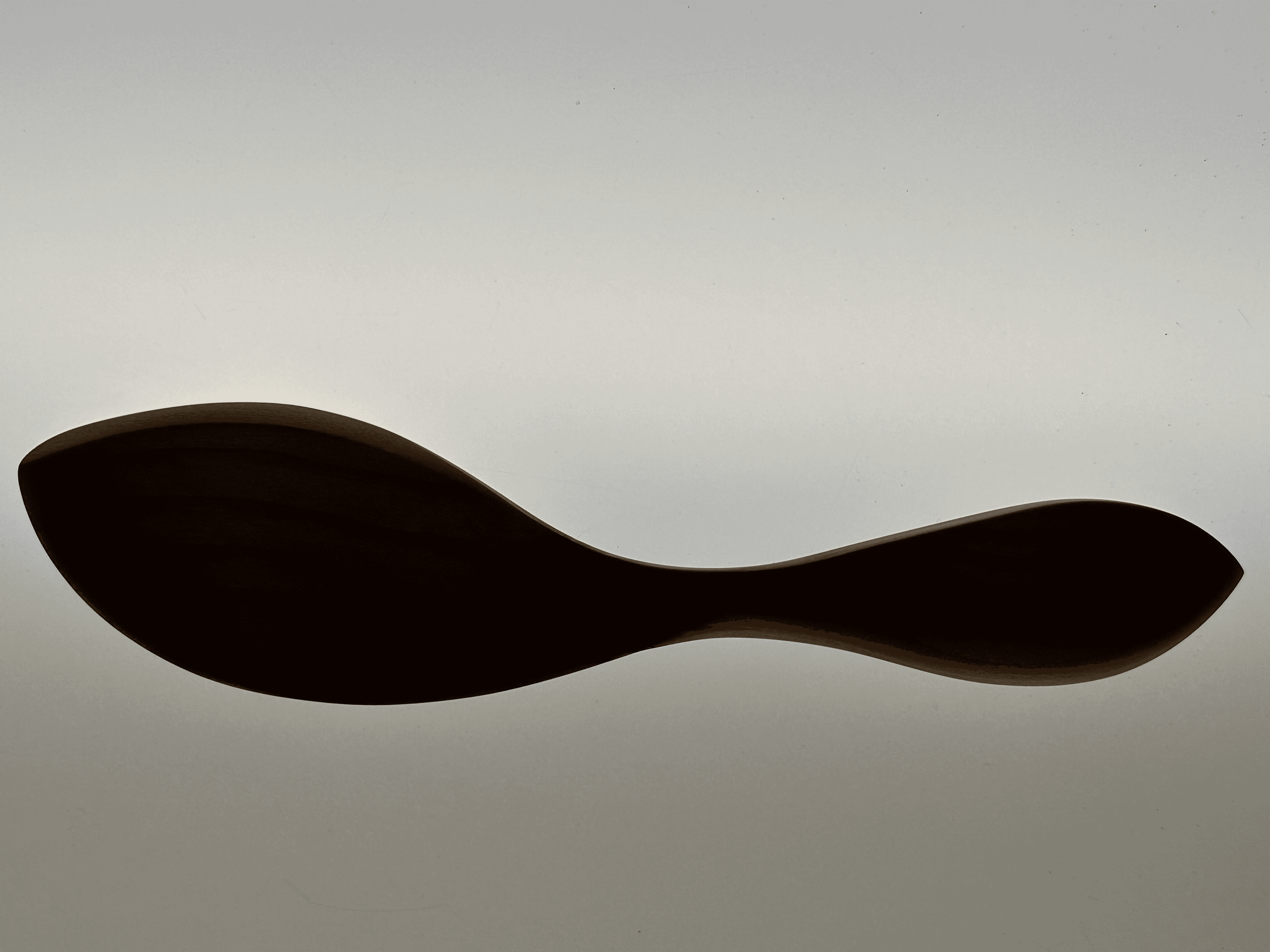
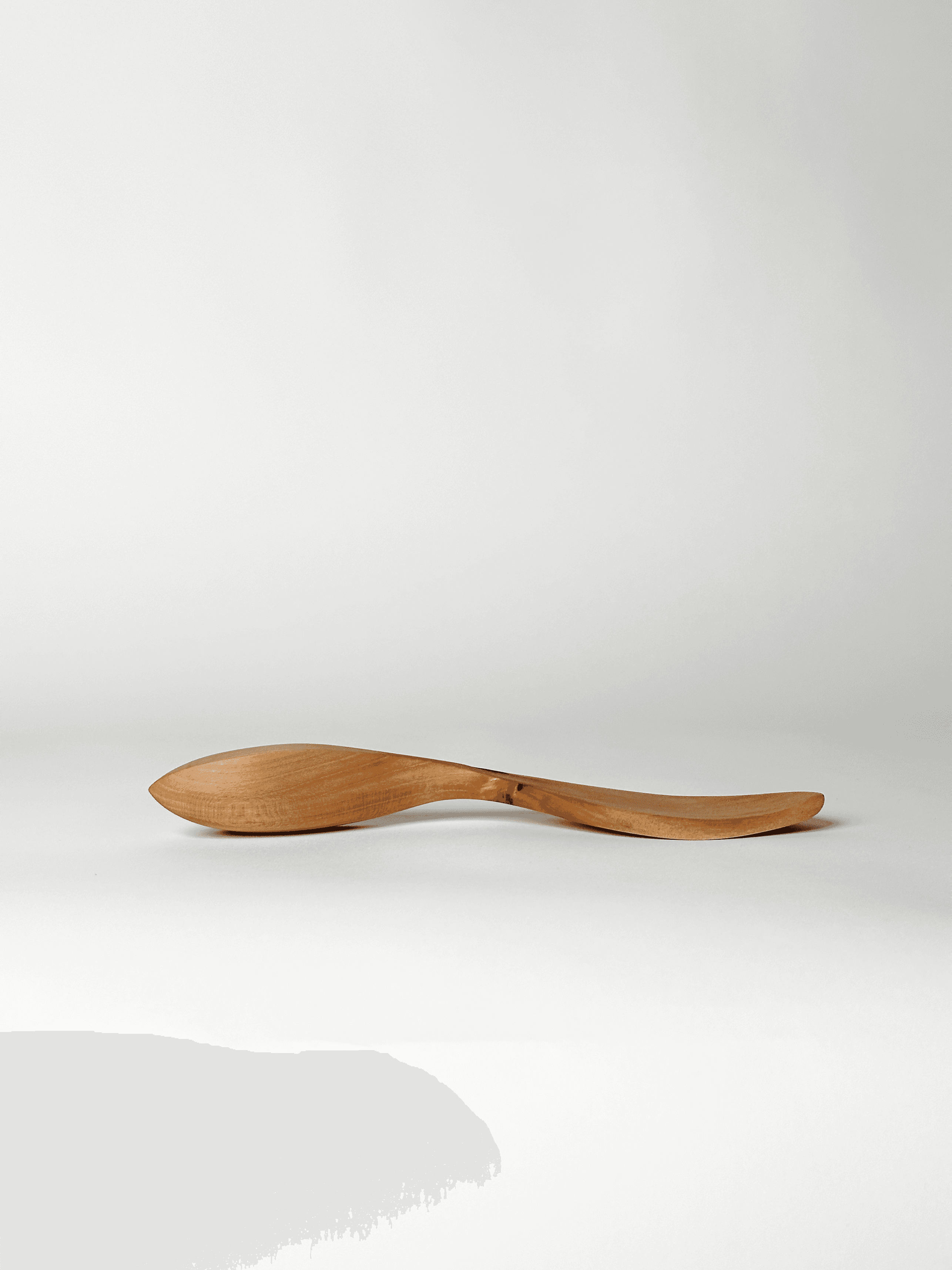
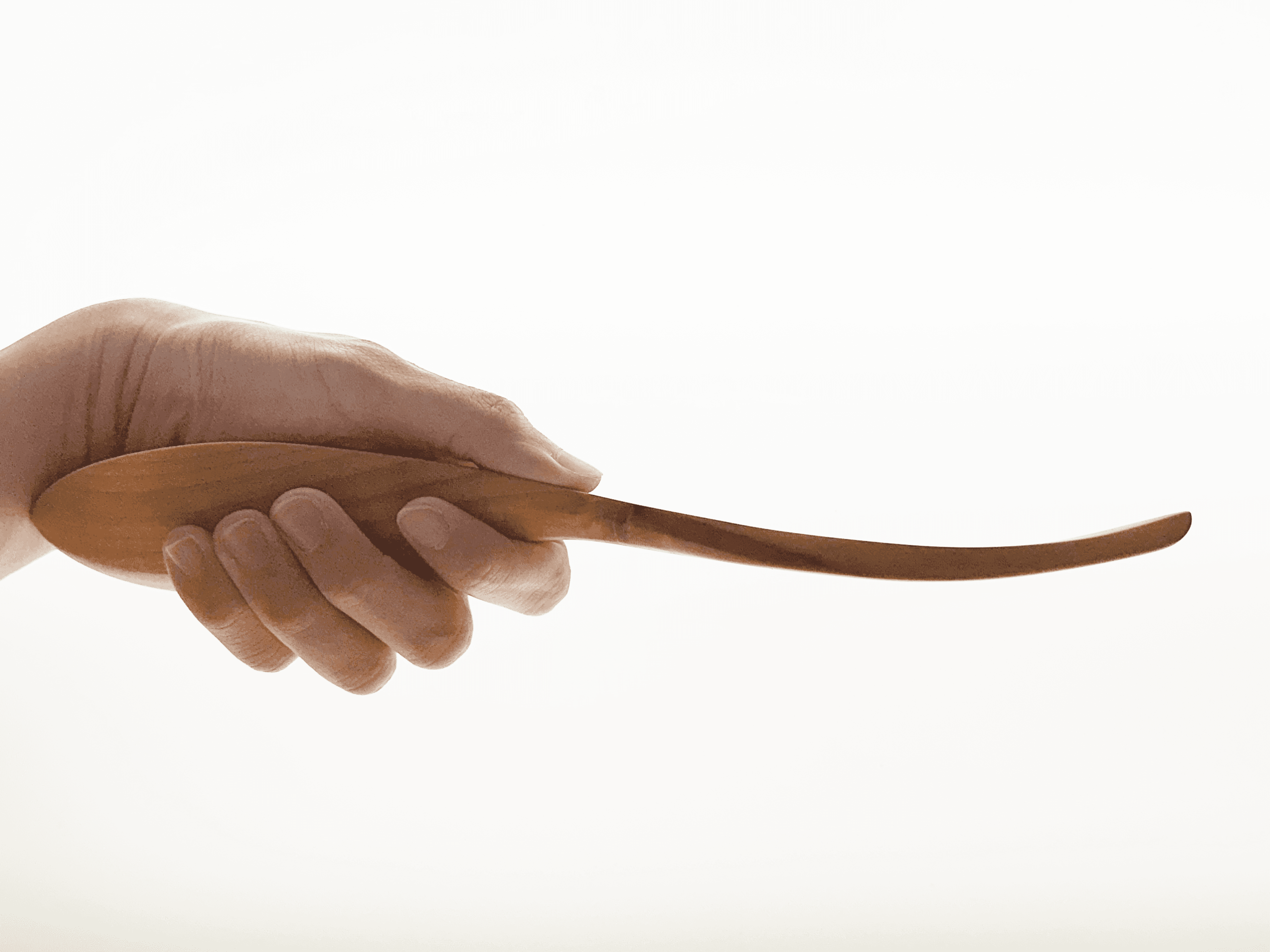
The Flow Form(spatula) explores the concept of “flow,” translating continuous movement into a refined, functional form. Using a fixed block of wood, this project explores the creation of a single, abstracted curvilinear form designed to extend the hand. The object facilitates scraping, lifting, and flipping through careful consideration of motion, behavior, and body posture, emphasizing function through form and ergonomic fit.
The Flow Form(spatula) explores the concept of “flow,” translating continuous movement into a refined, functional form. Using a fixed block of wood, this project explores the creation of a single, abstracted curvilinear form designed to extend the hand. The object facilitates scraping, lifting, and flipping through careful consideration of motion, behavior, and body posture, emphasizing function through form and ergonomic fit.
Exploration
Exploration
Before defining the object as a spatula, this project began as an exploration of flow, focusing purely on form, movement, and line. At the outset, I gathered inspiration from how flow appears in both the natural and built world, using these observations to inform the development of the form.
Before defining the object as a spatula, this project began as an exploration of flow, focusing purely on form, movement, and line. At the outset, I gathered inspiration from how flow appears in both the natural and built world, using these observations to inform the development of the form.

Process
Process
Rather than beginning with physical models, this project focused on how drawing could influence the final form. I explored flow through numerous drawings that captured movement, rhythm, and continuity, using them as the foundation for the final design.
Rather than beginning with physical models, this project focused on how drawing could influence the final form. I explored flow through numerous drawings that captured movement, rhythm, and continuity, using them as the foundation for the final design.
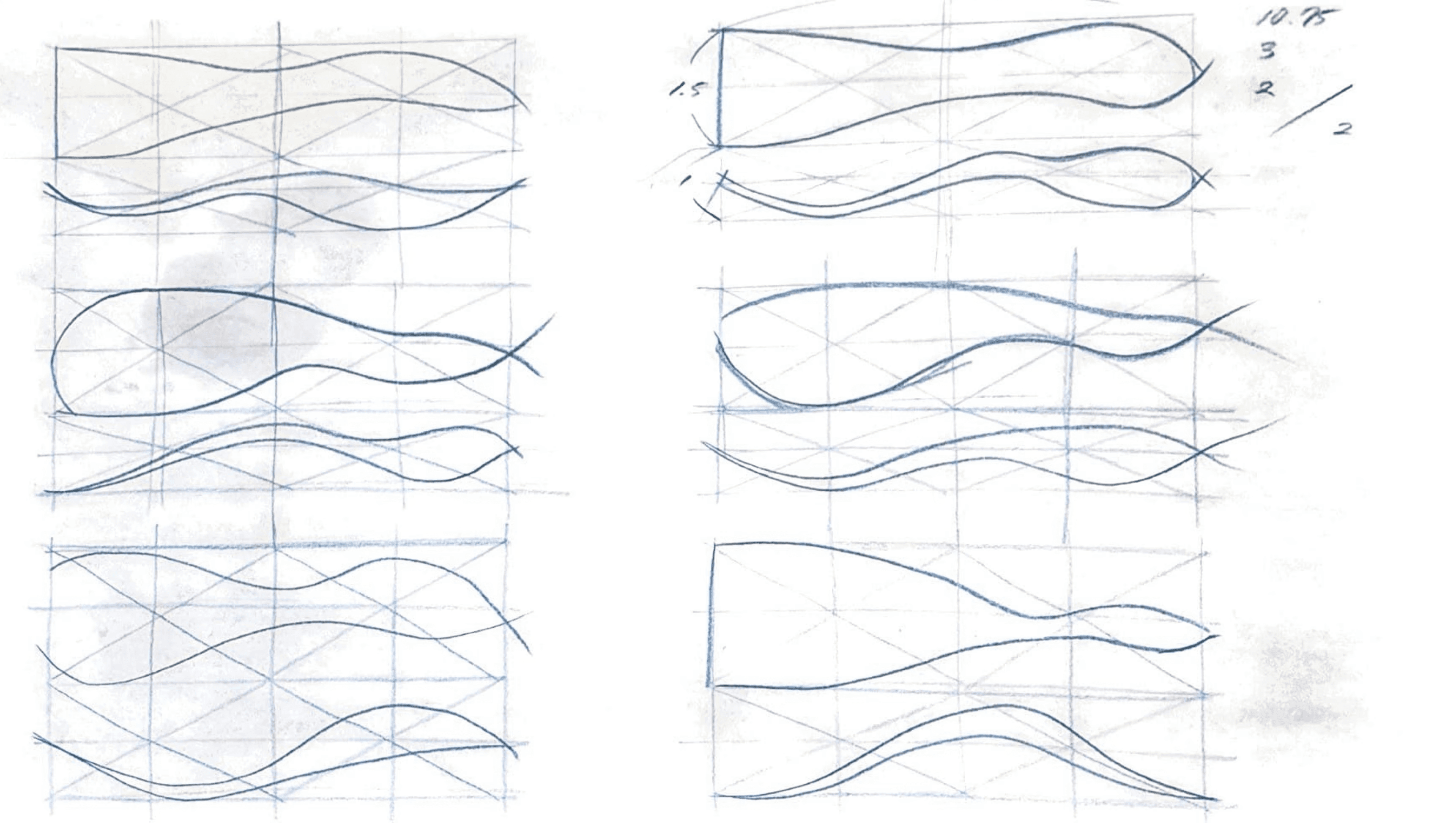
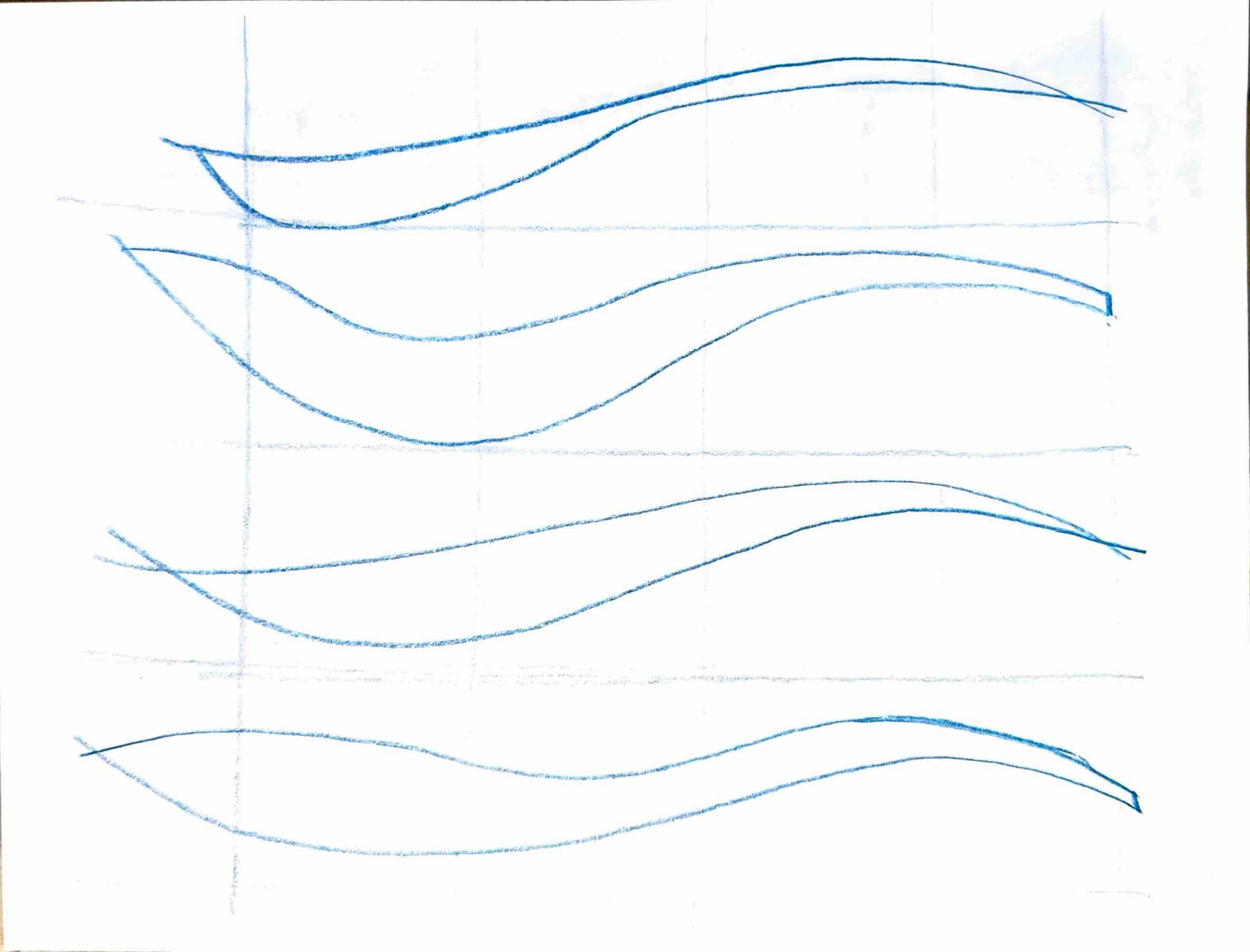
Flow Line drawings
Flow Line drawings
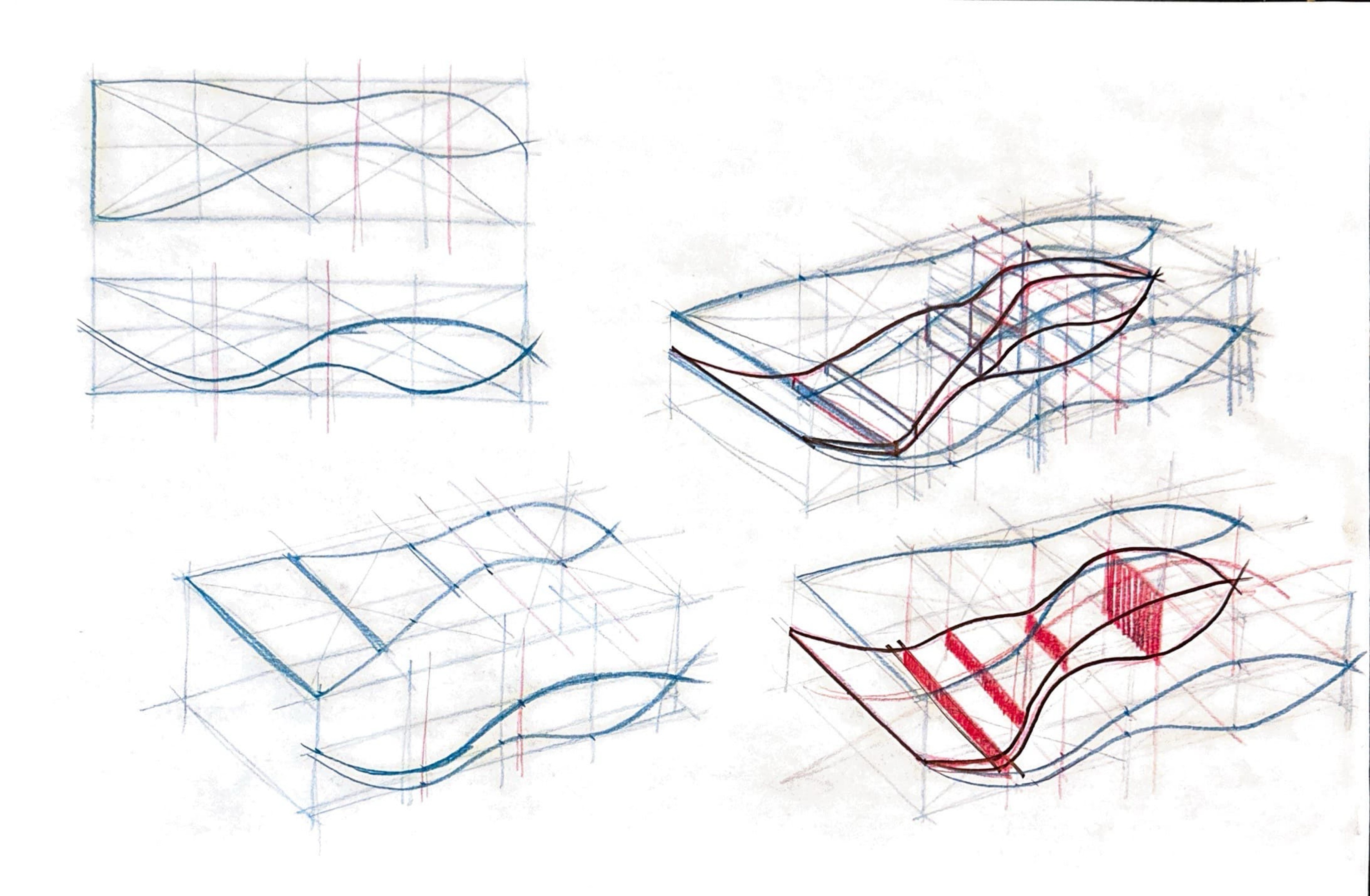
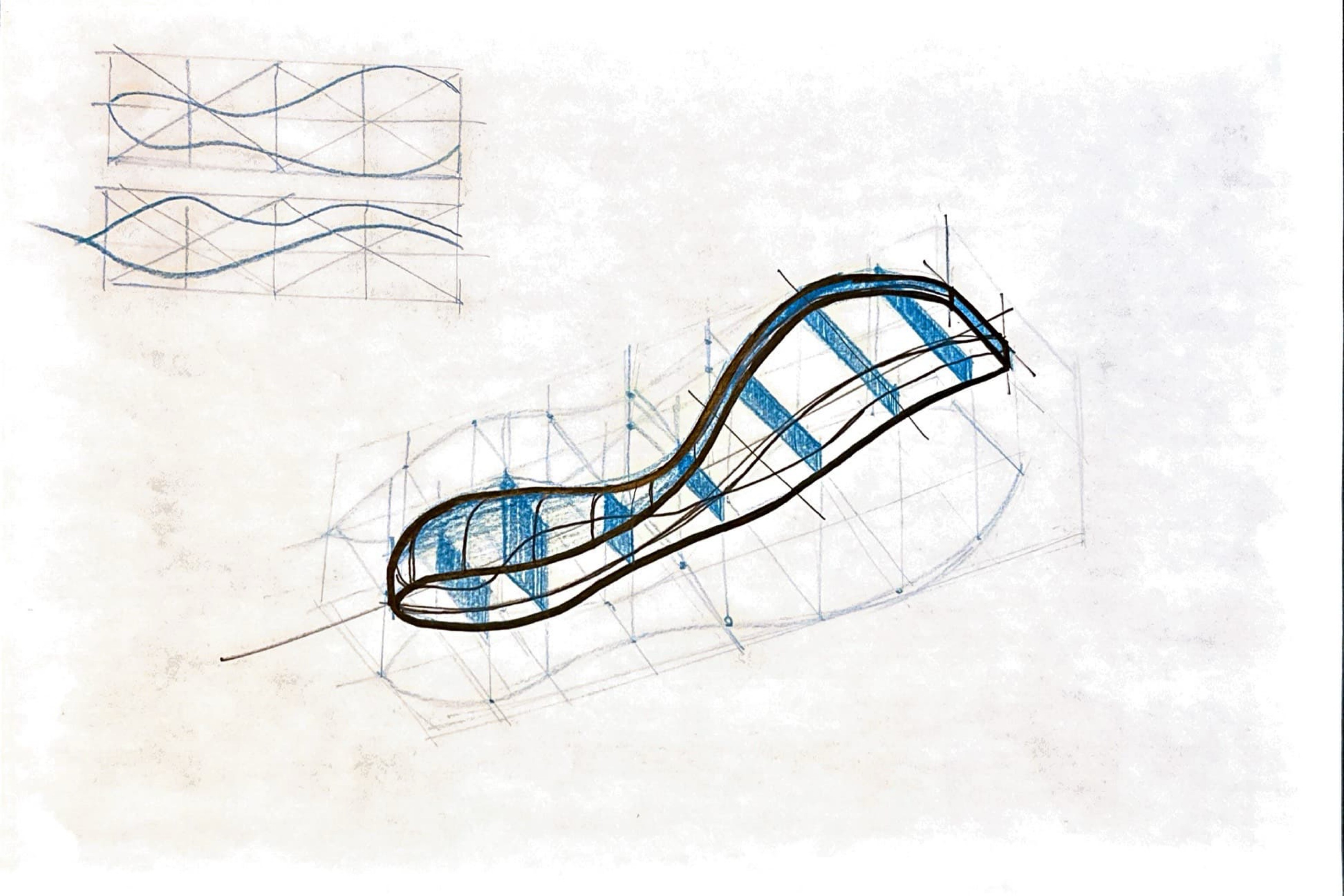
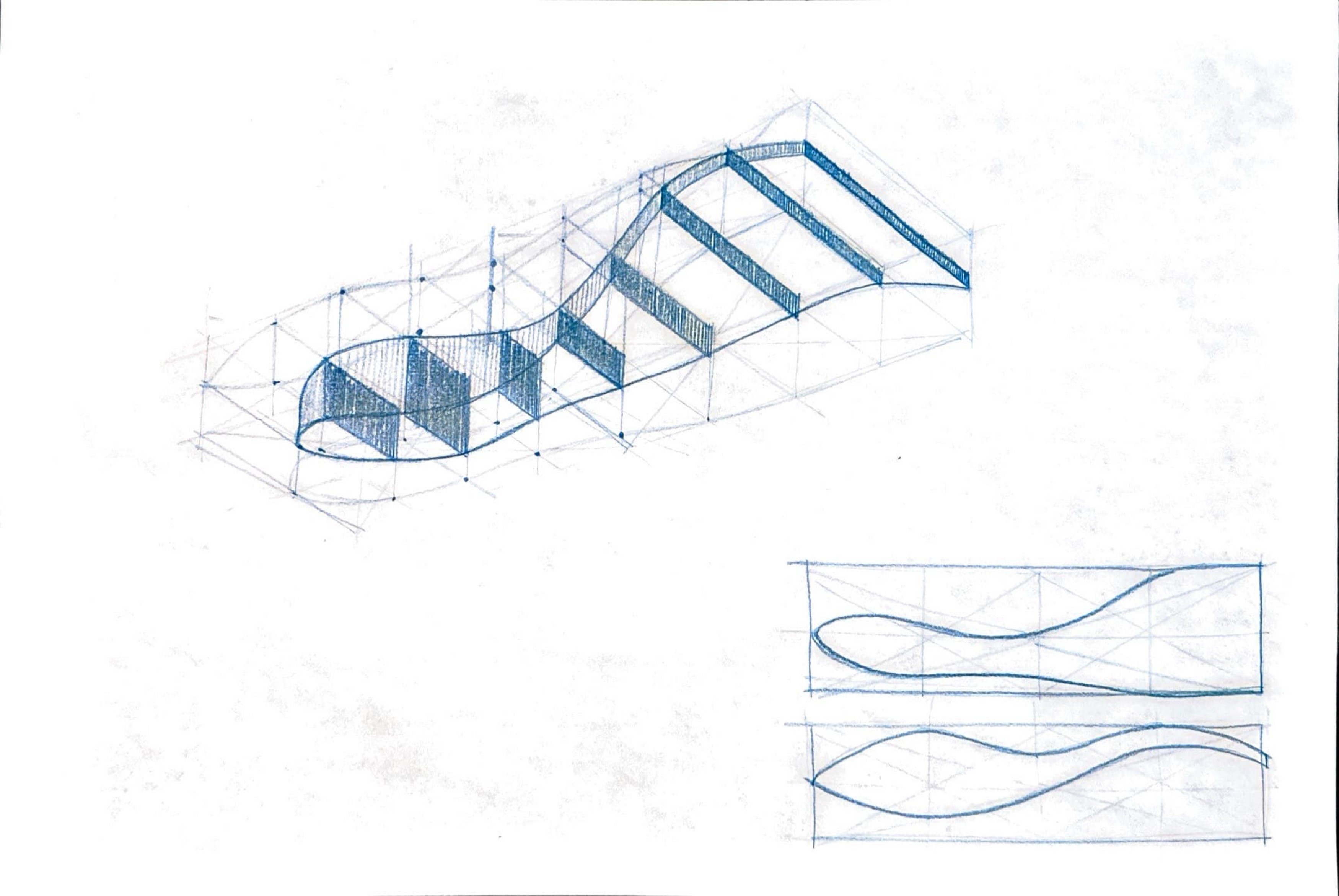
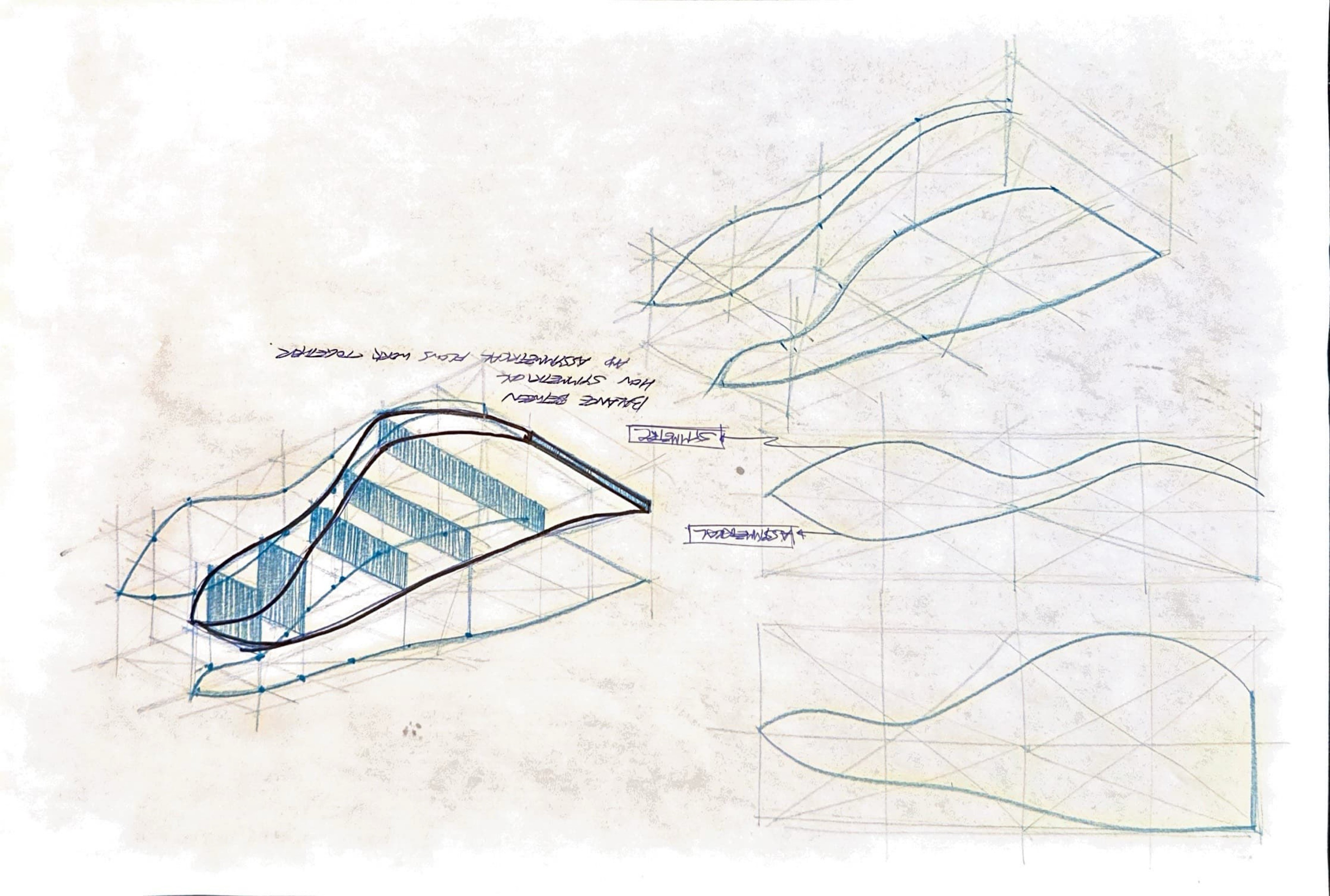
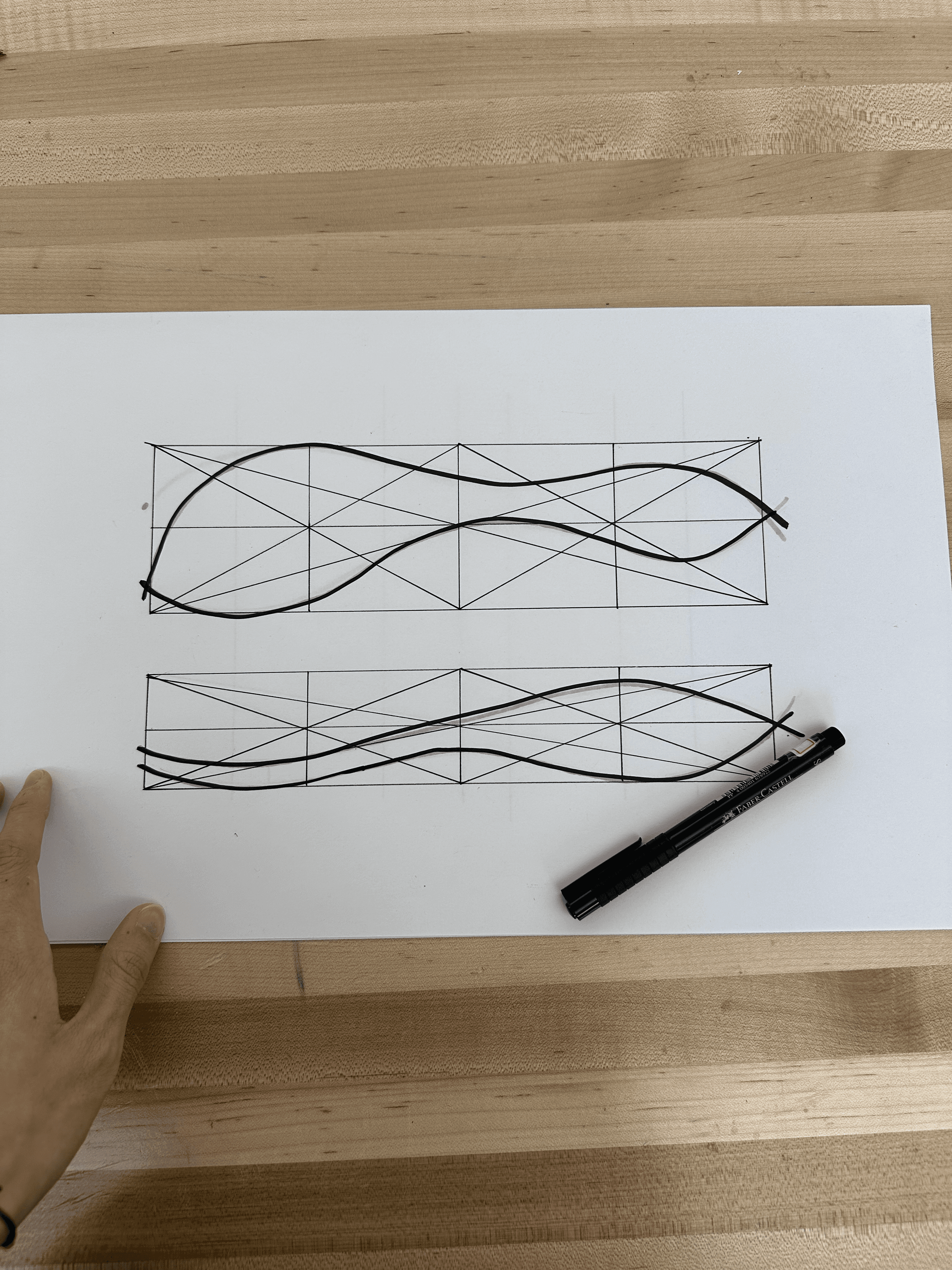
Using orthographic views as guides, I visualized and drew three dimensional forms to explore how the spatula would take shape.
Using orthographic views as guides, I visualized and drew three dimensional forms to explore how the spatula would take shape.
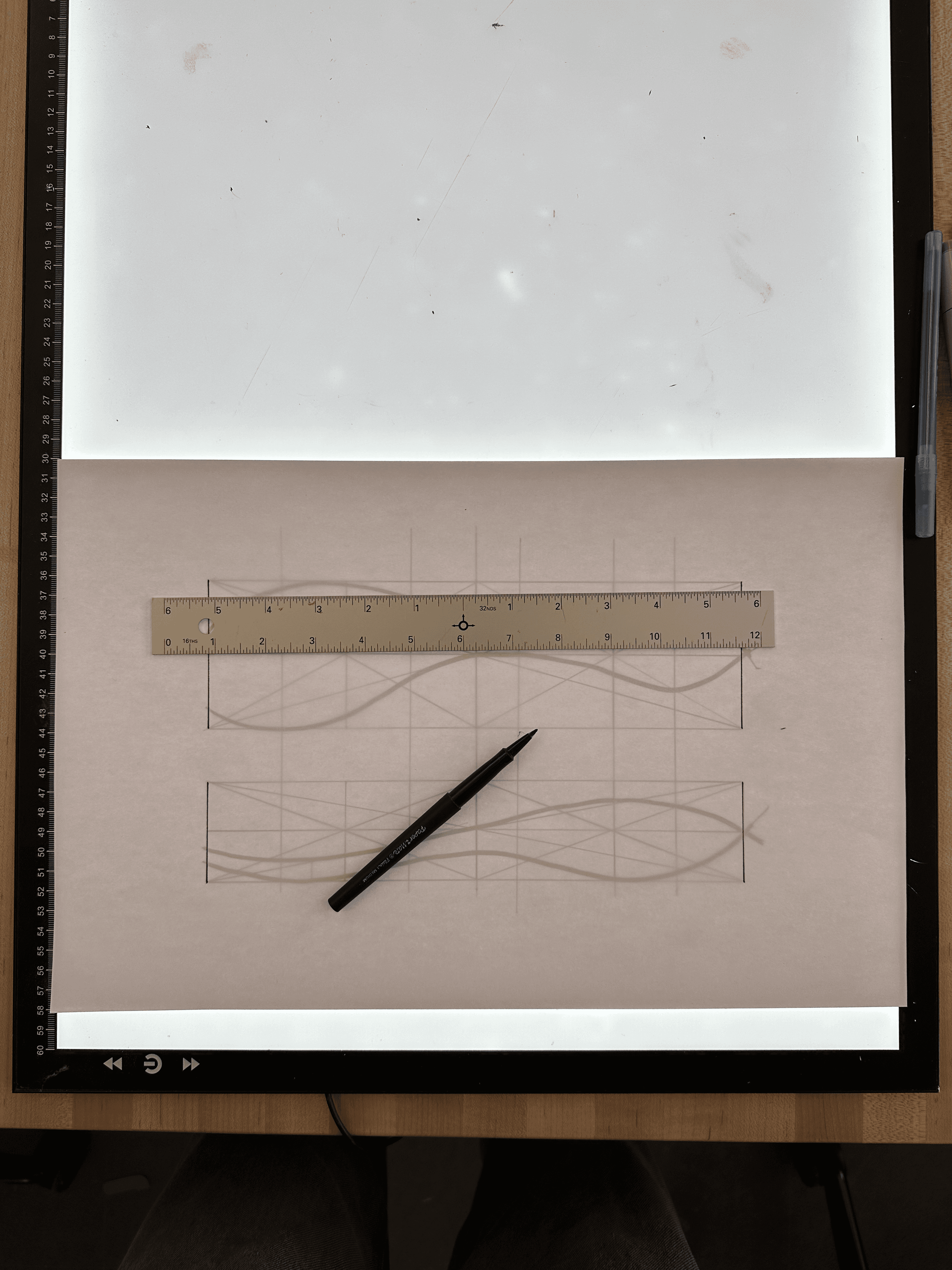
After multiple iterations and prototypes, I finalized a template to guide the bandsaw cuts for the wooden form.
After multiple iterations and prototypes, I finalized a template to guide the bandsaw cuts for the wooden form.
Prototyping
Prototyping
After developing multiple drawings and concepts, I moved back and forth between drawing and prototyping to refine the final design and achieve a form that aligned with both my intent and the material.
After developing multiple drawings and concepts, I moved back and forth between drawing and prototyping to refine the final design and achieve a form that aligned with both my intent and the material.
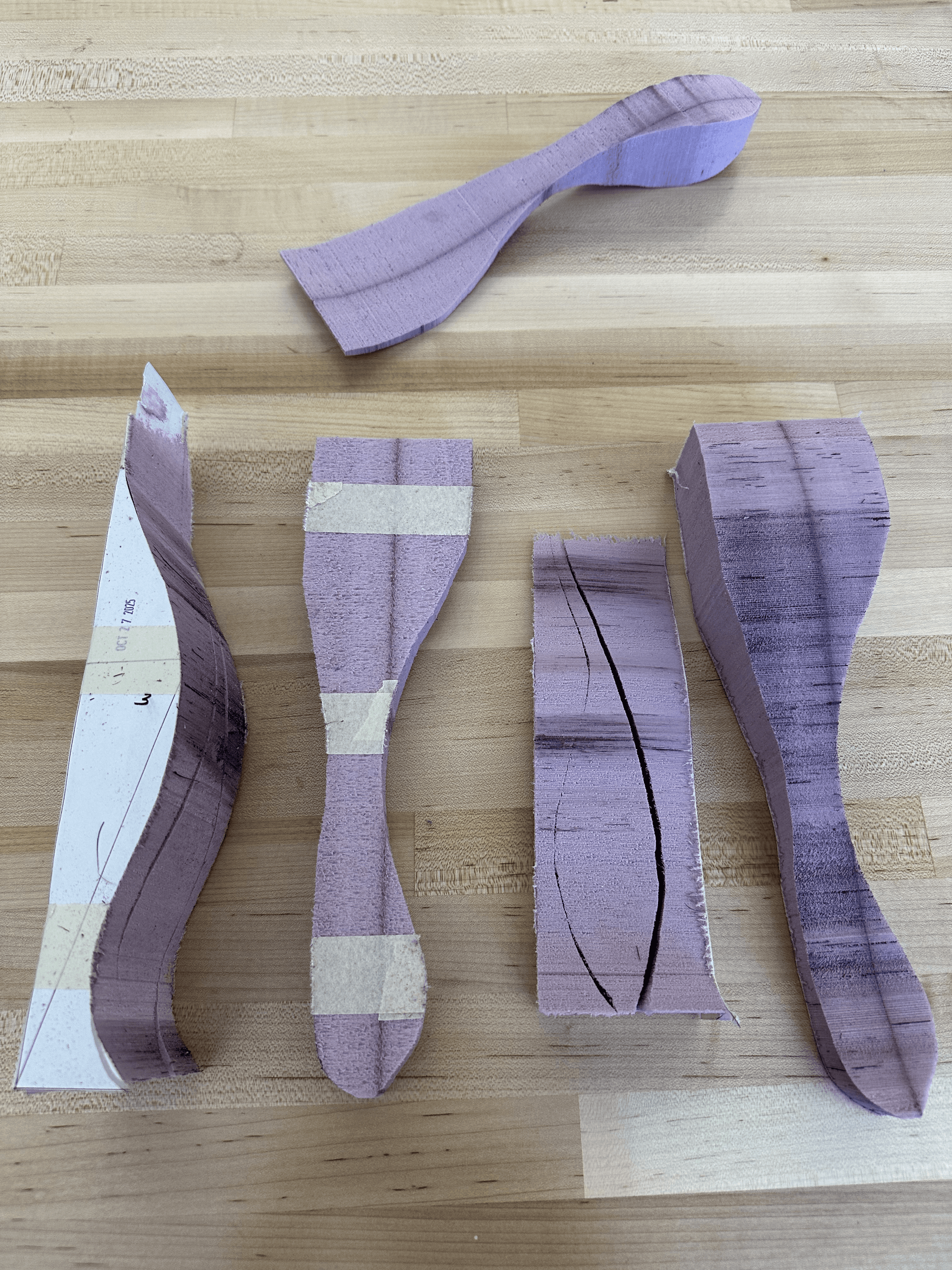
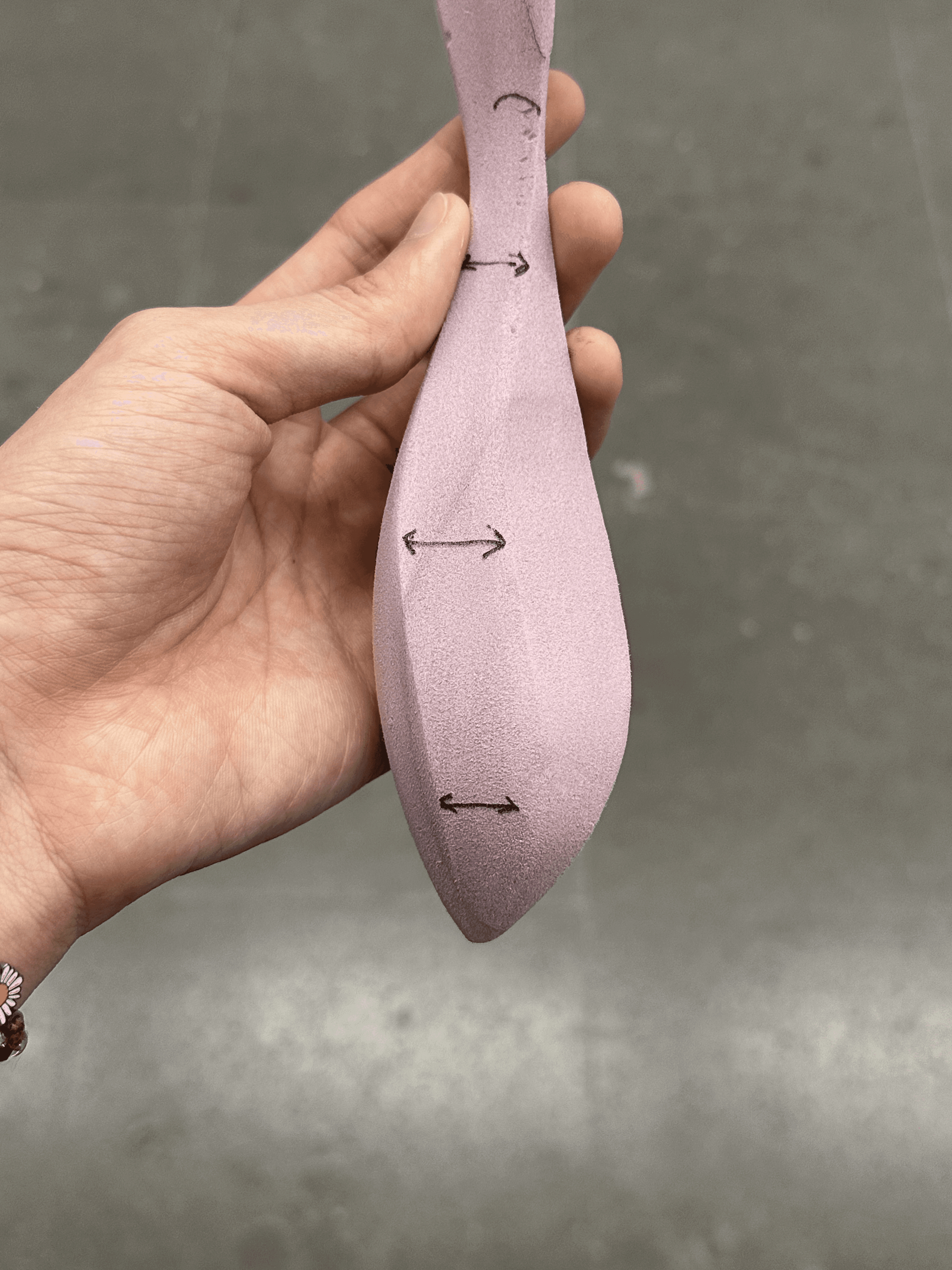
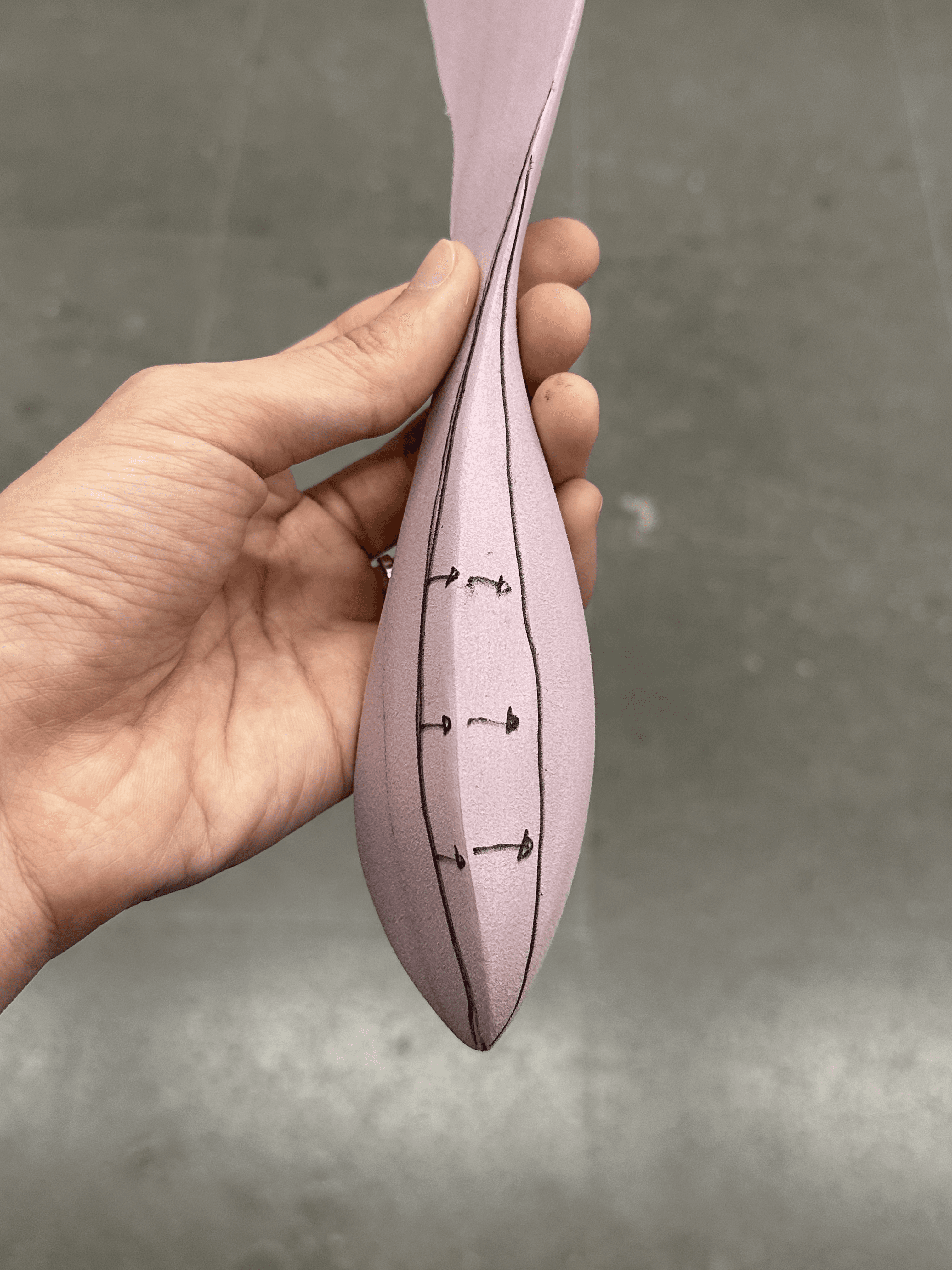
The first prototype was created in pink foam, with notes and adjustments to inform future iterations.
The first prototype was created in pink foam, with notes and adjustments to inform future iterations.
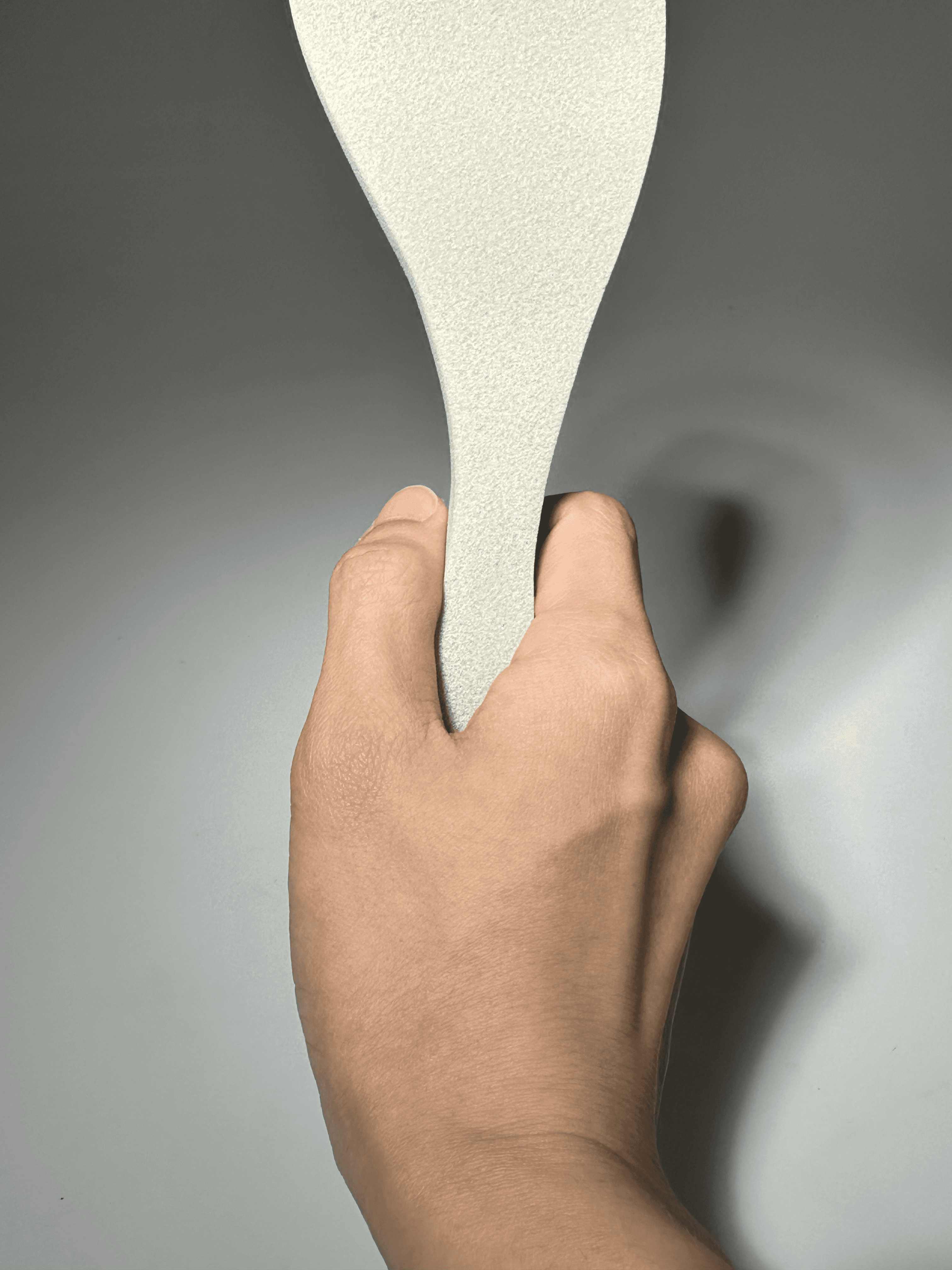
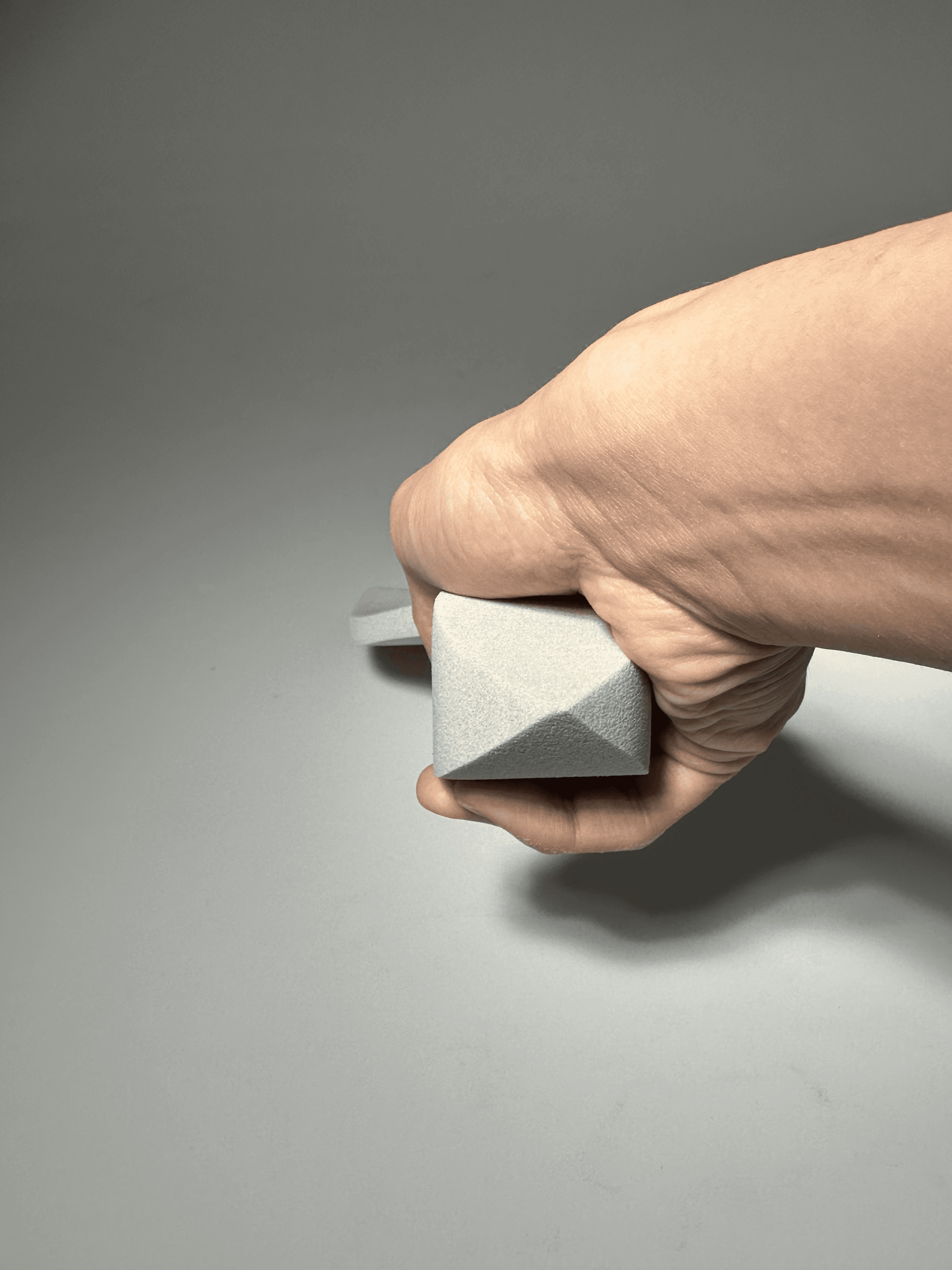
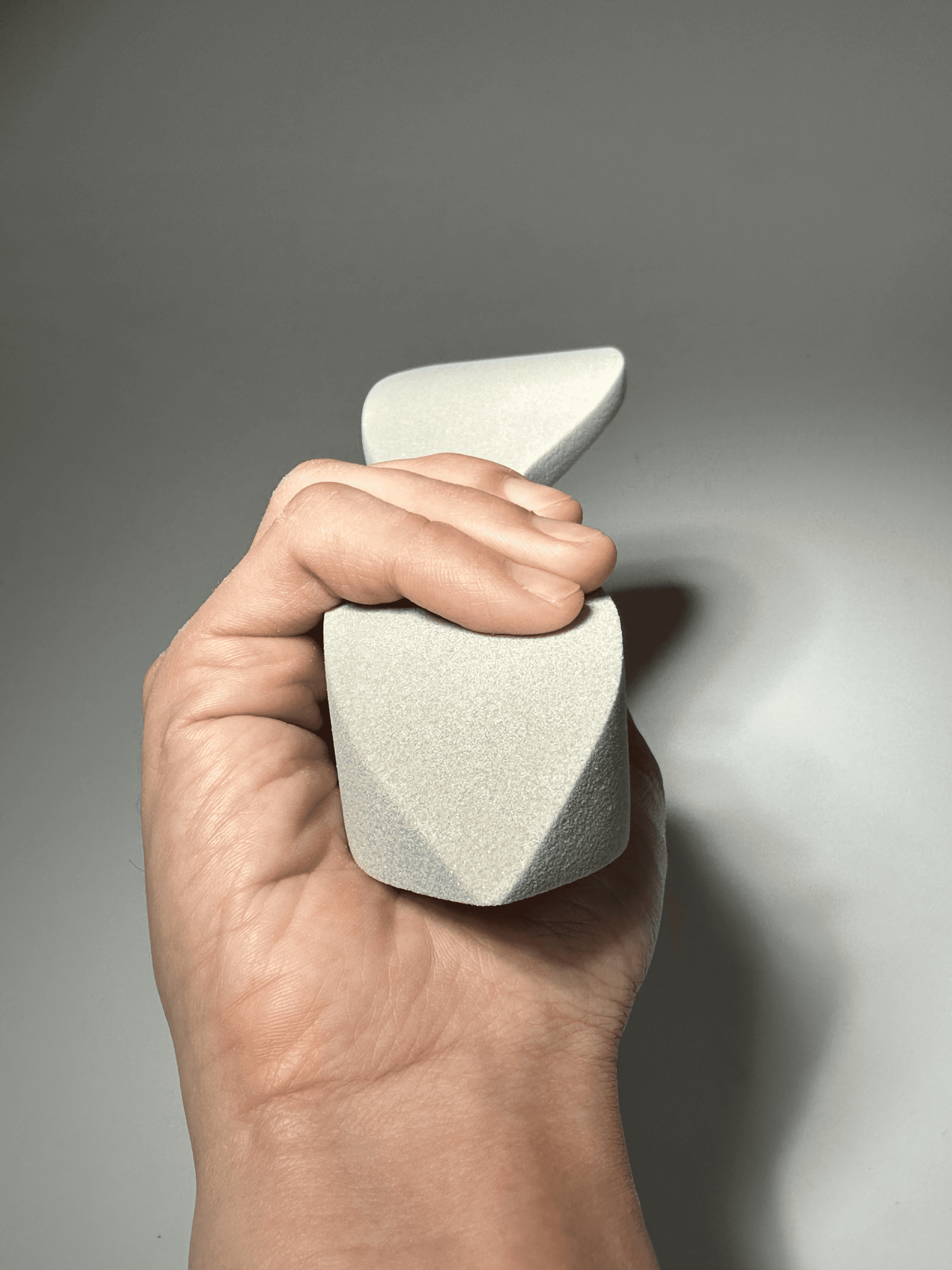
Next, I created a prototype using a gray sanding block, which allowed for further refinement through sanding.
Next, I created a prototype using a gray sanding block, which allowed for further refinement through sanding.
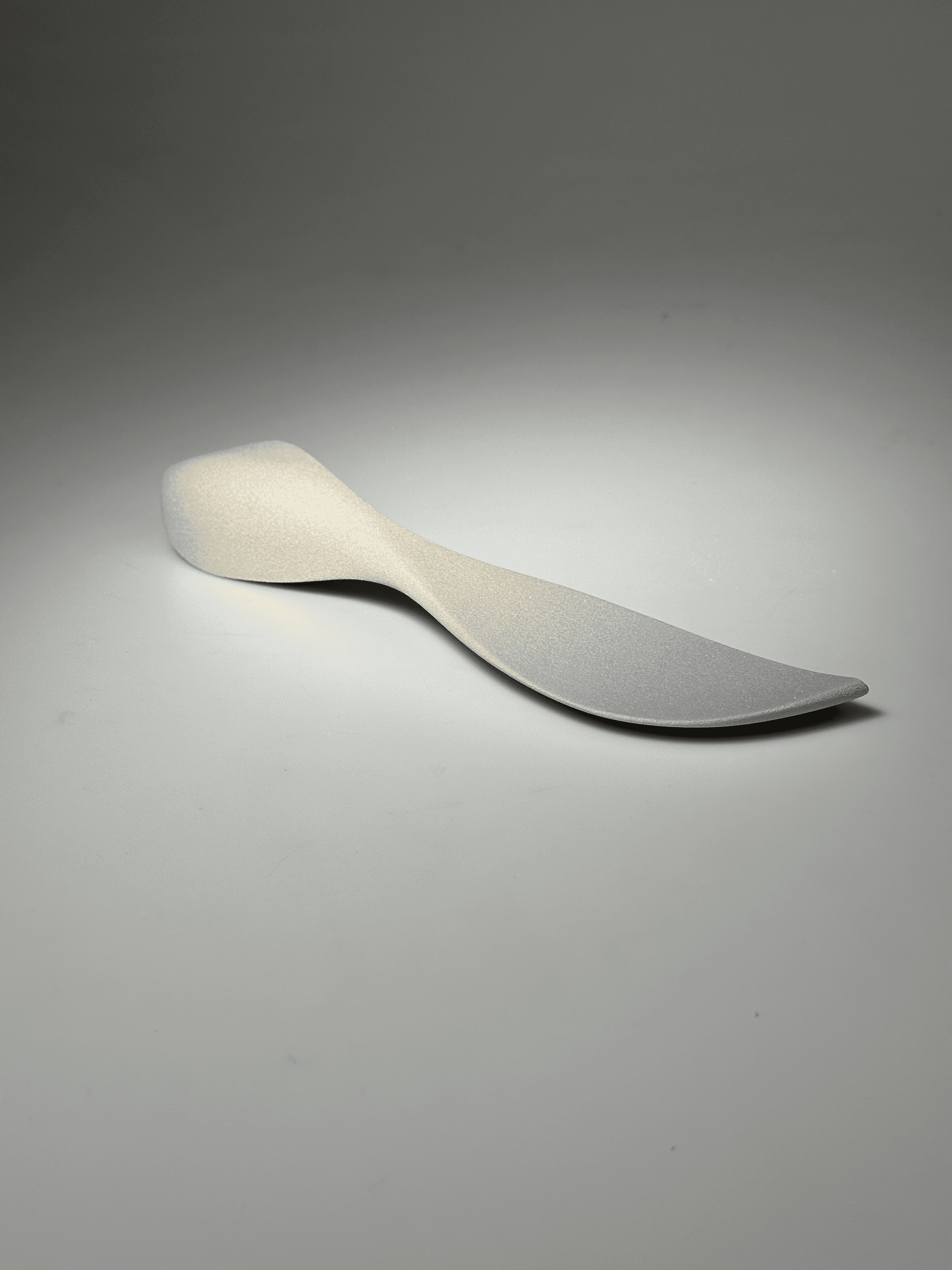
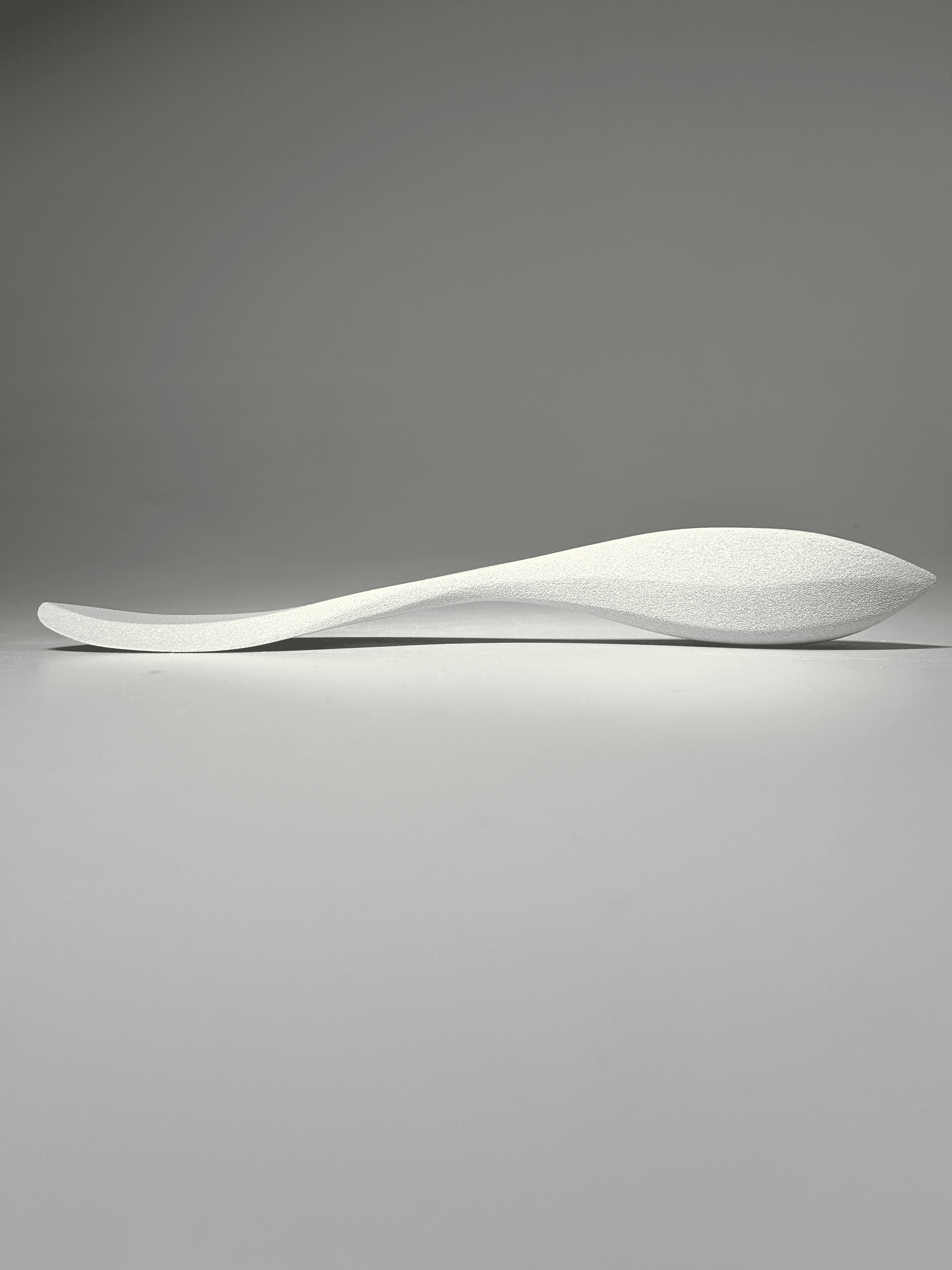
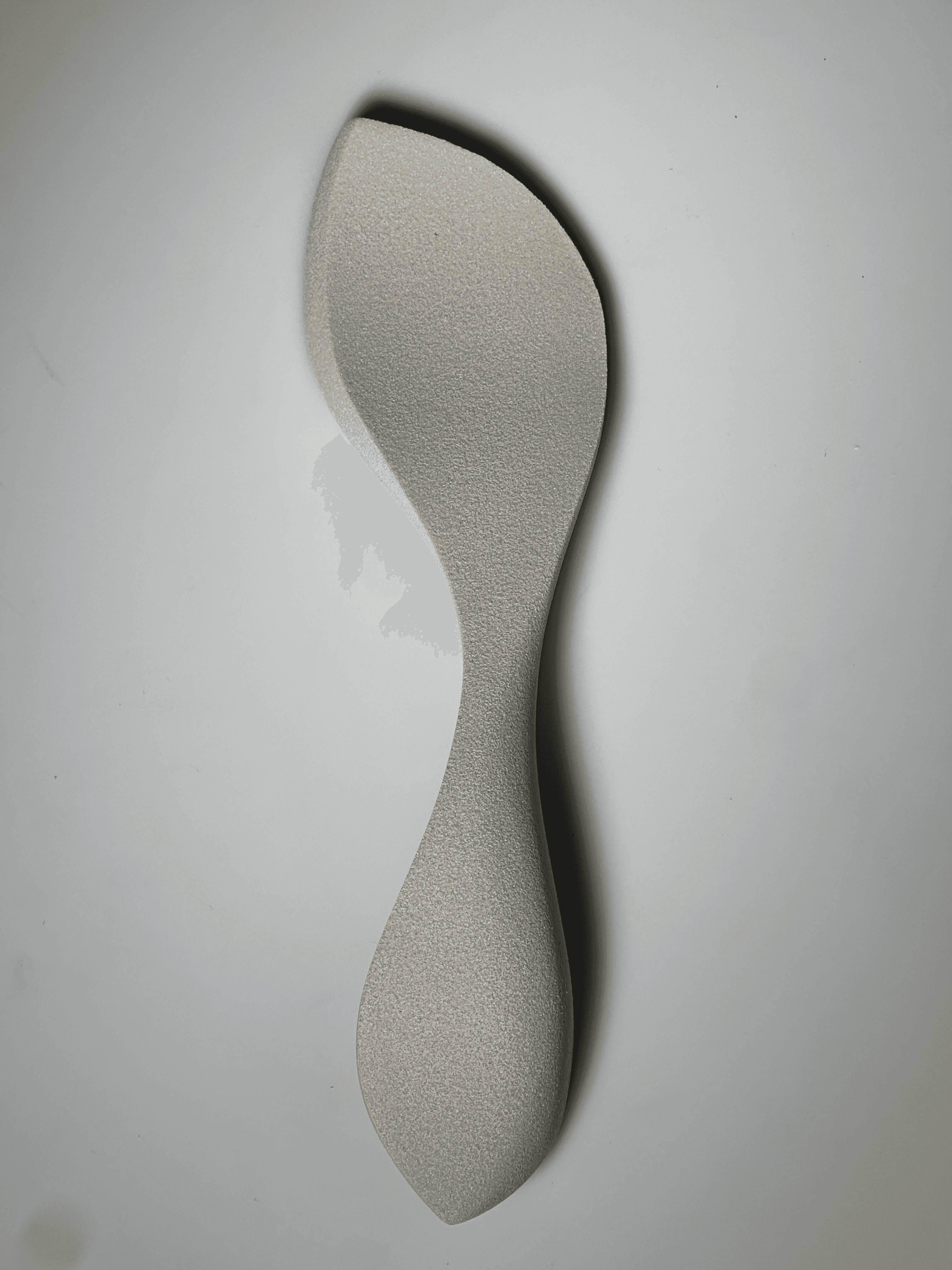
Final foam prototype
Final foam prototype
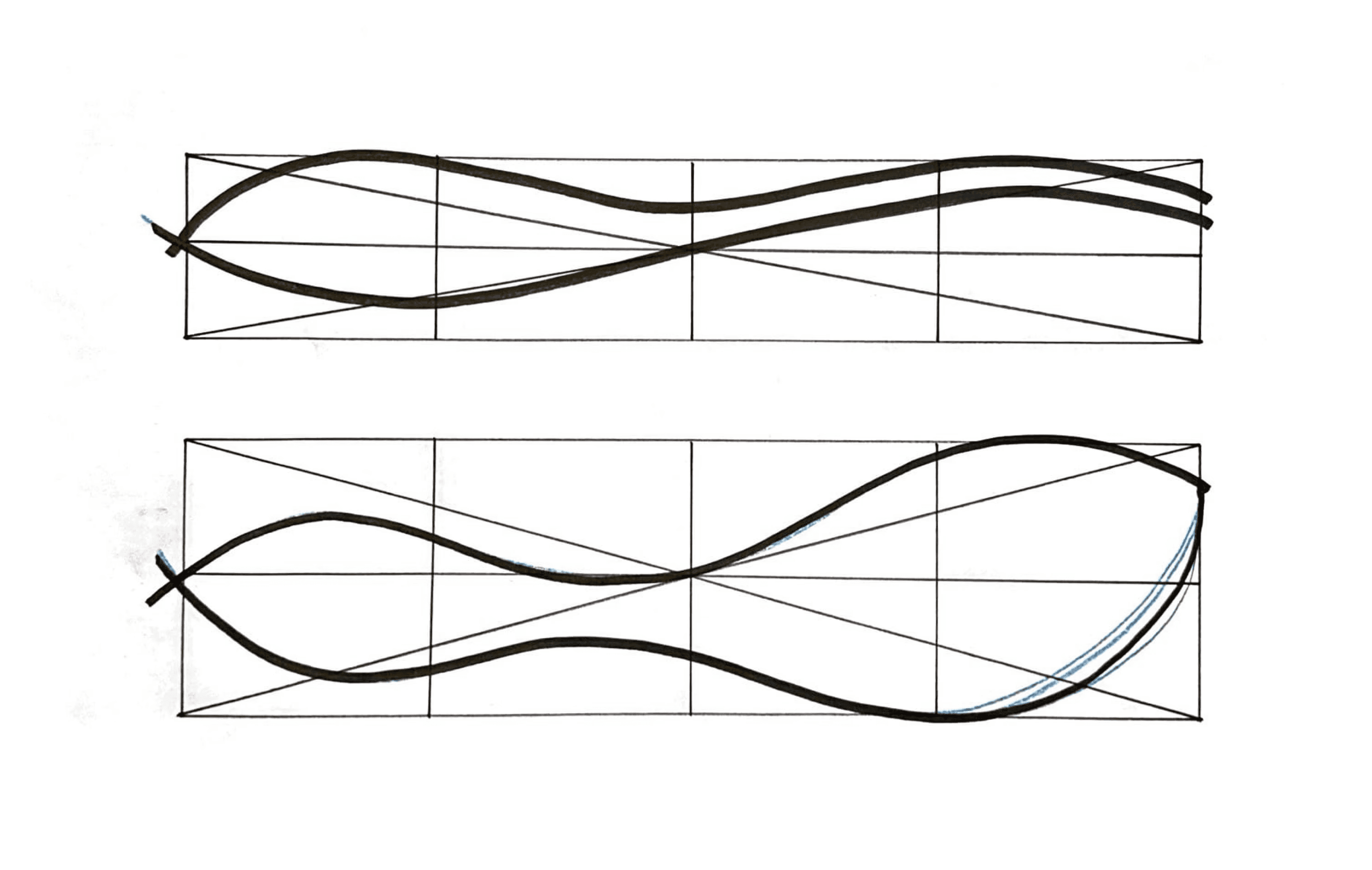
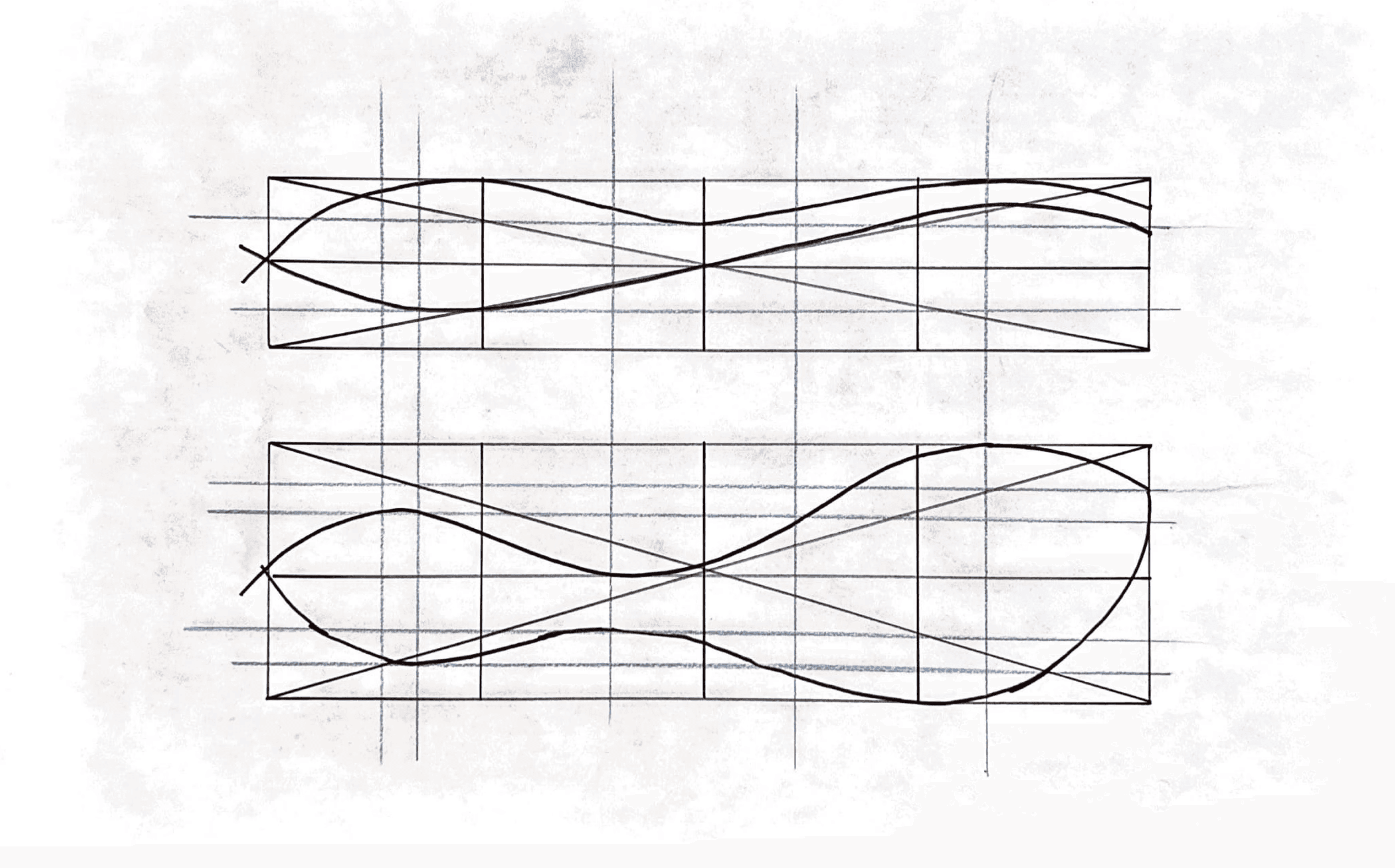
With more refined prototypes and drawings, I finalized the drawing template used to guide the bandsaw cuts in wood.
With more refined prototypes and drawings, I finalized the drawing template used to guide the bandsaw cuts in wood.
Final Product
Final Product
The project constraints required creating a flow form using only four total bandsaw cuts, with chamfers or fillets applied to no more than fifty percent of the edges.
The project constraints required creating a flow form using only four total bandsaw cuts, with chamfers or fillets applied to no more than fifty percent of the edges.
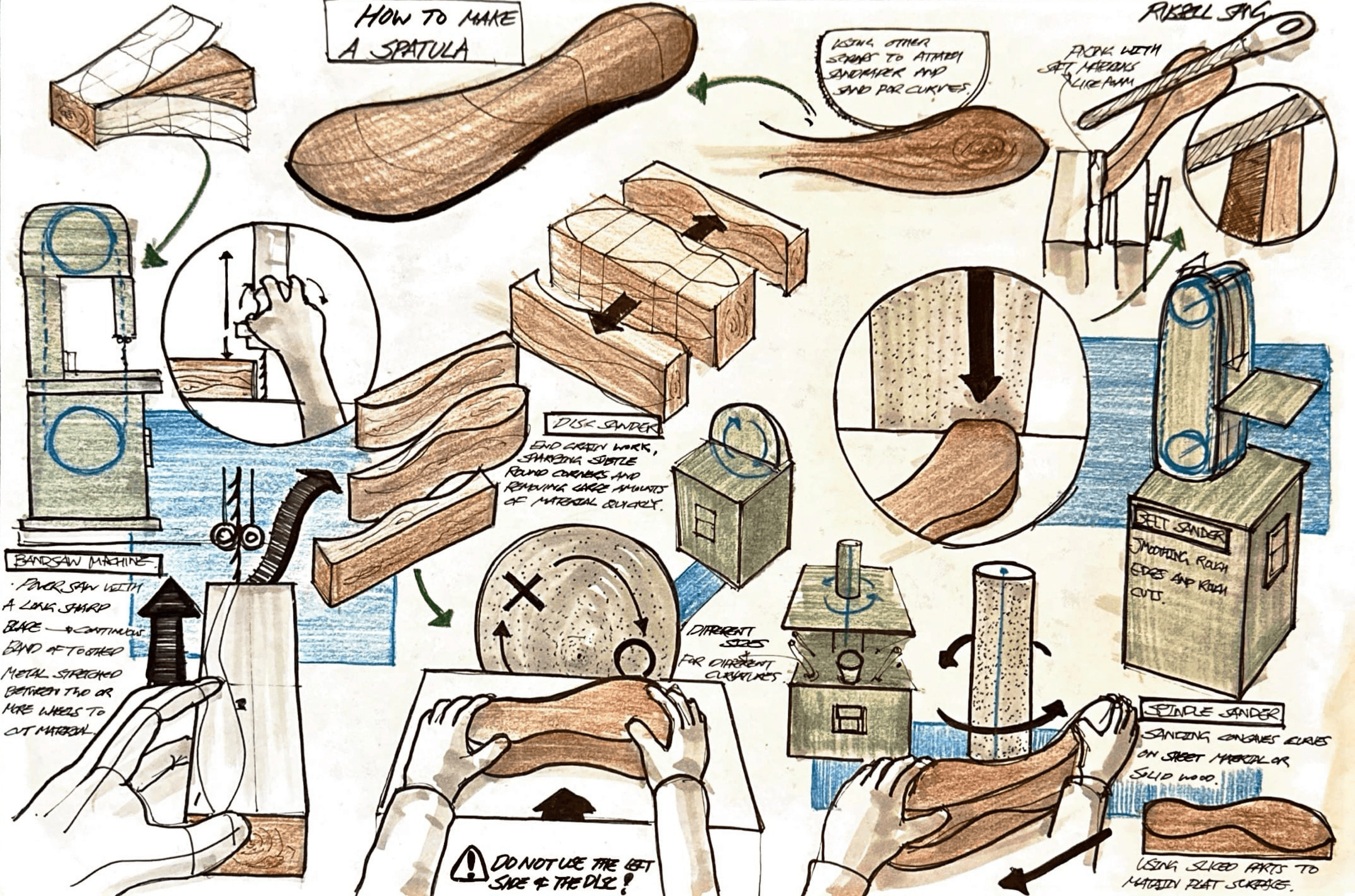
Sketches of the machines used in the 3D lab were created to better understand their operation and ensure safe use.
Sketches of the machines used in the 3D lab were created to better understand their operation and ensure safe use.
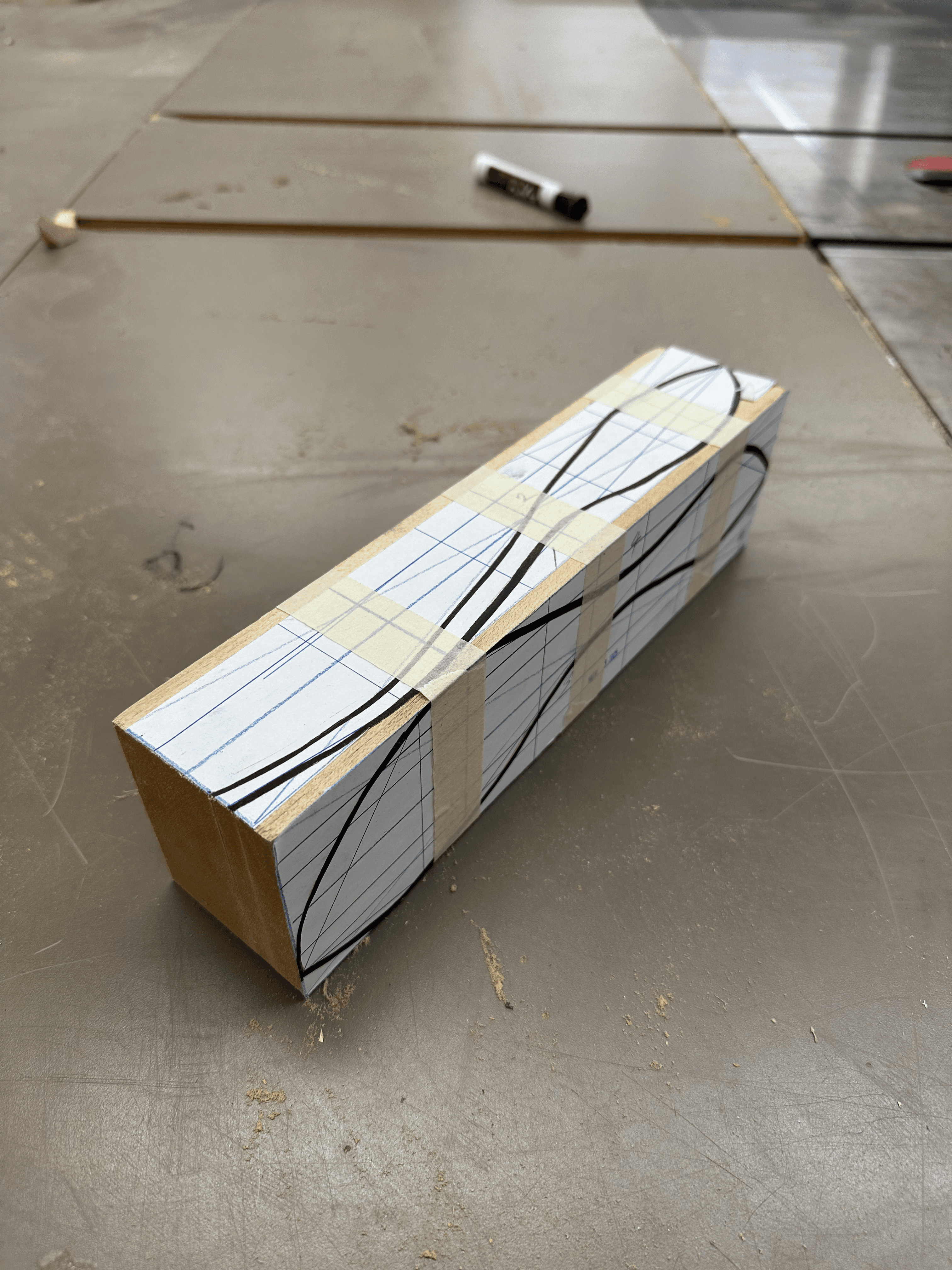
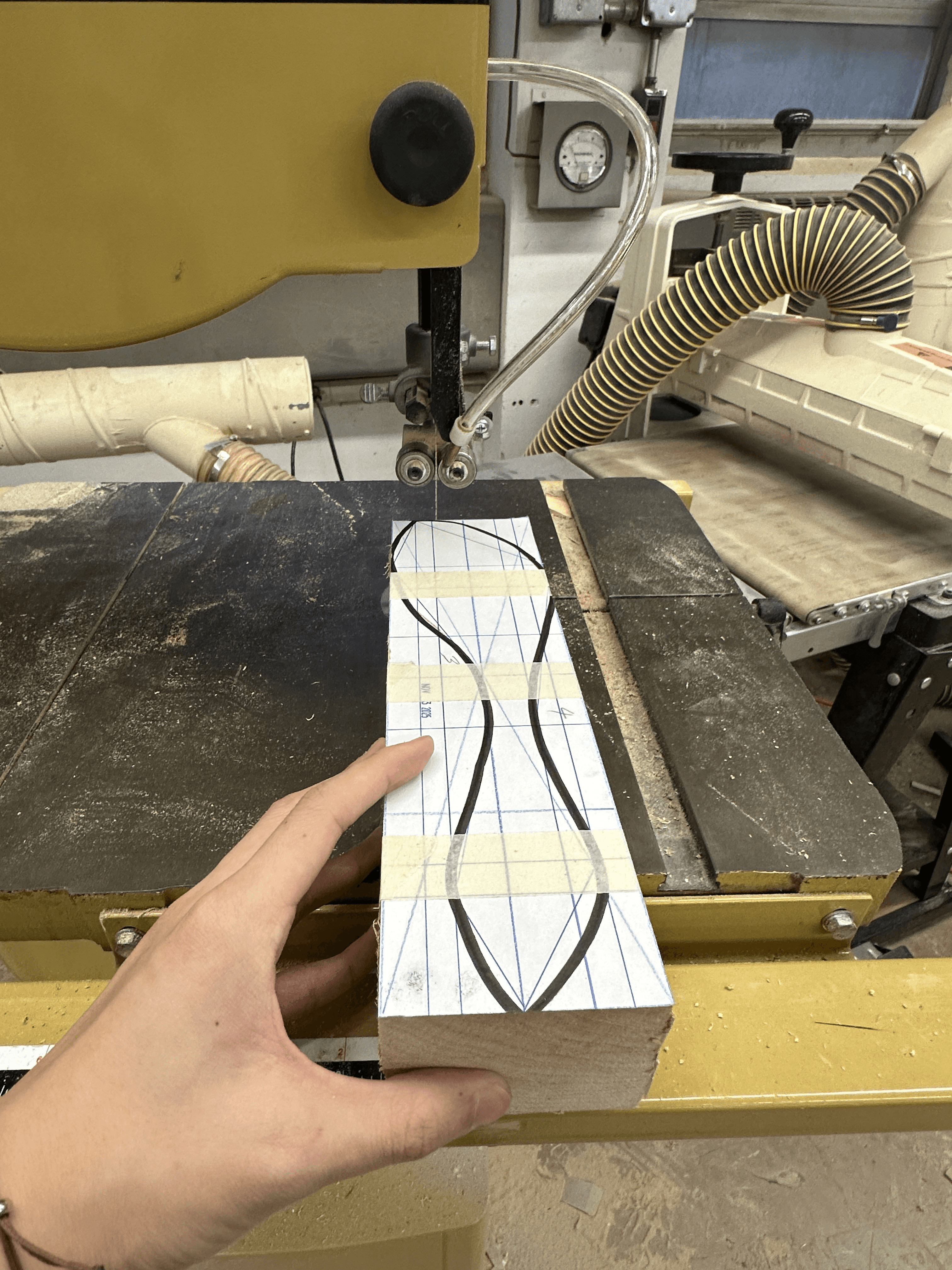
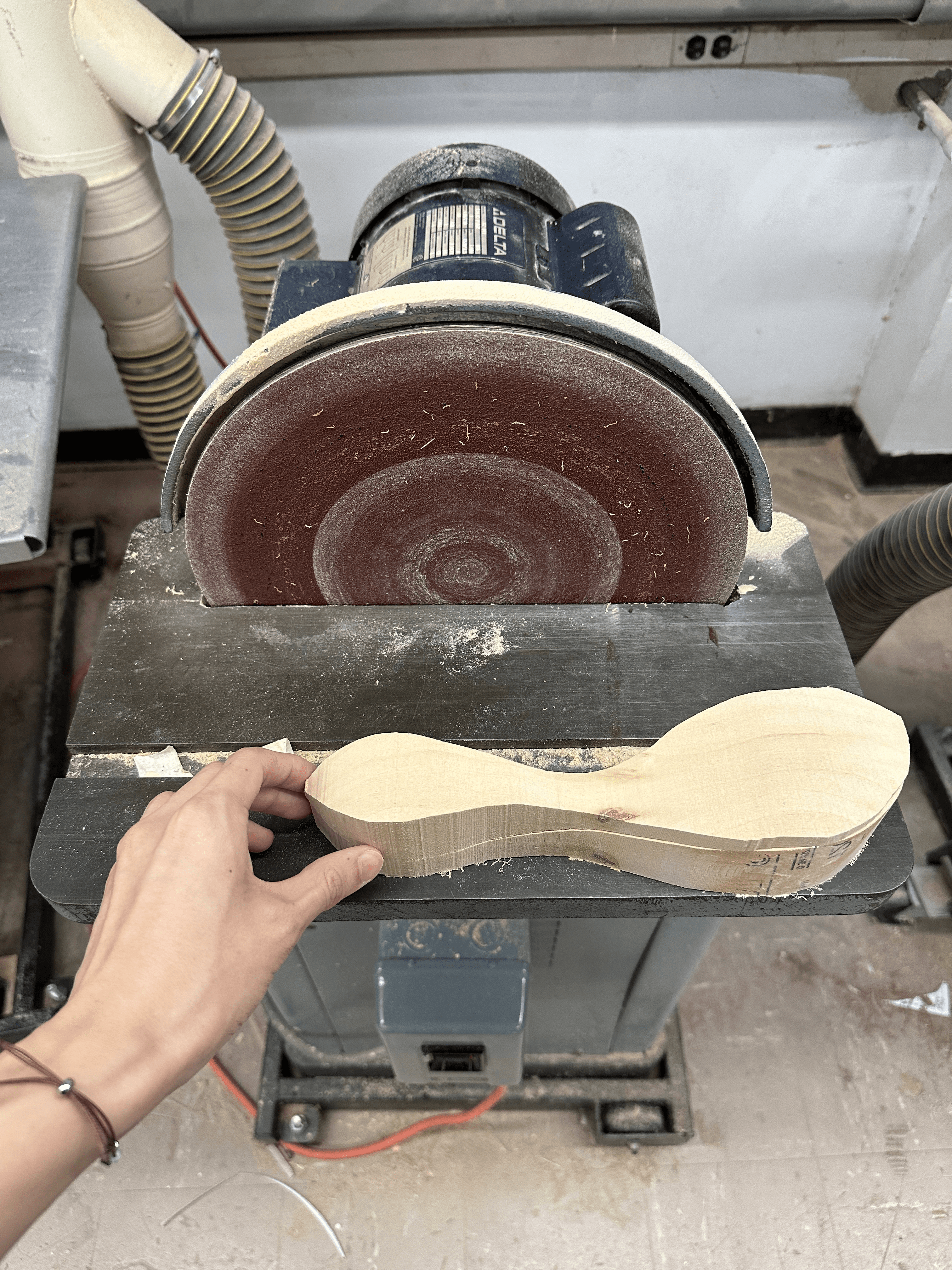
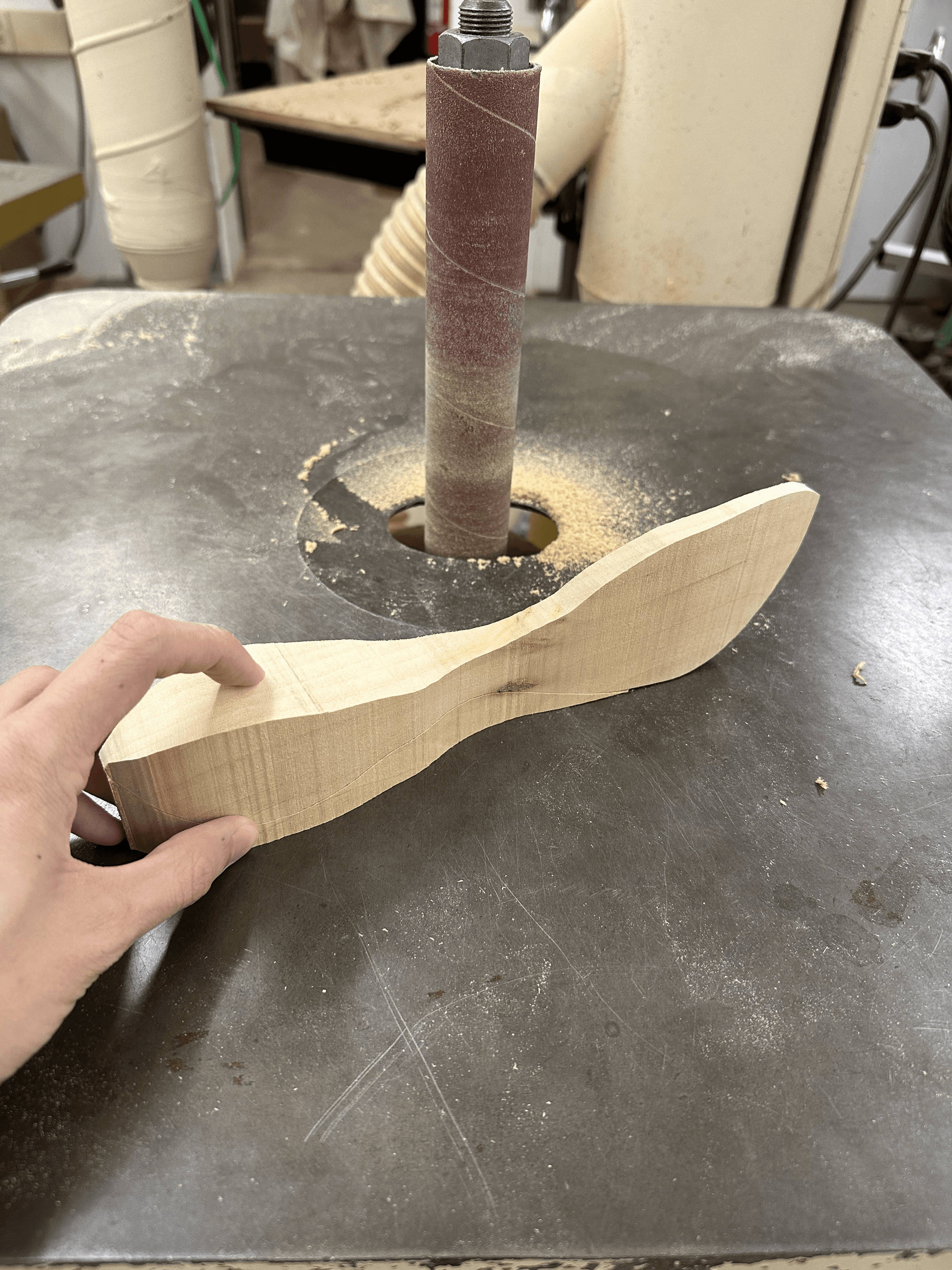
Using the template as a guide, I used the bandsaw and sanders to create a flow form lines
Using the template as a guide, I used the bandsaw and sanders to create a flow form lines
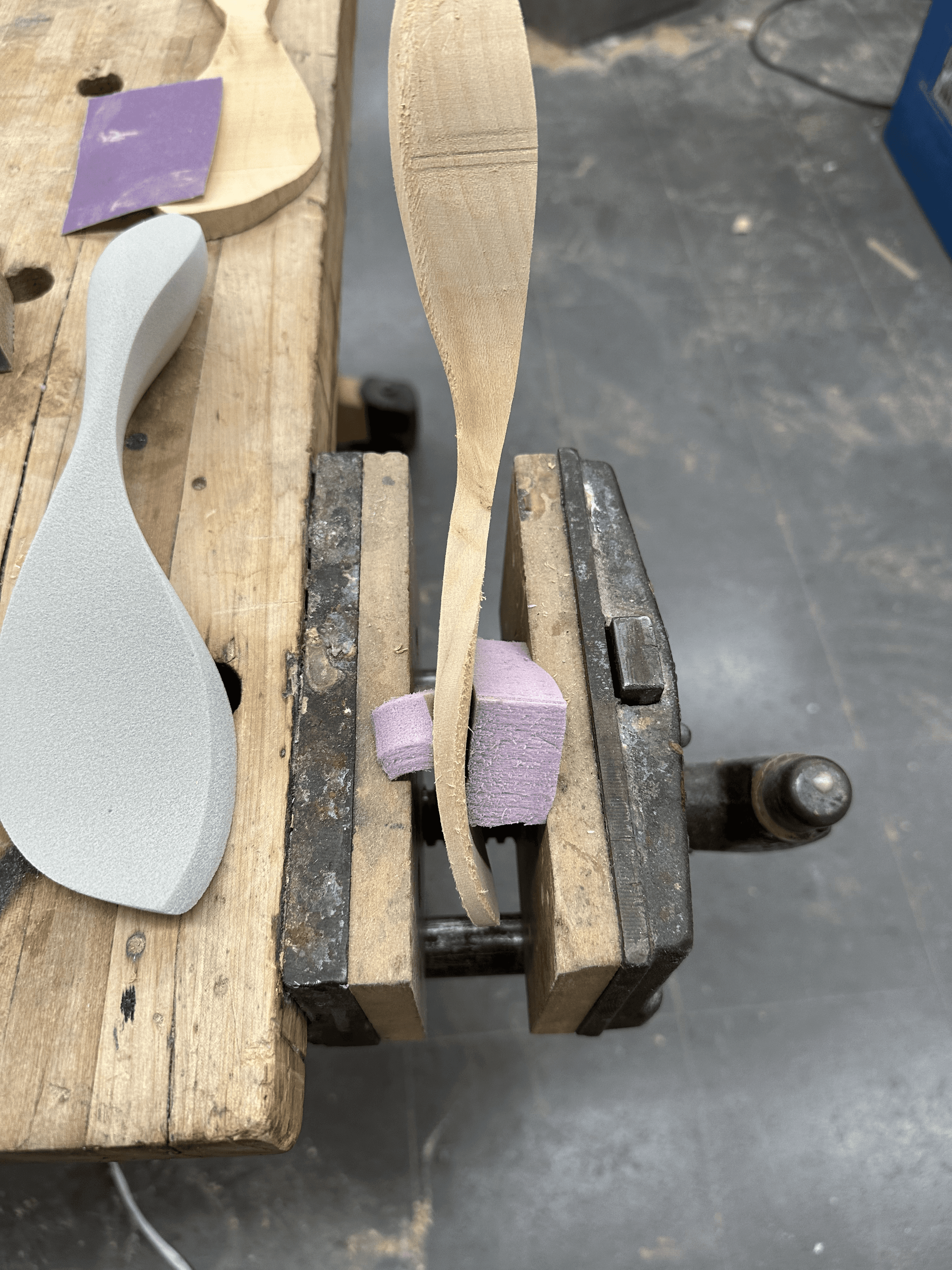
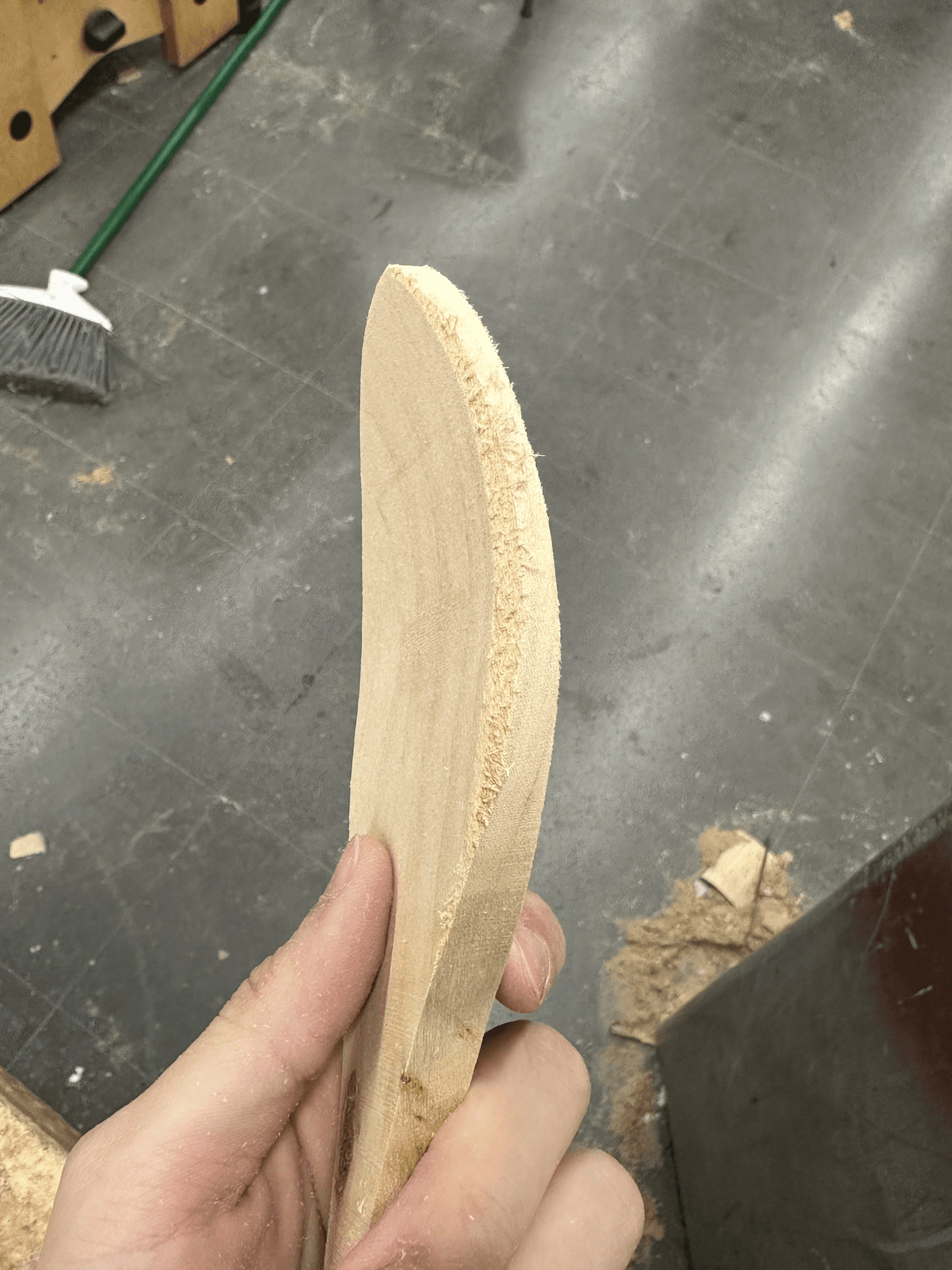
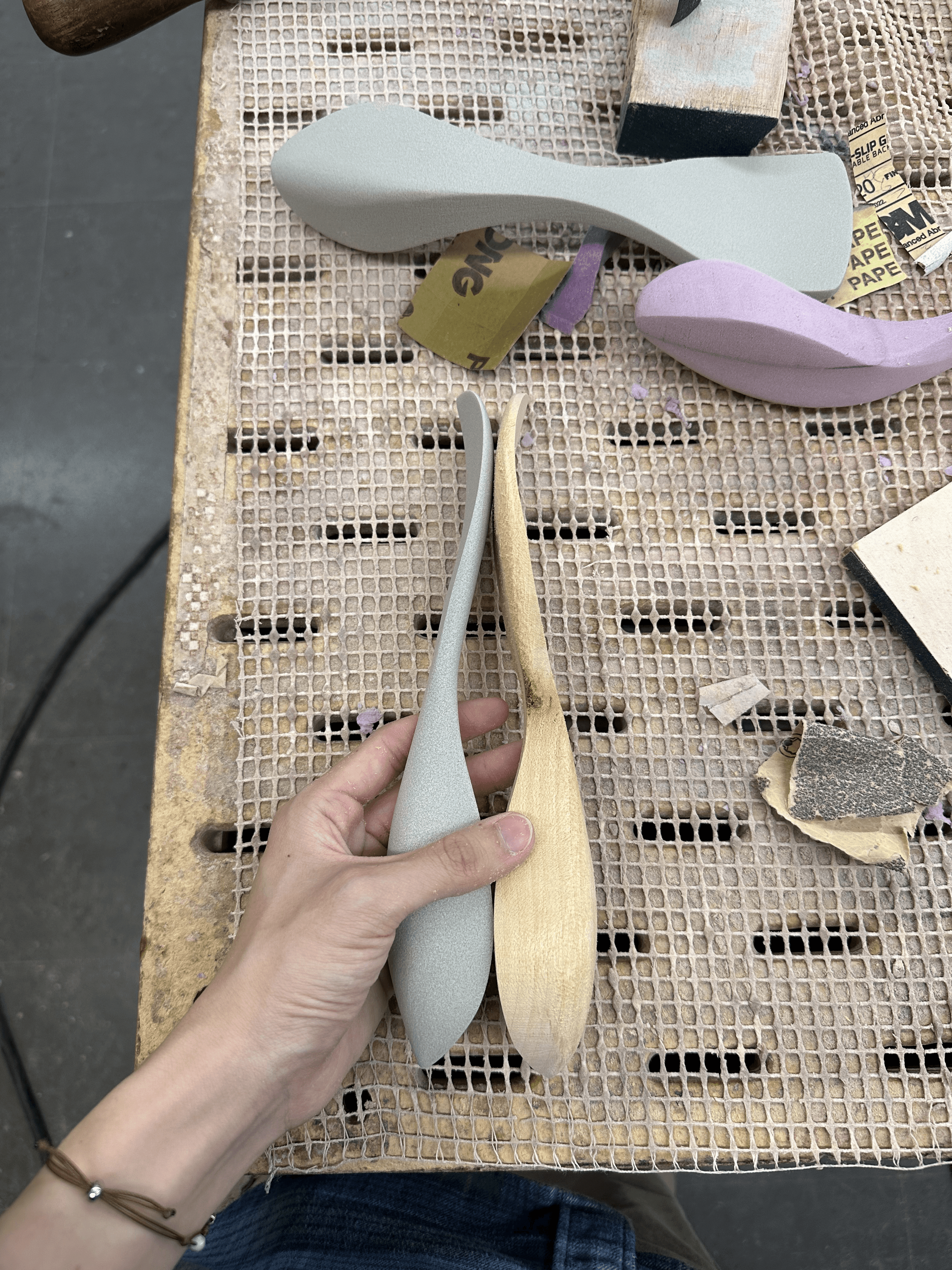
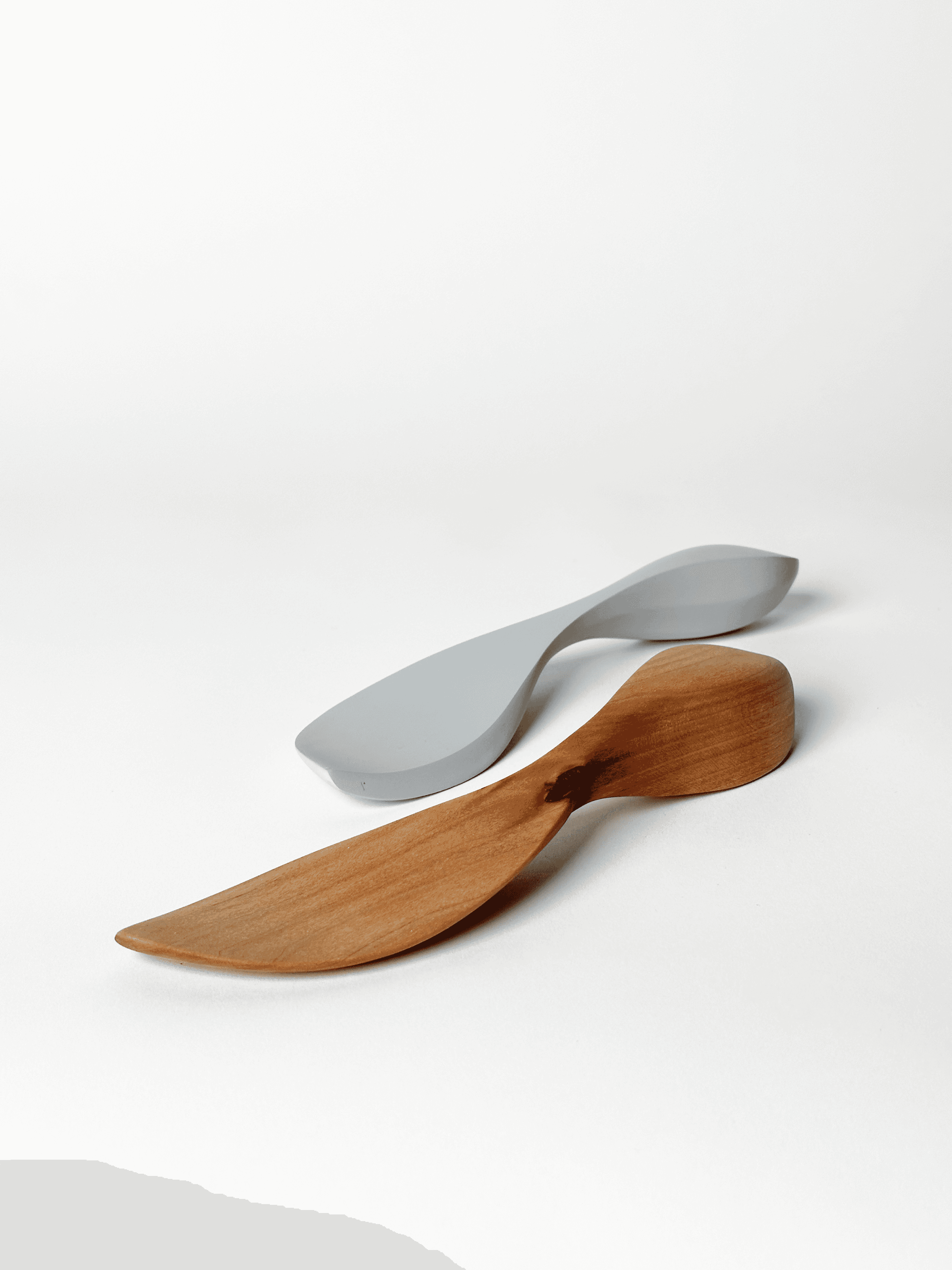
I also used the gray block prototype as a reference to achieve the same design in the final prototype.
I also used the gray block prototype as a reference to achieve the same design in the final prototype.
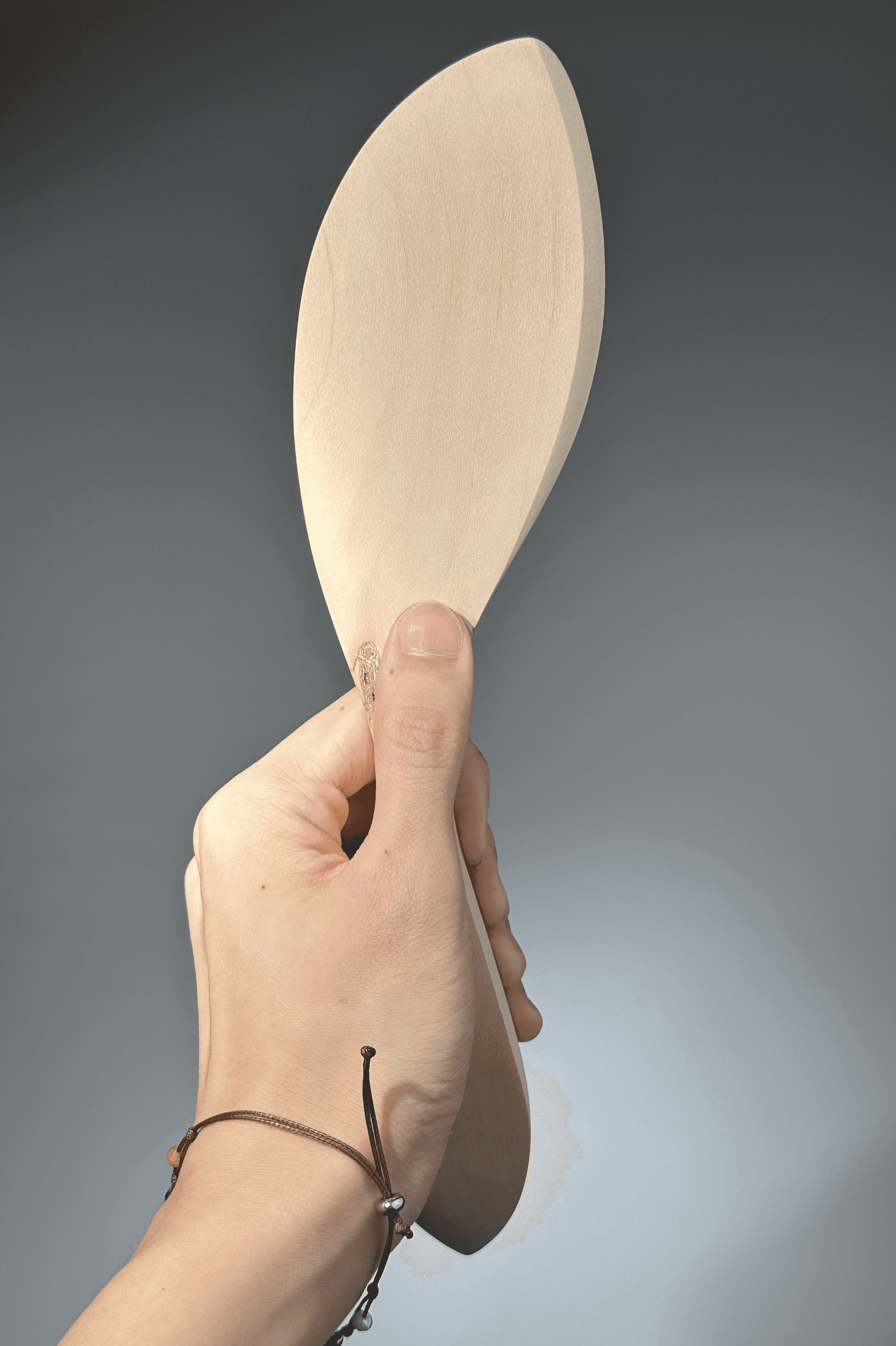
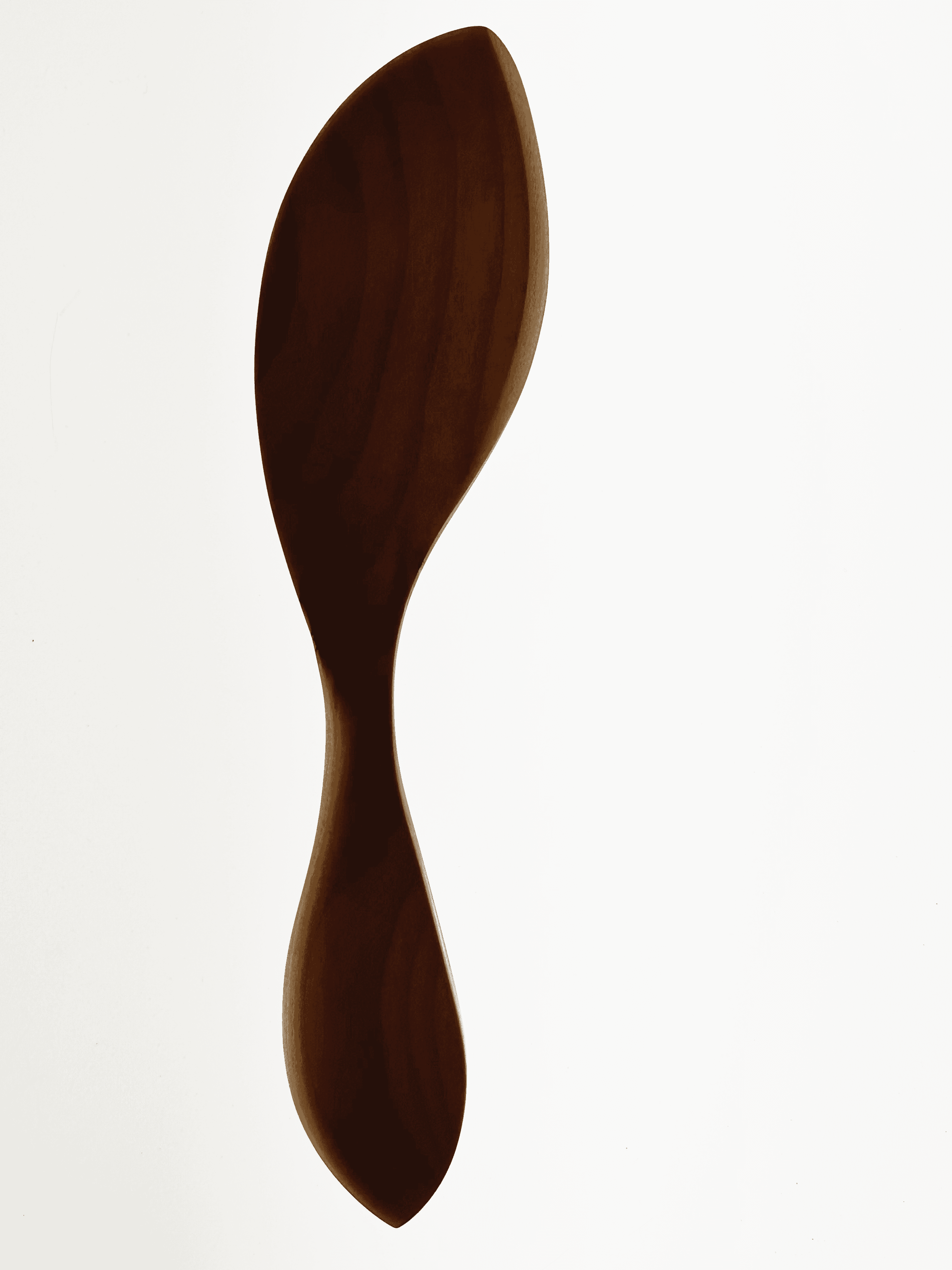
Final Wood Flow Form(before applying oil)
Final Wood Flow Form(before applying oil)
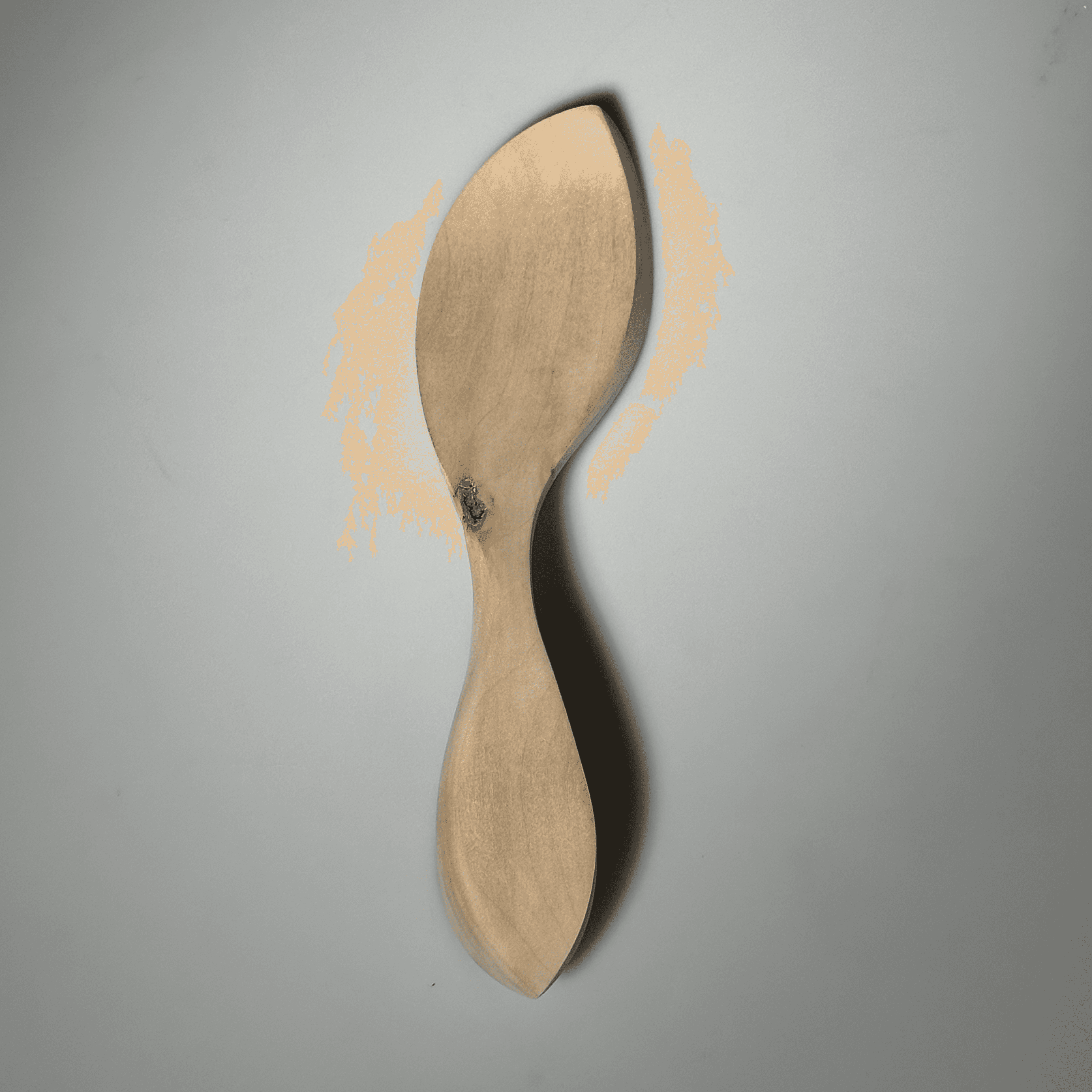
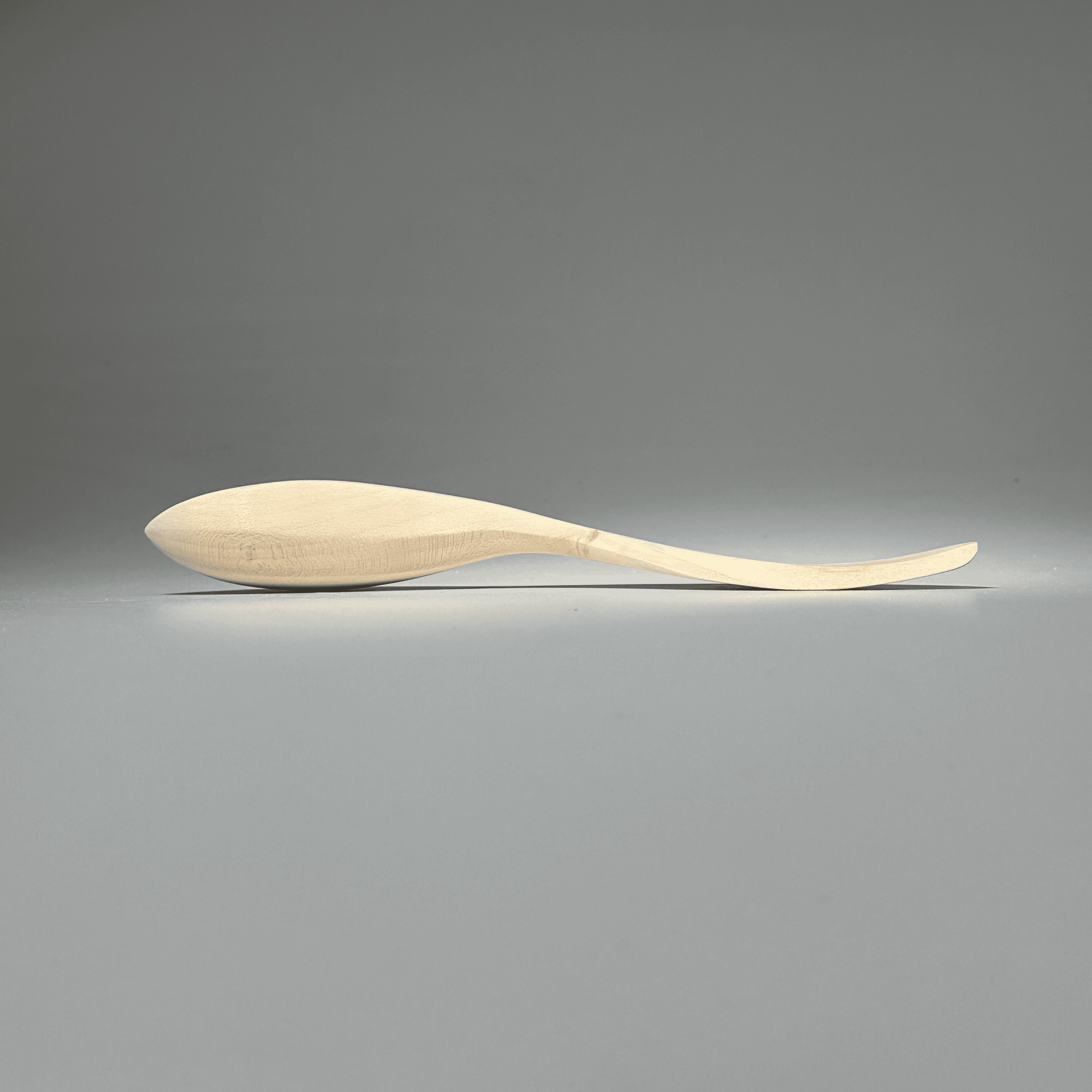
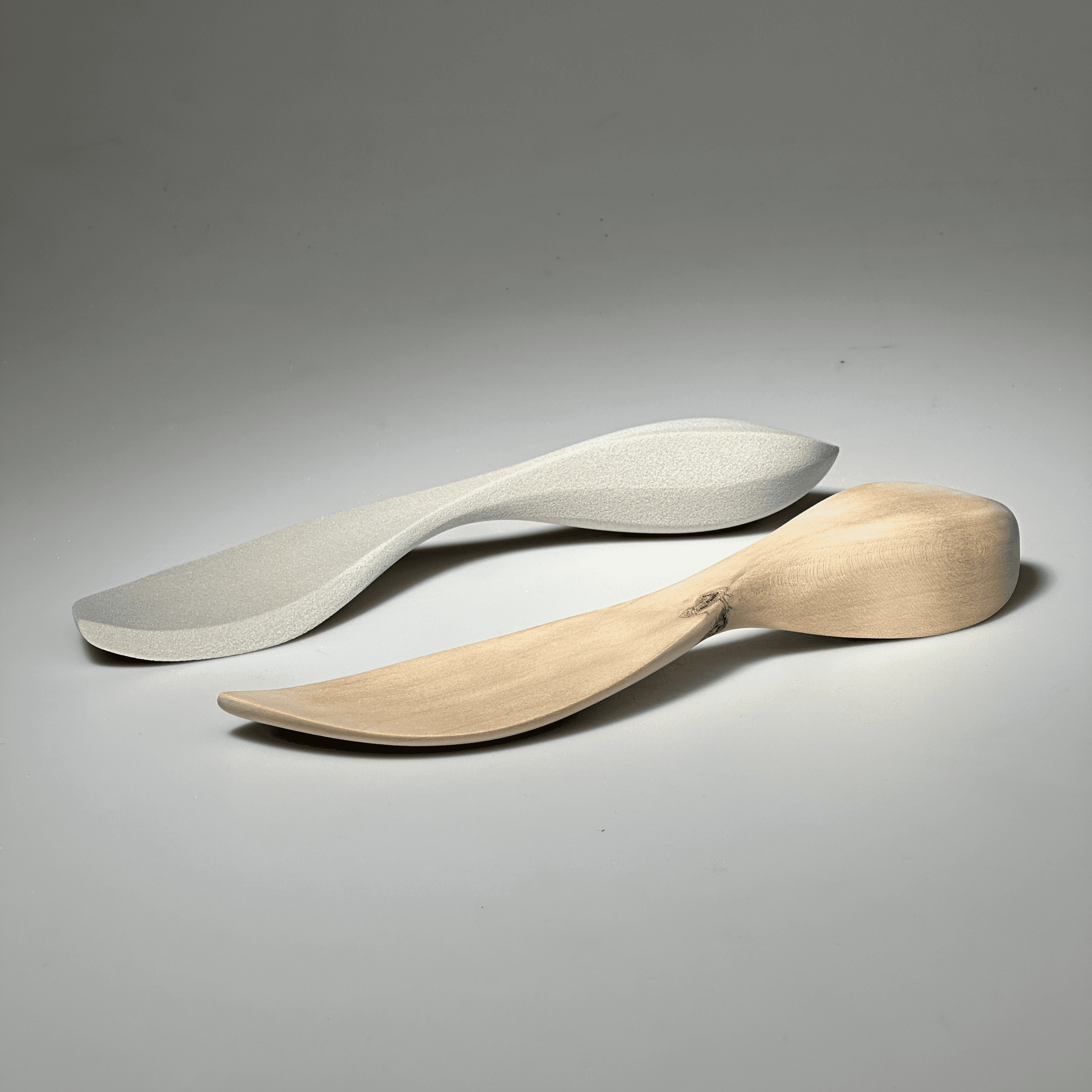
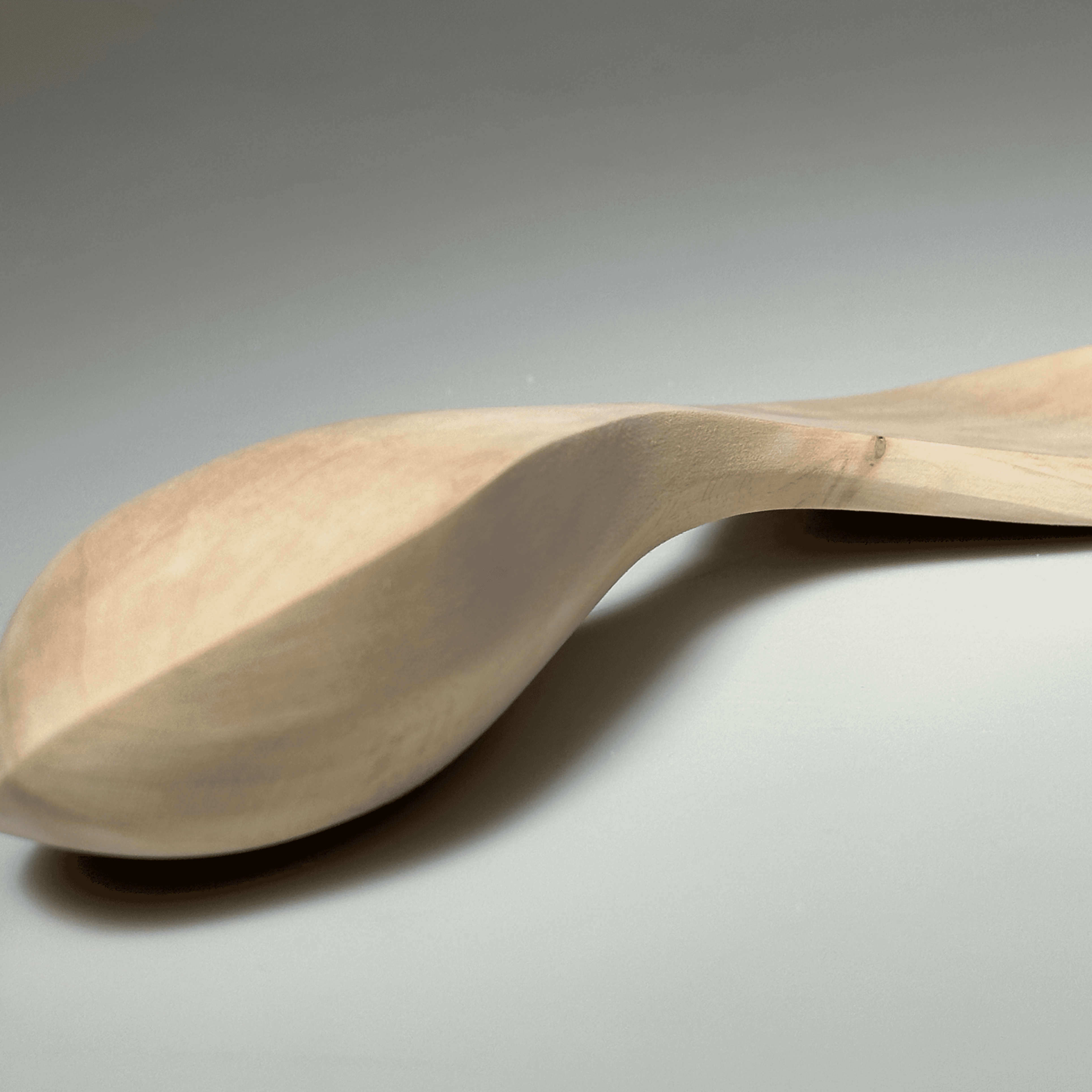
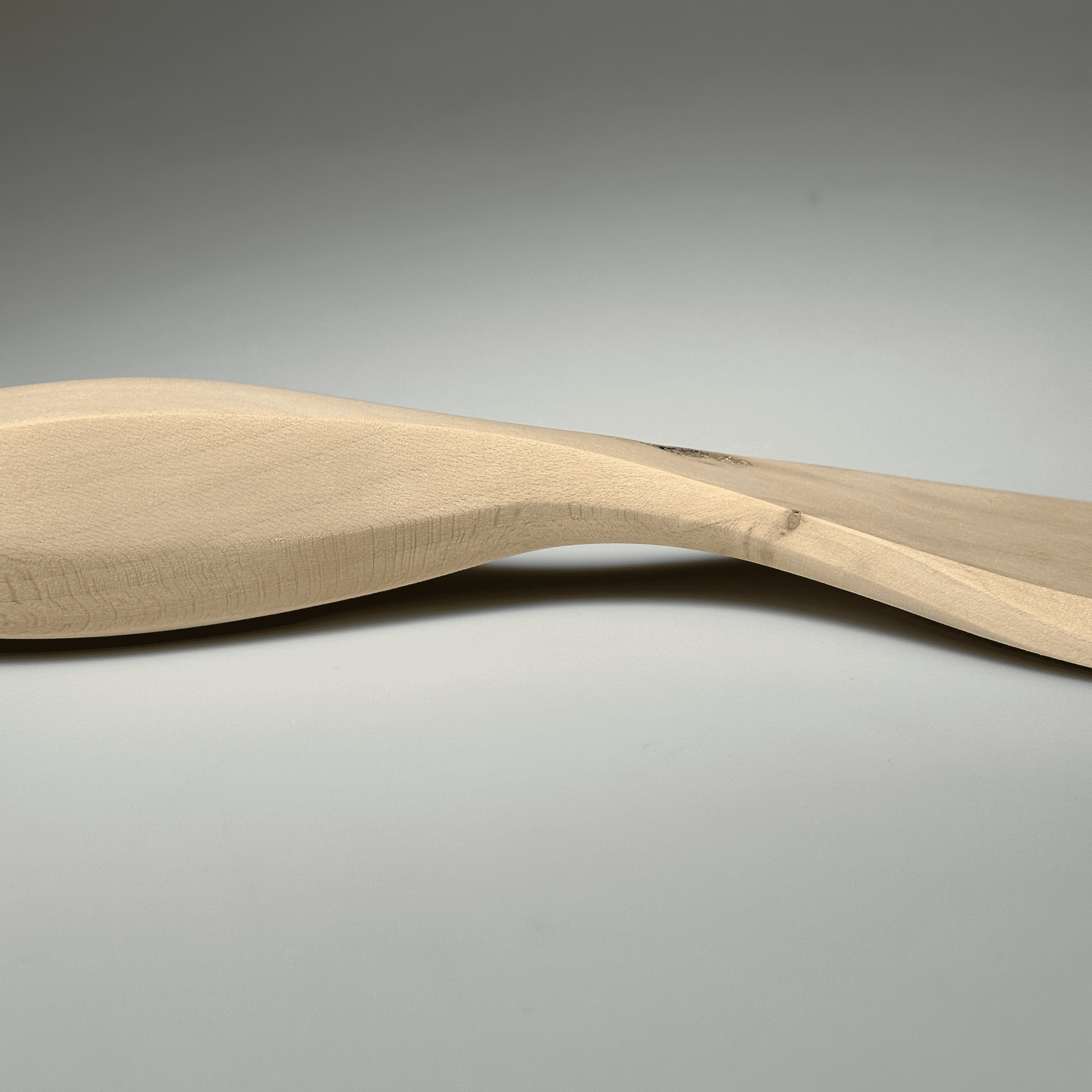
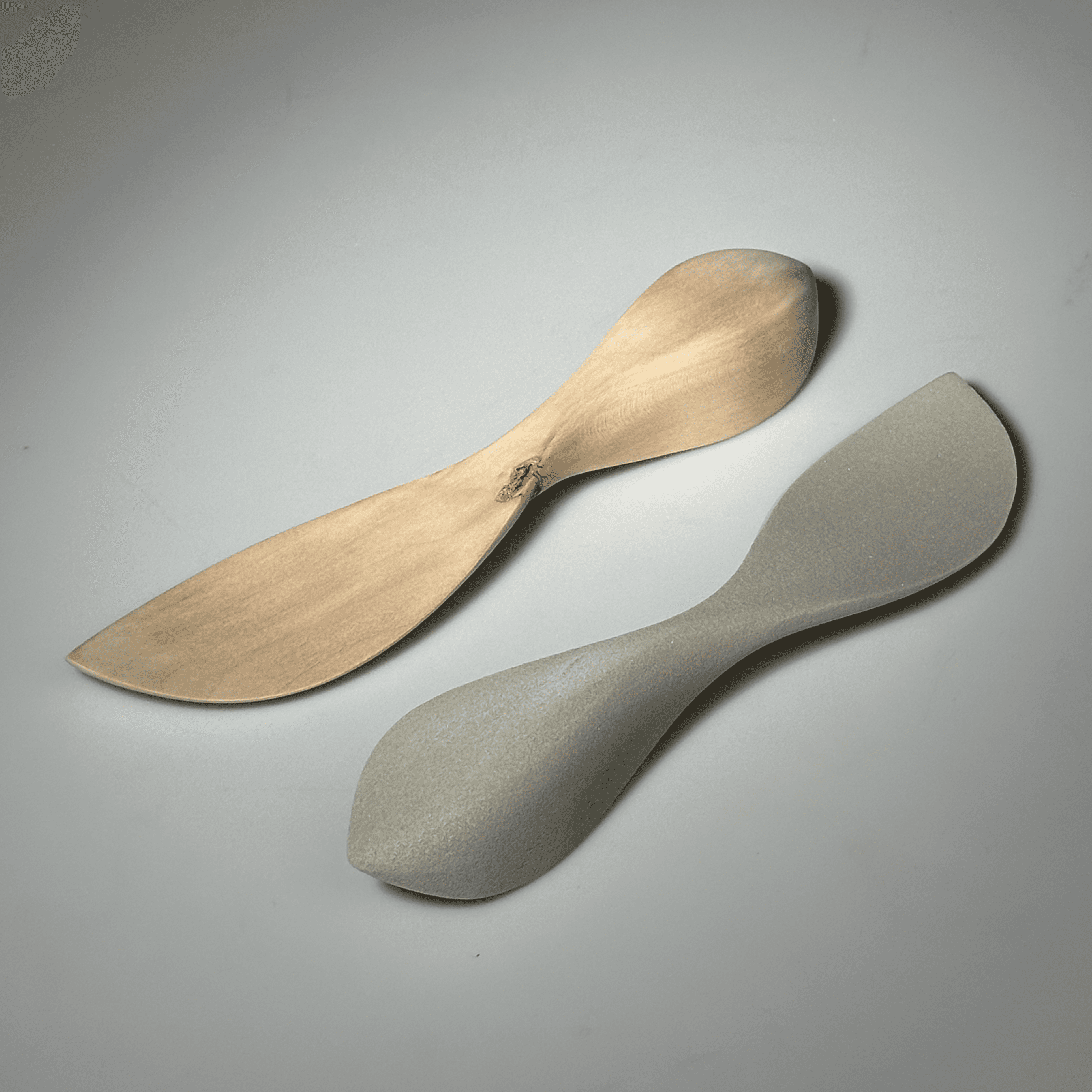
Final Wood Flow Form(after applying oil)
Final Wood Flow Form(after applying oil)
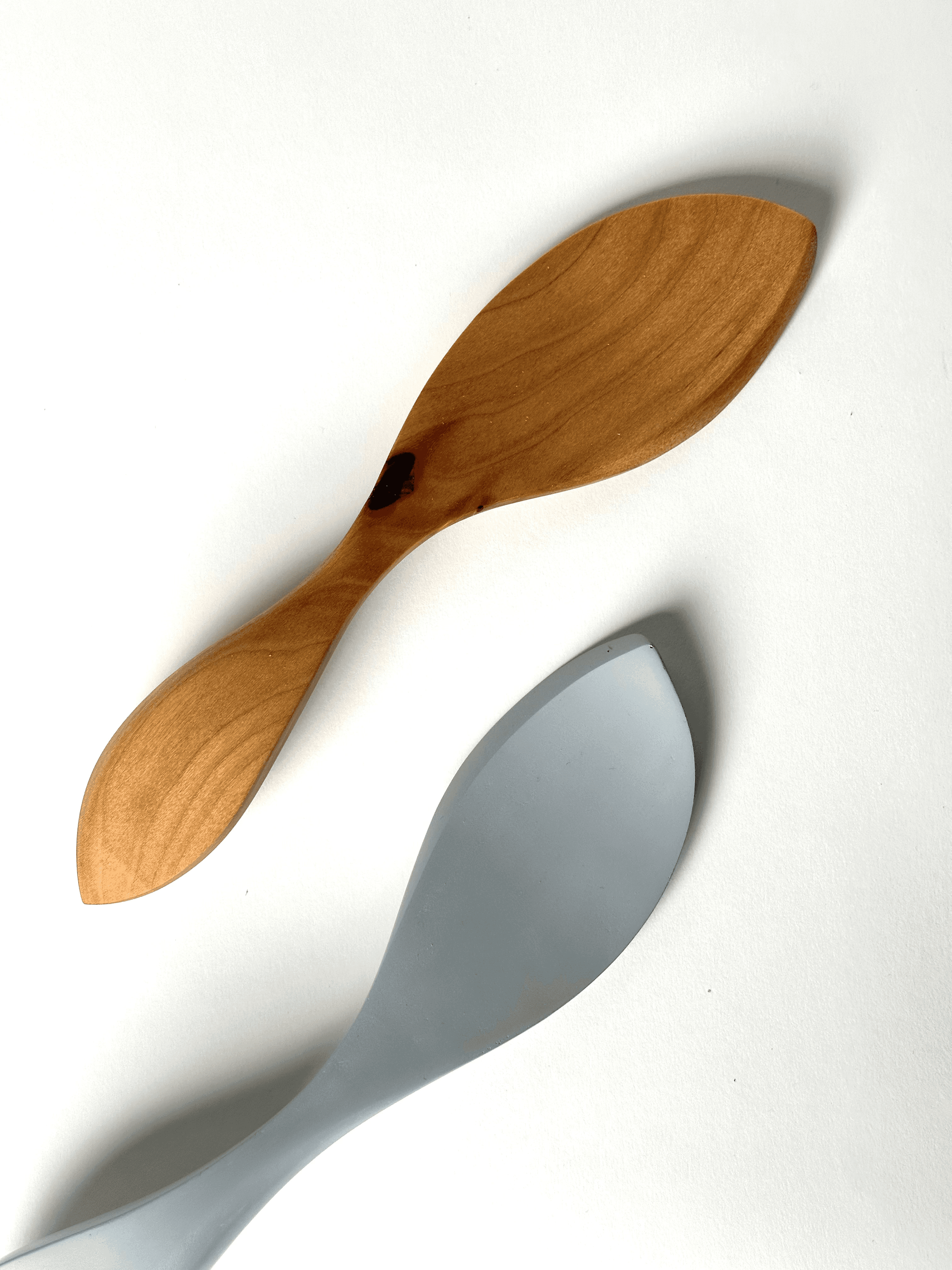
Reflection
Reflection
Through this project, I developed a deeper understanding of woodworking machines, material behavior, and hands on prototyping skills. More importantly, the exploration of flow emphasized how drawing and sketching can directly drive design decisions, which was a core intention of the project. I also learned that form is not solely about visual appeal, but about how aesthetics can meaningfully support function in practical use. Finally, designing within strict constraints challenged me to think beyond my usual approach, reinforcing the idea that limitations can often lead to more creative and thoughtful outcomes.
Through this project, I developed a deeper understanding of woodworking machines, material behavior, and hands on prototyping skills. More importantly, the exploration of flow emphasized how drawing and sketching can directly drive design decisions, which was a core intention of the project. I also learned that form is not solely about visual appeal, but about how aesthetics can meaningfully support function in practical use. Finally, designing within strict constraints challenged me to think beyond my usual approach, reinforcing the idea that limitations can often lead to more creative and thoughtful outcomes.