Timeline
Jan 2026 - Feb 2026
Role
Industrial Design
Work
Furniture
Tools
Solidworks
3D printing
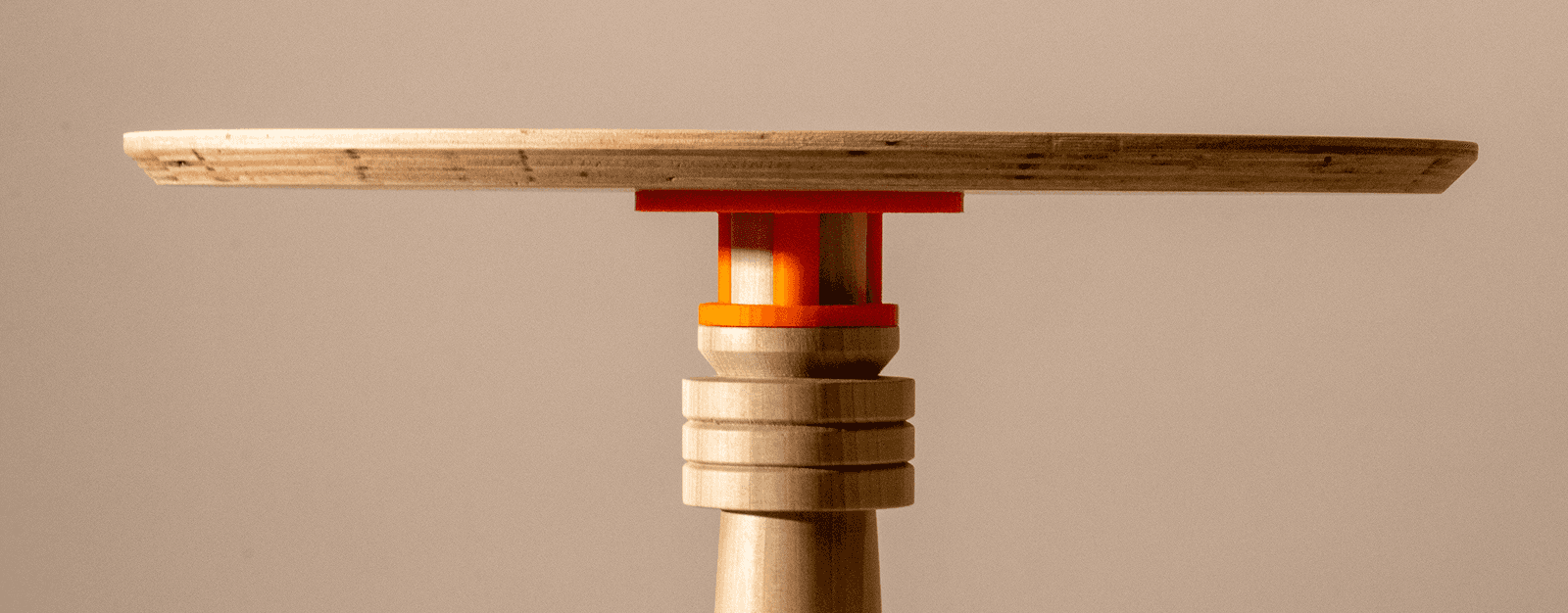
The Tripod Table explores the relationship between wood and 3D-printed materials. By using 3D-printed components at the intersections of the tripod table, the design highlights new possibilities for constructing tables and demonstrates innovative ways of merging modern fabrication with traditional materials.
Featured On

Exploration
The intention of this project was to explore the relationship between 3D-printed elements and wood. Although these two materials are very different in texture, appearance, and overall character, I aimed to create a design that felt harmonious. While 3D-printed parts are often paired with neutral colors, I believed they could instead serve as a visual highlight within the piece, drawing attention to how the material is used and emphasizing its role in the overall design.
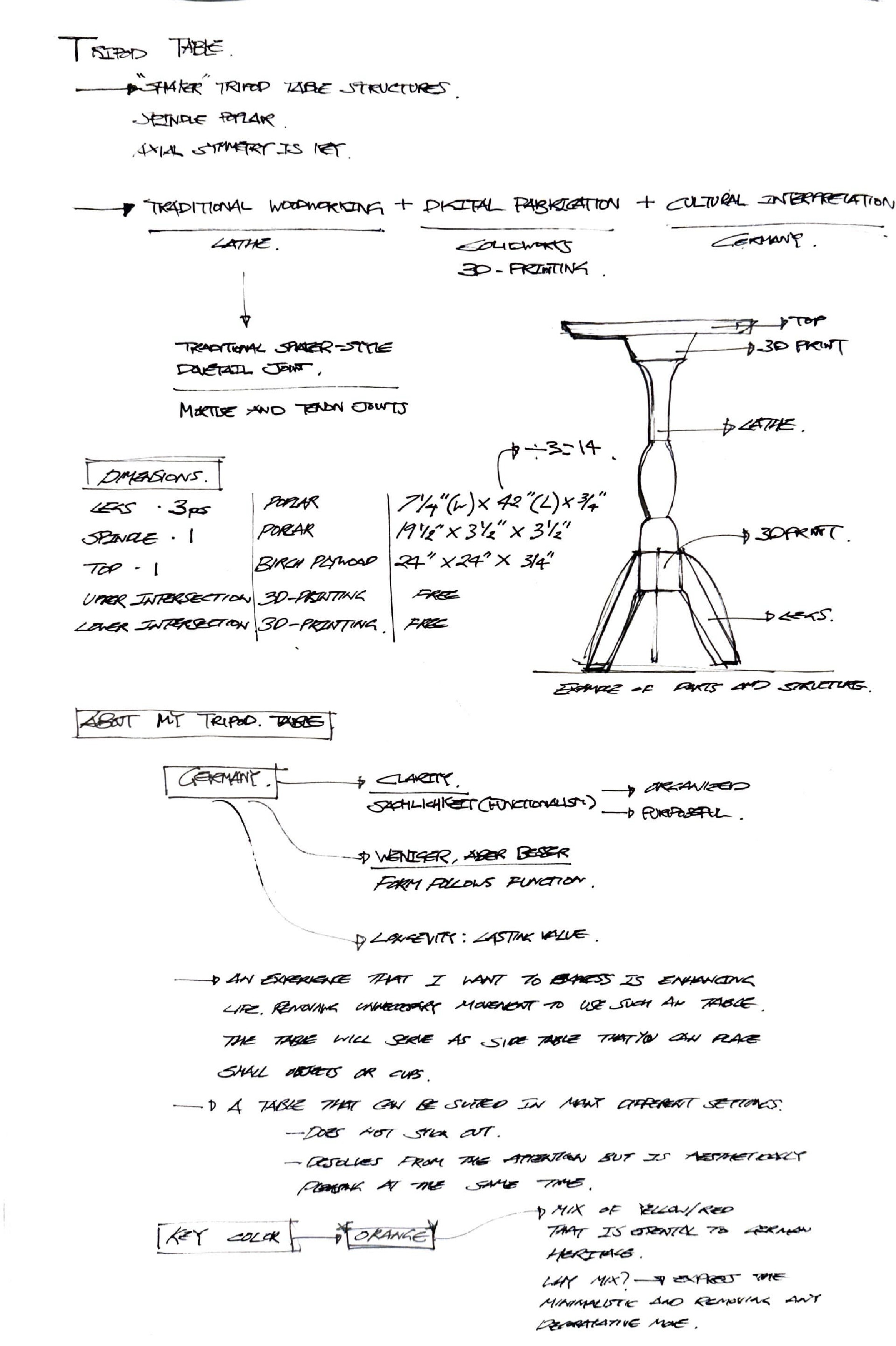
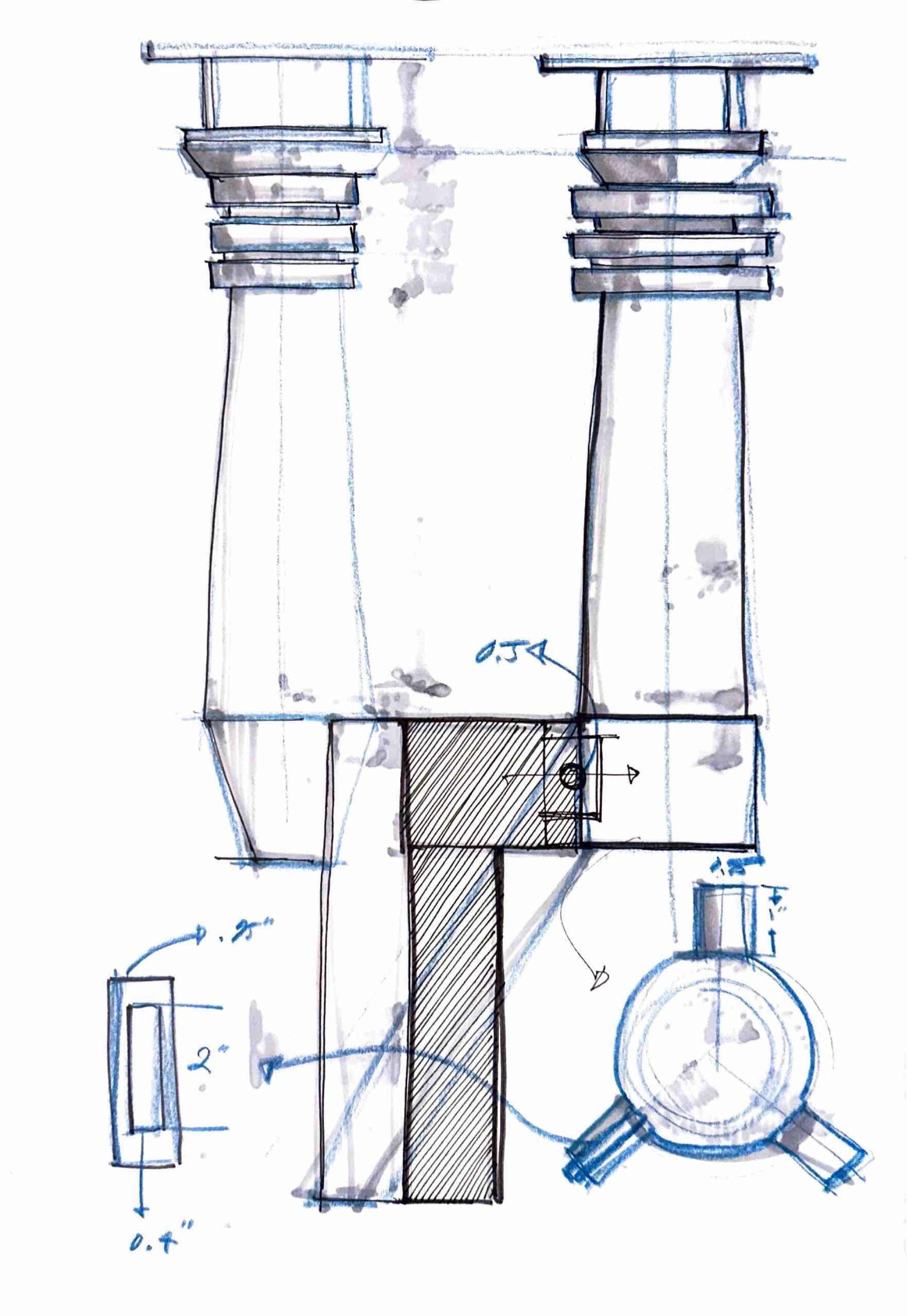
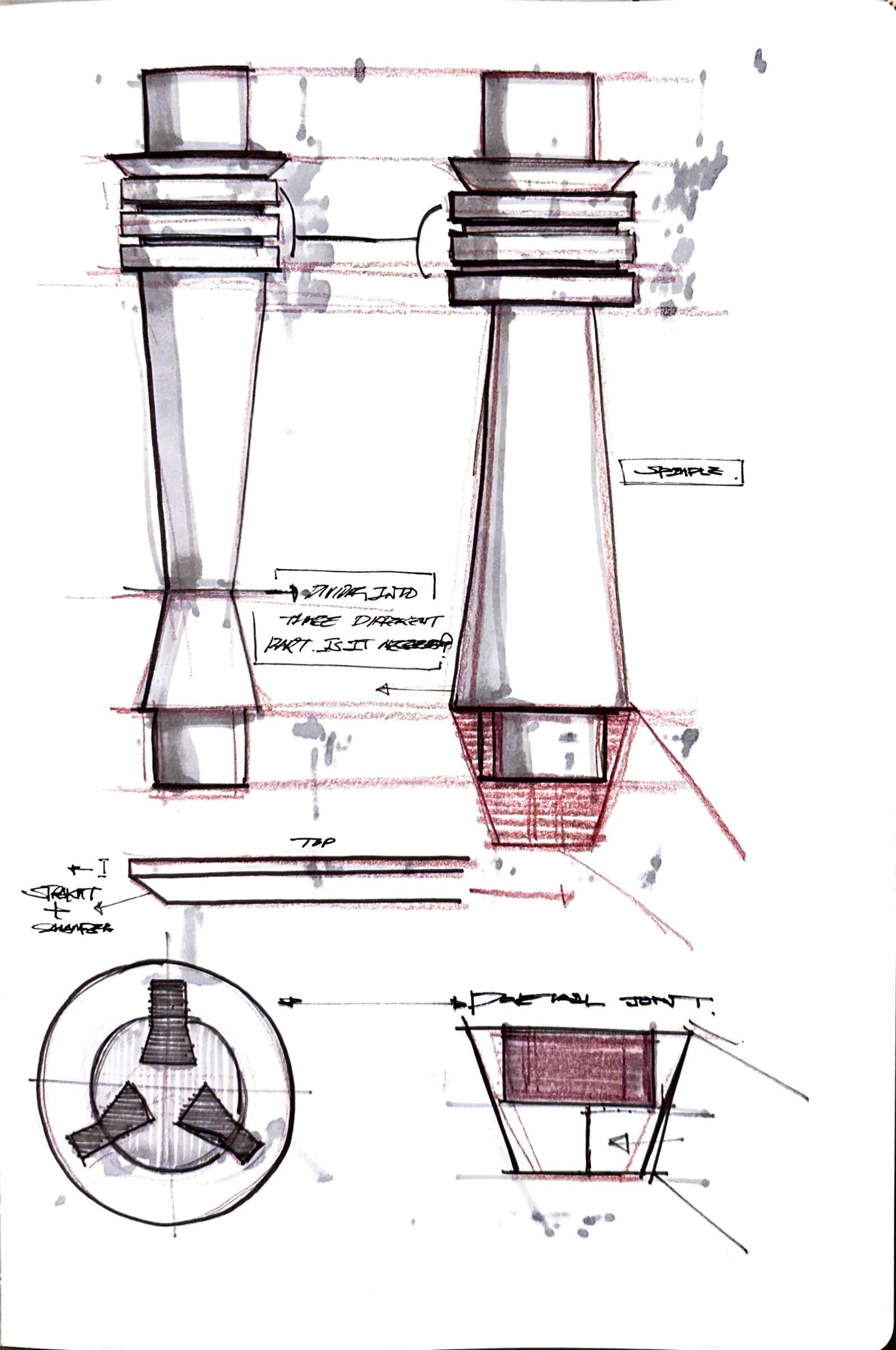
Sketches and Ideations of the table components
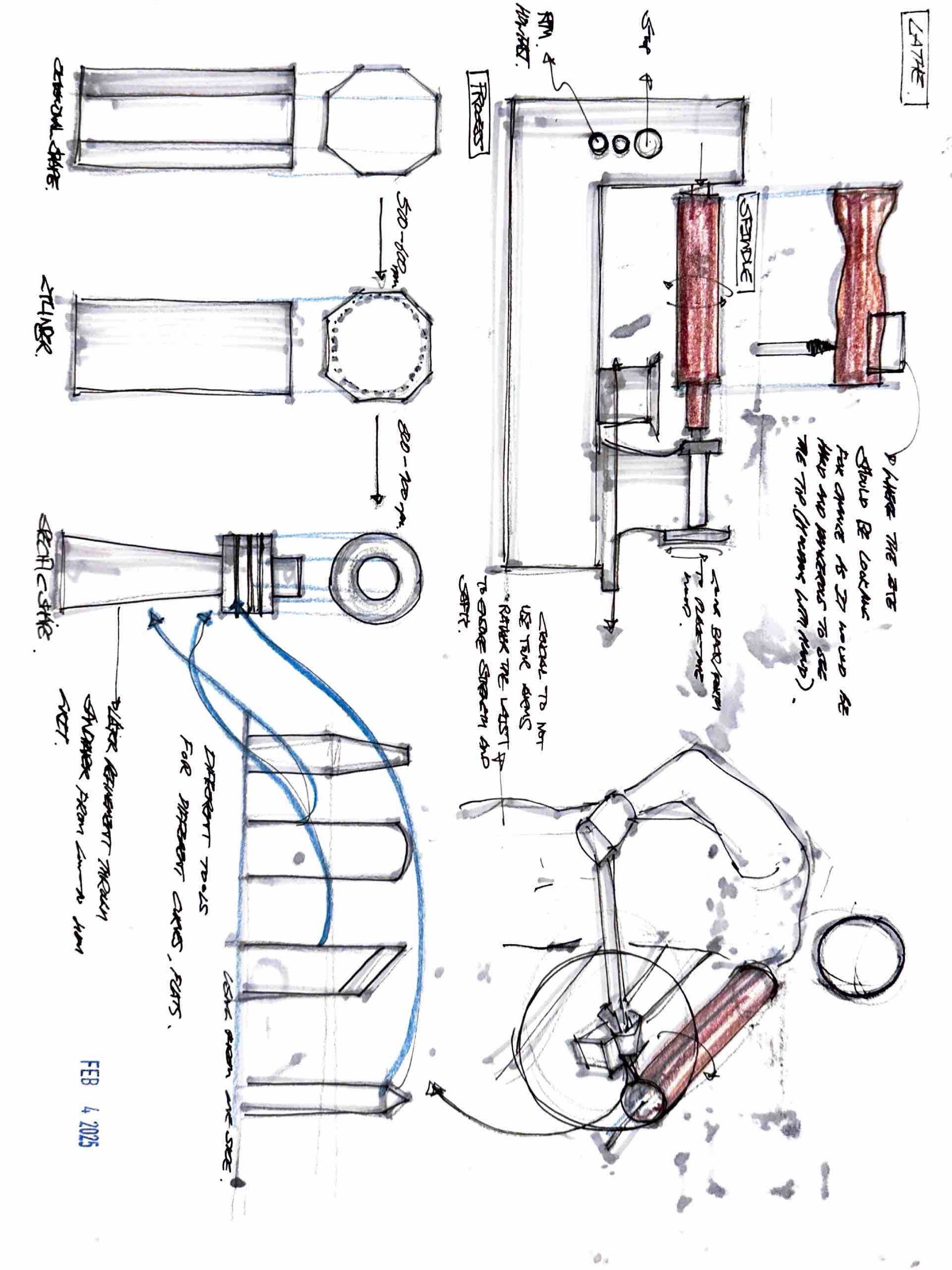
Fabrication sketches to plan out how to use the lathe properly
Process
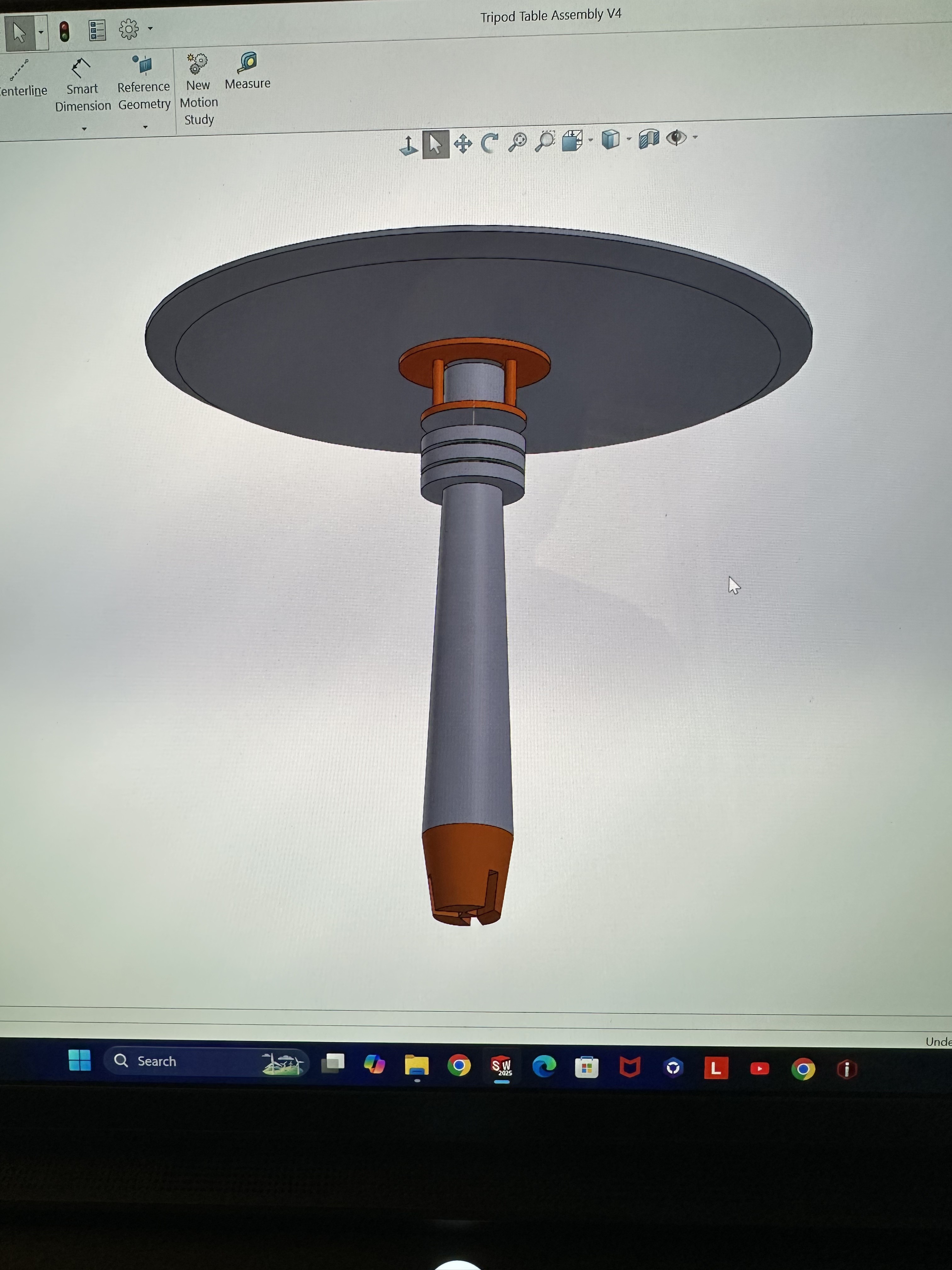
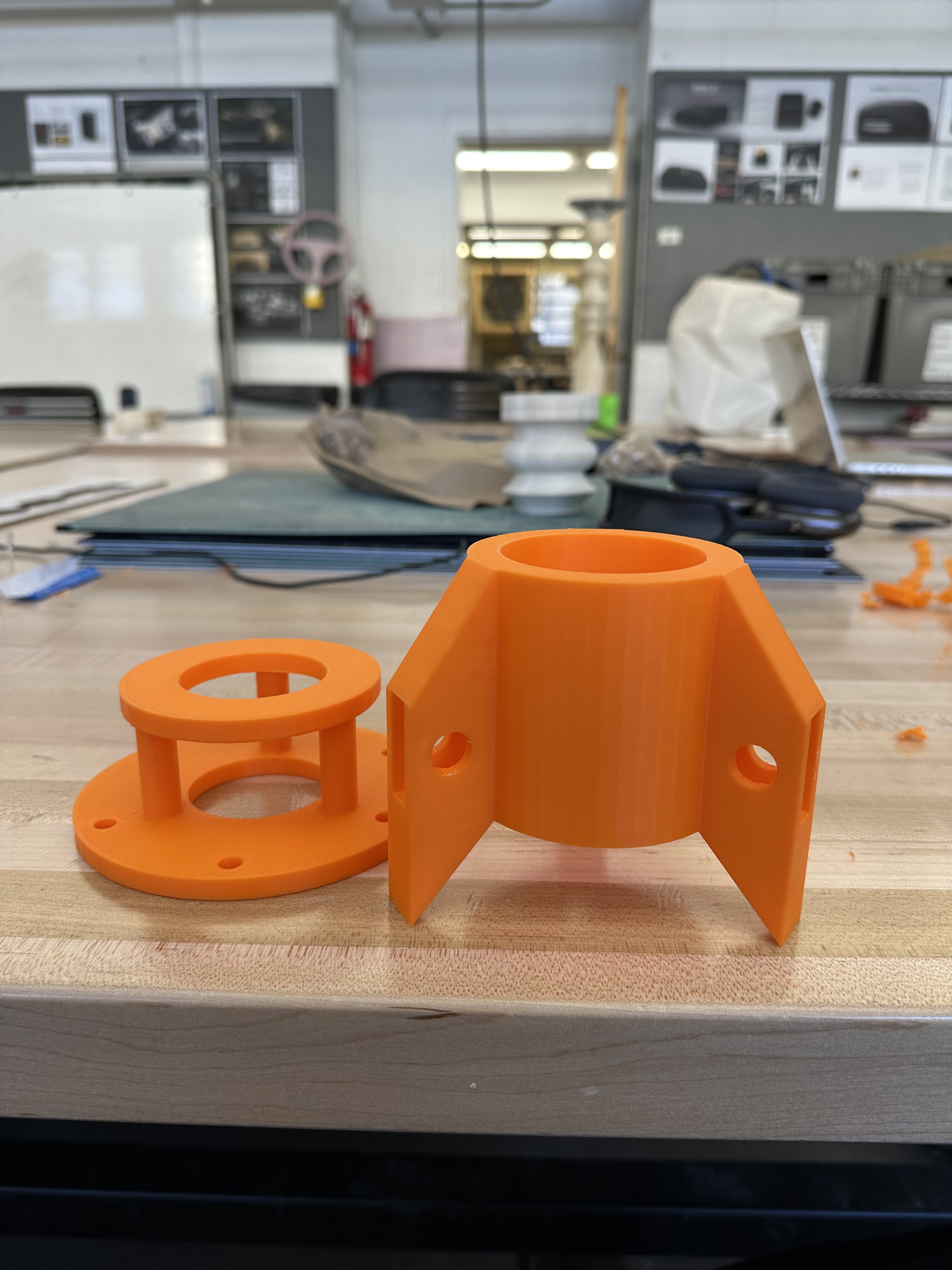
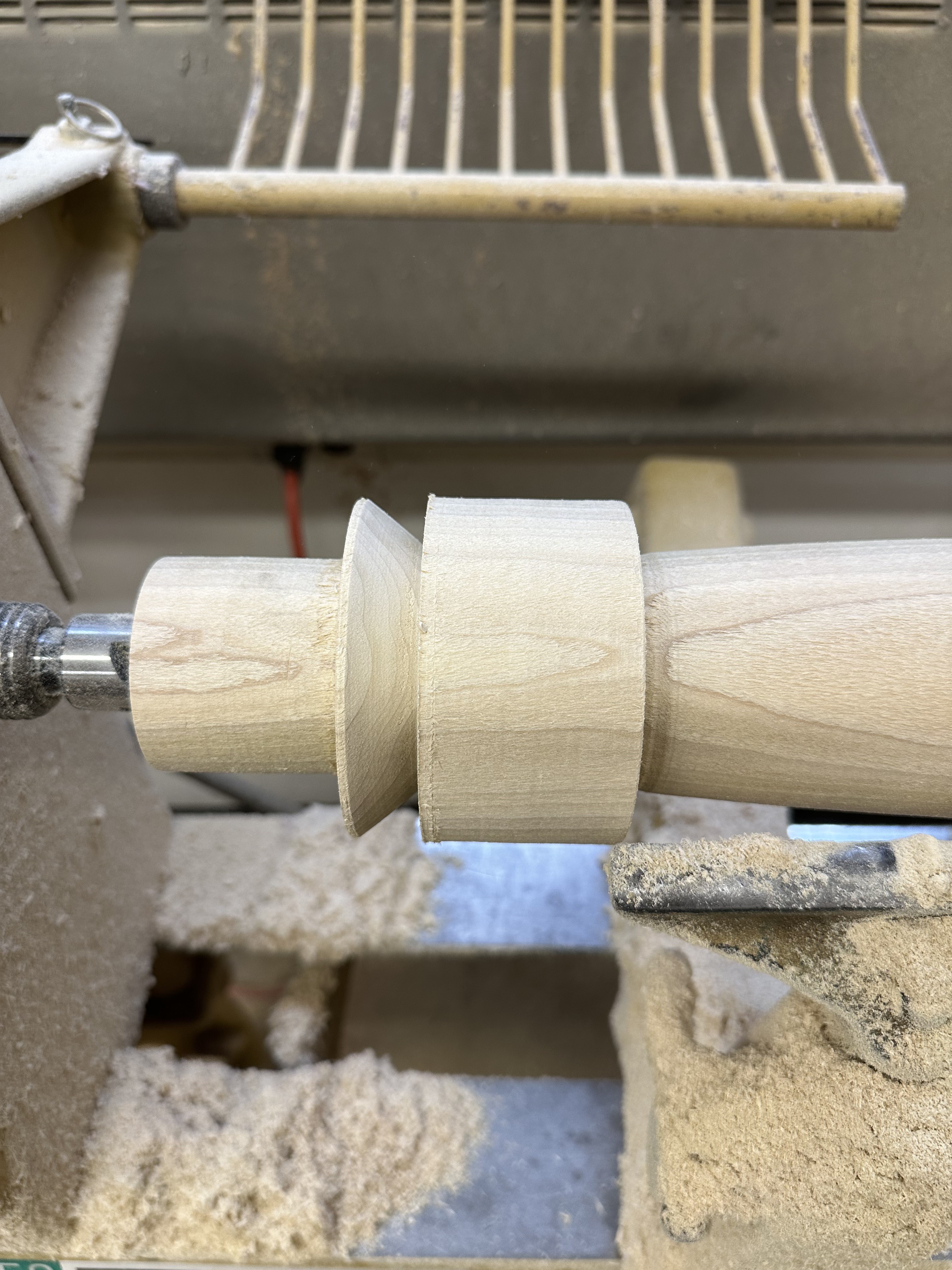
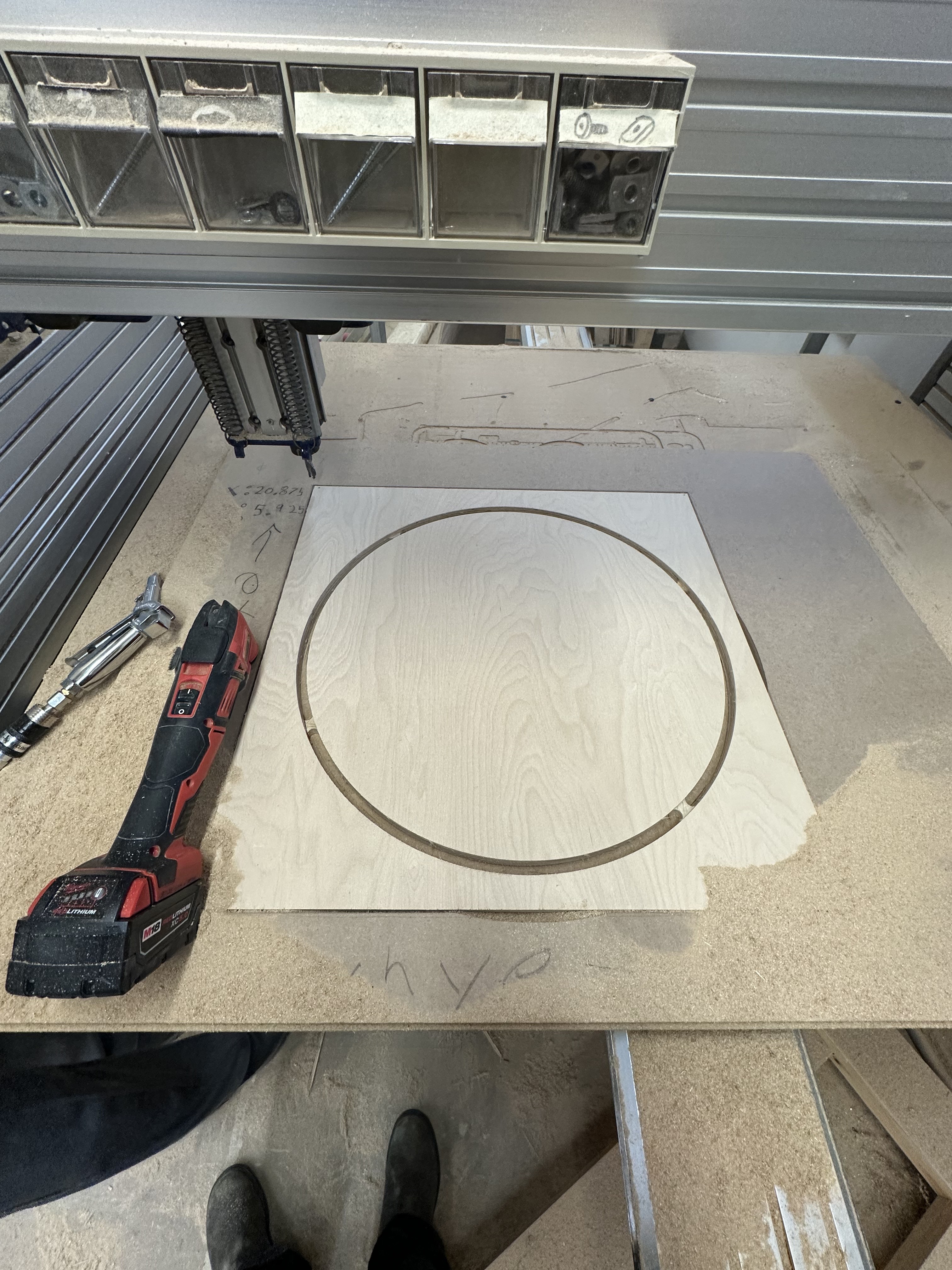
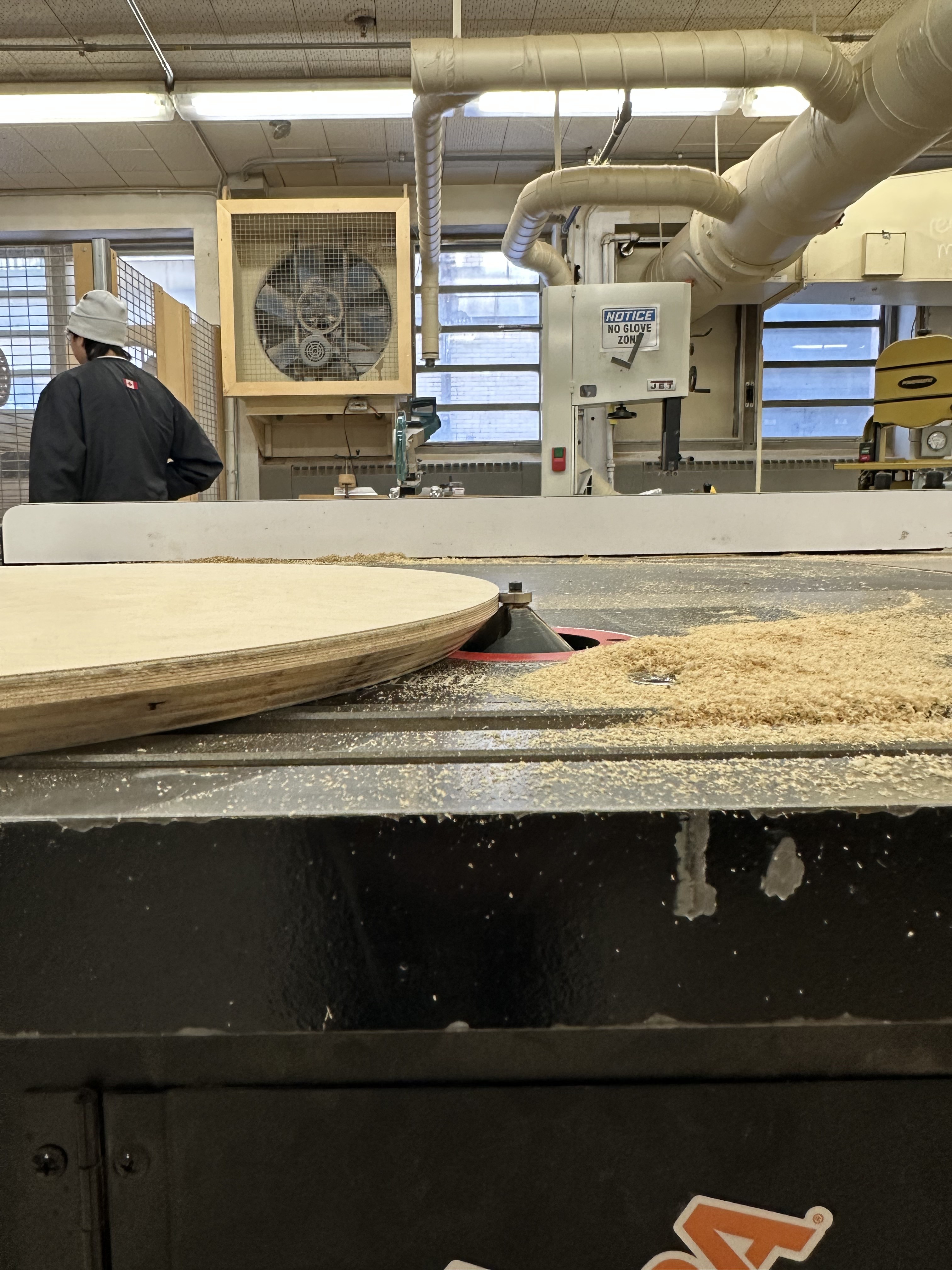
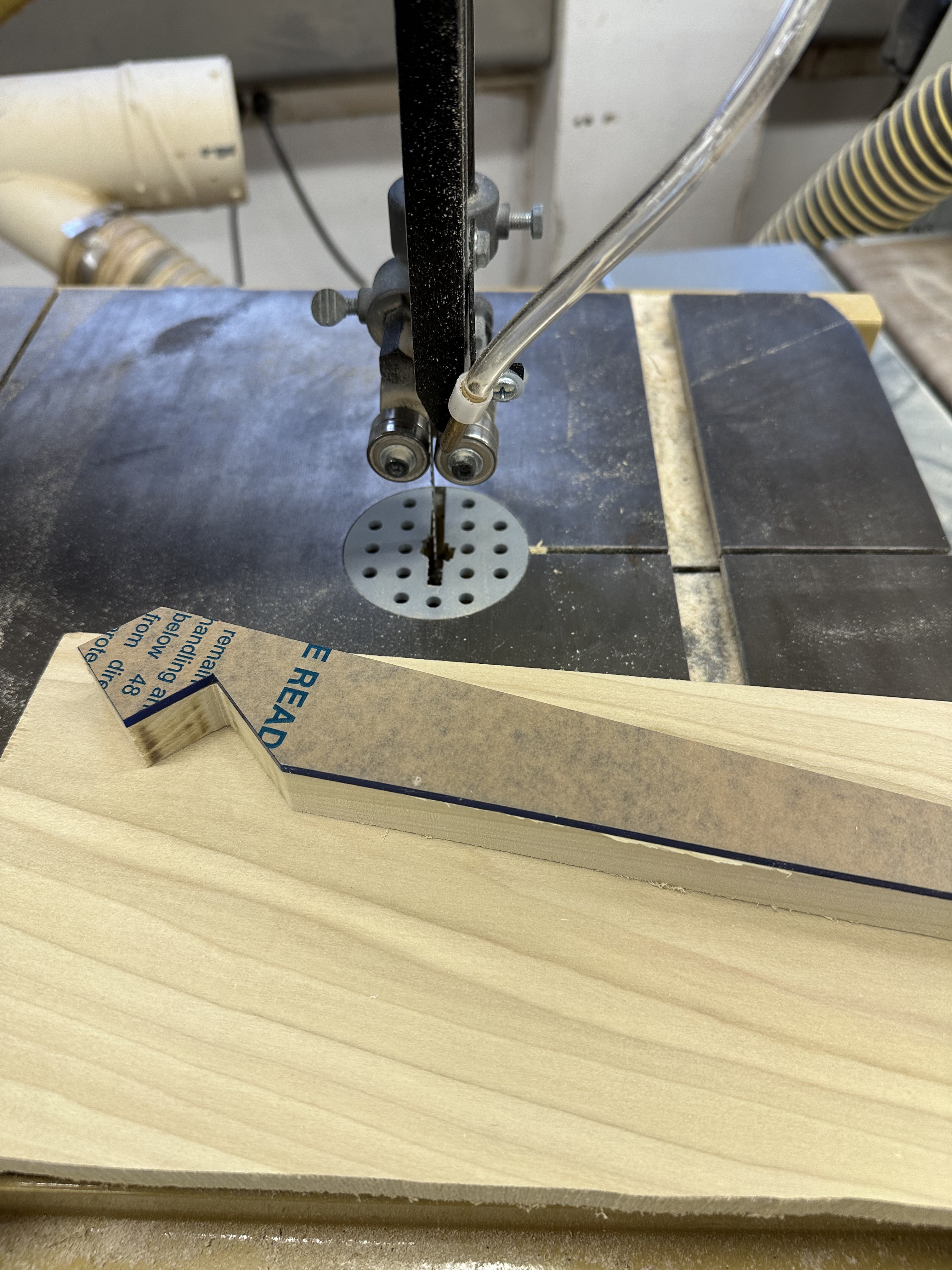
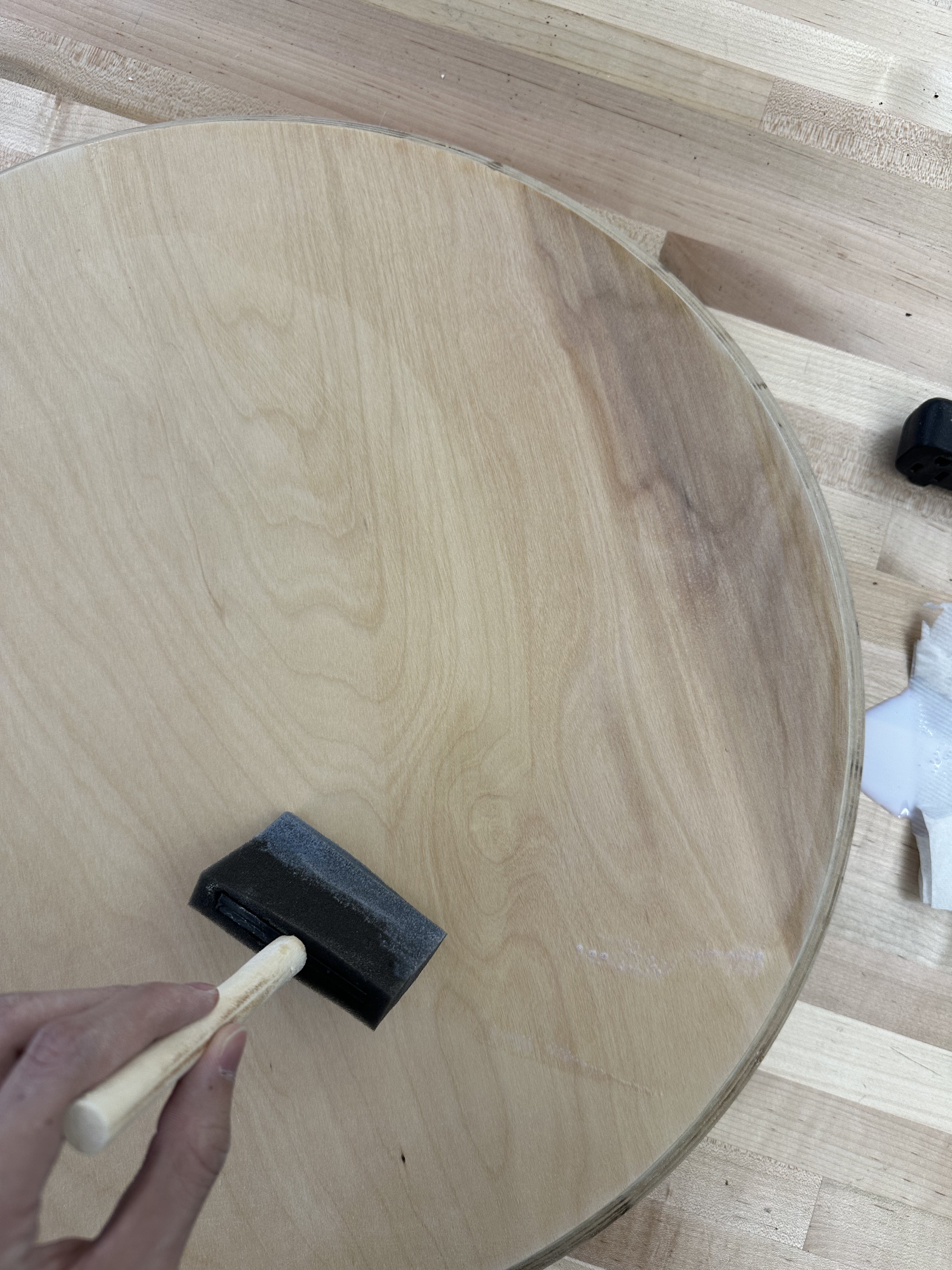
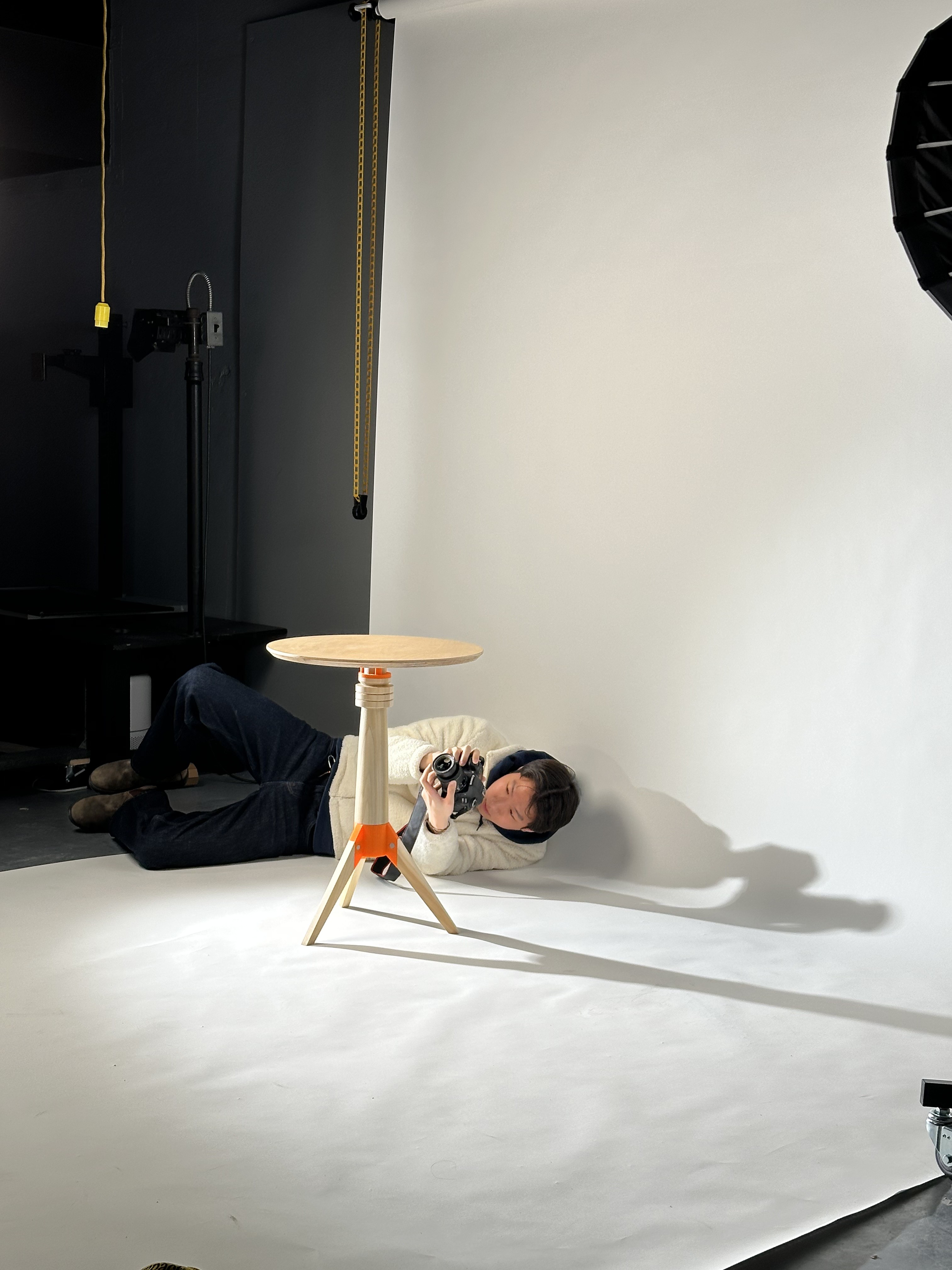
The wooden components were fabricated using tools such as the lathe, CNC machine, table saw, and router. Through multiple iterations and prototypes exploring how the 3D-printed elements would visually interact with the wood, I developed a minimal table design that emphasizes the intersecting joints. The 3D-printed components are highlighted through both form and color, drawing attention to their role within the structure. This project explores new possibilities for reinterpreting traditional furniture forms through the integration of contemporary materials.
Final Product
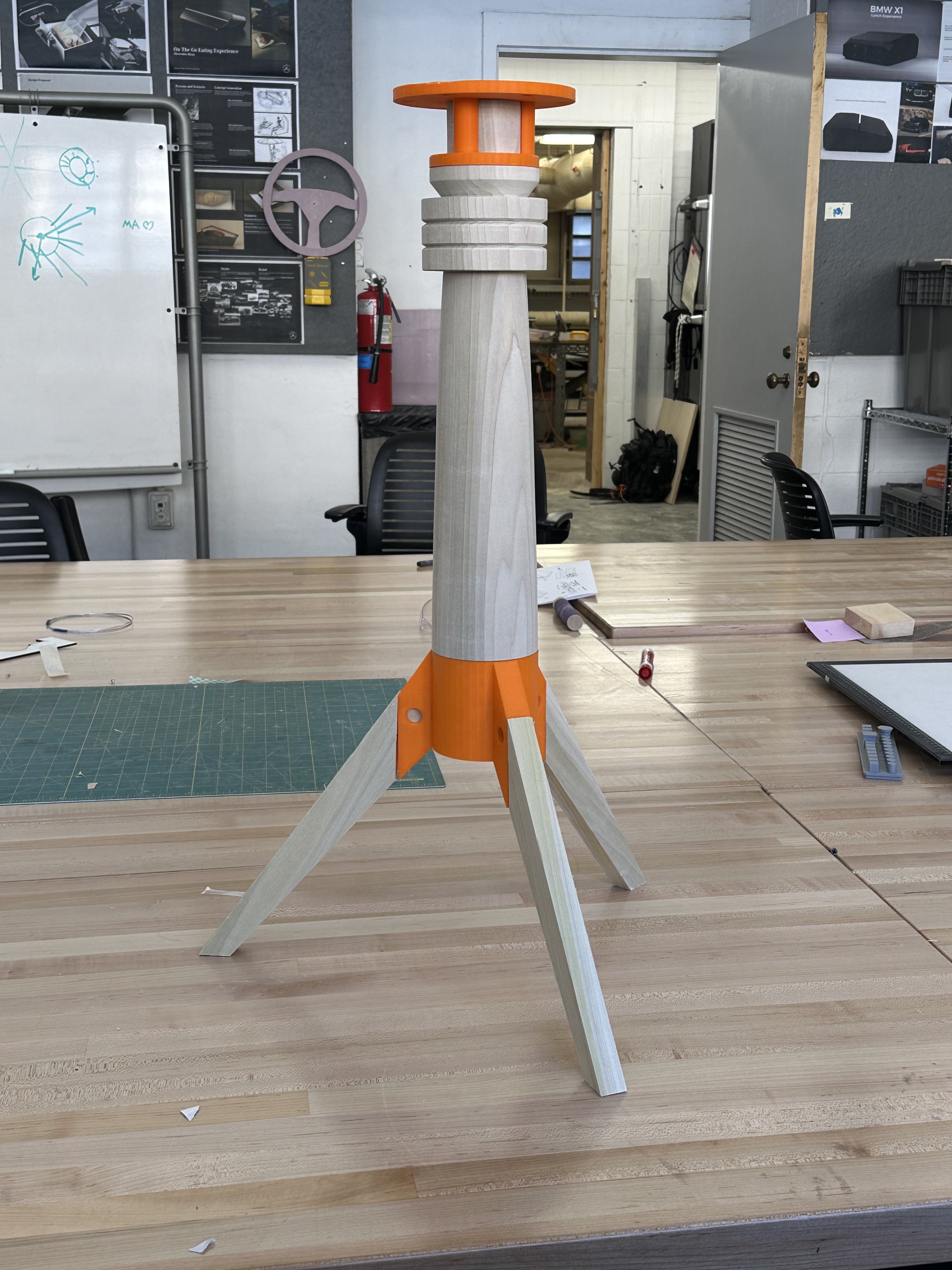
The tripod table explores a new approach to furniture design by combining 3D printing with wood. The use of orange filament for the 3D-printed components highlights the intersecting joints, making them a key visual feature of the piece. While maintaining a minimal design, the contrast between materials naturally draws attention and emphasizes how each material contributes to the overall form.
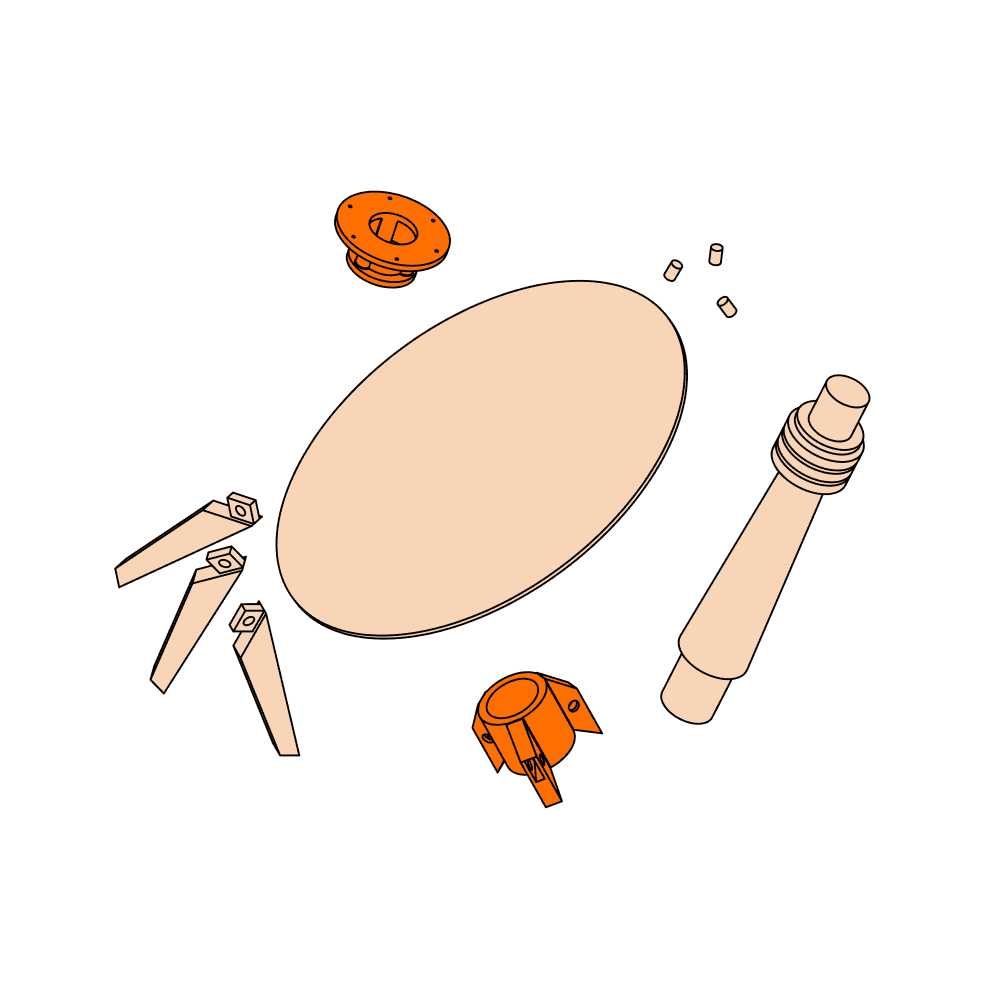
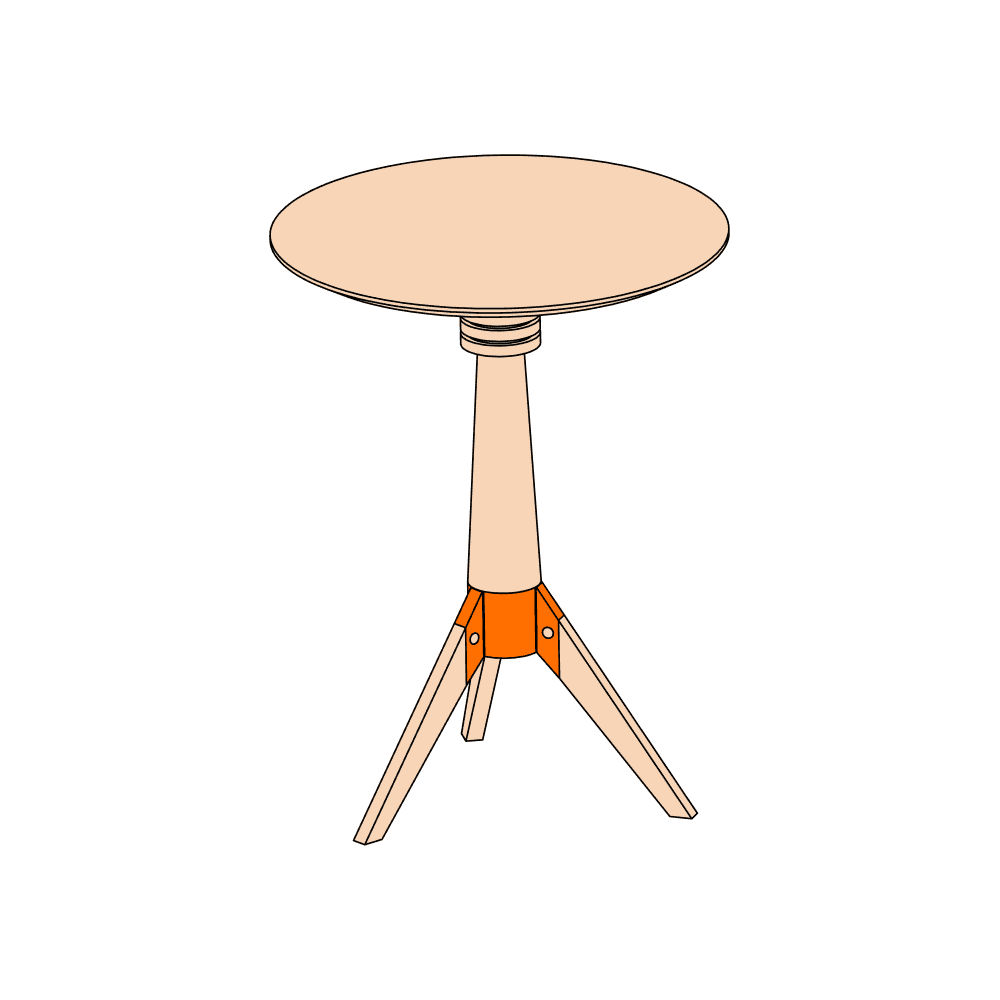
Illustration of Parts and Table
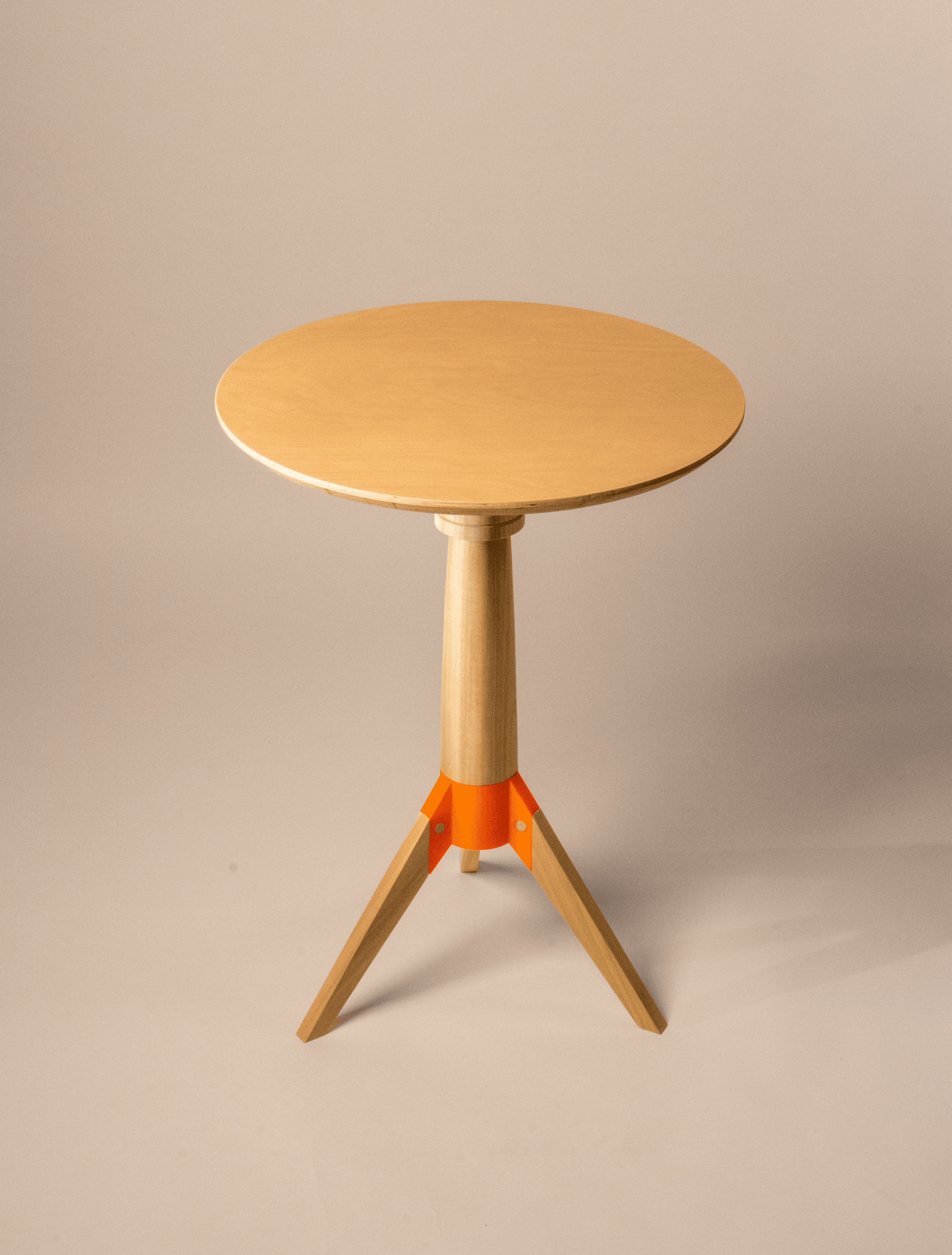
Front View
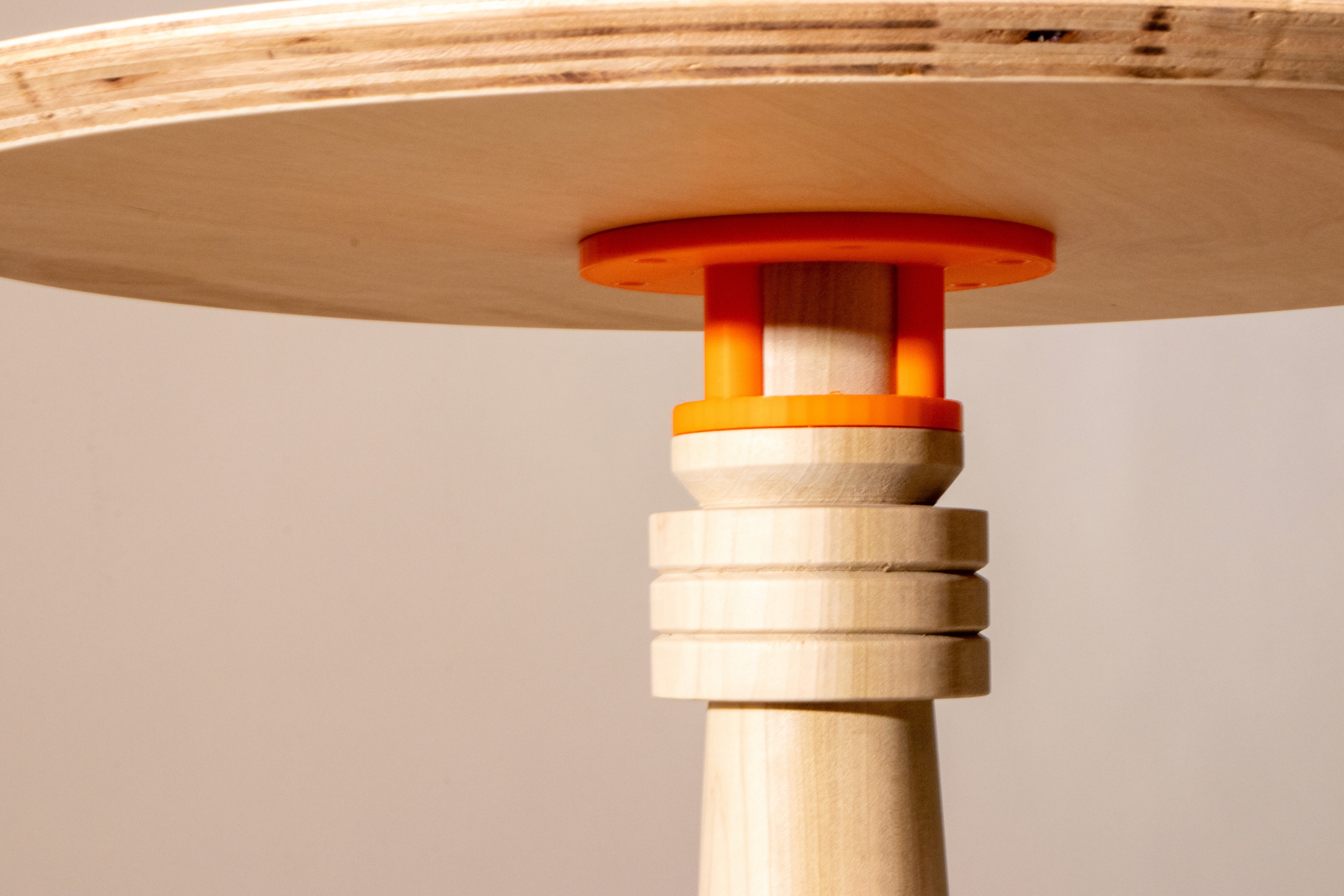
Close up of upper intersection and spindle
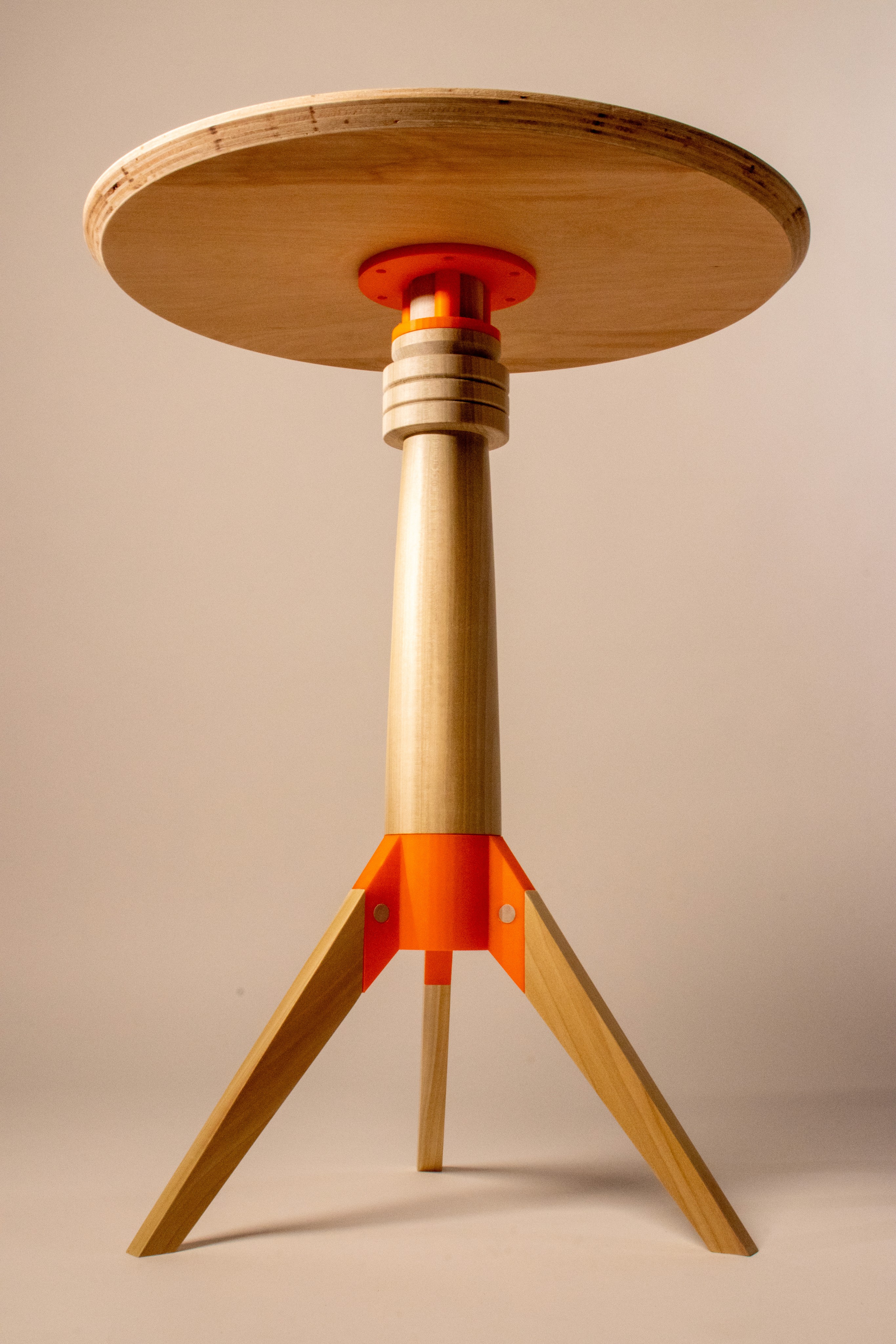
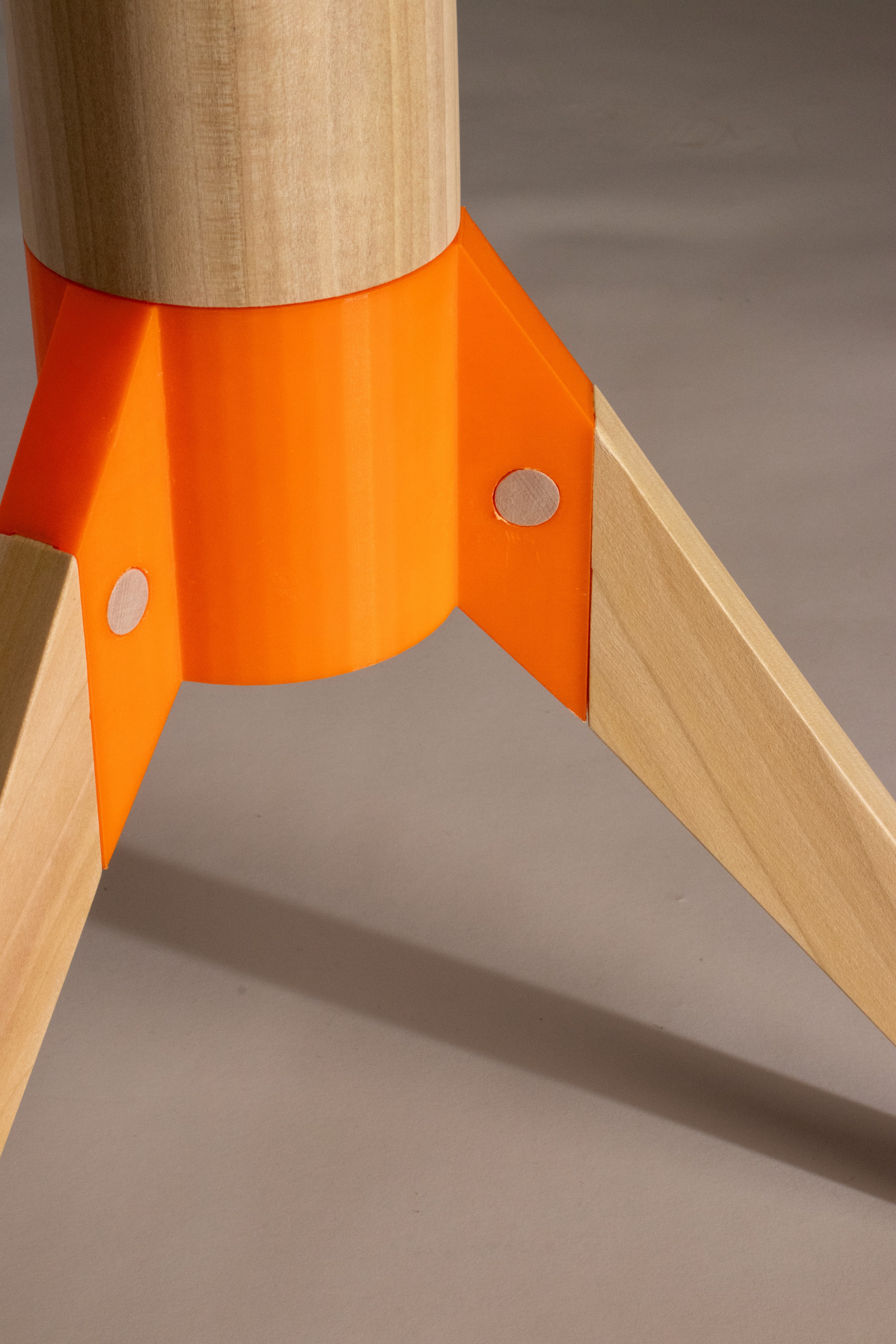
Down up and close up of bottom intersection
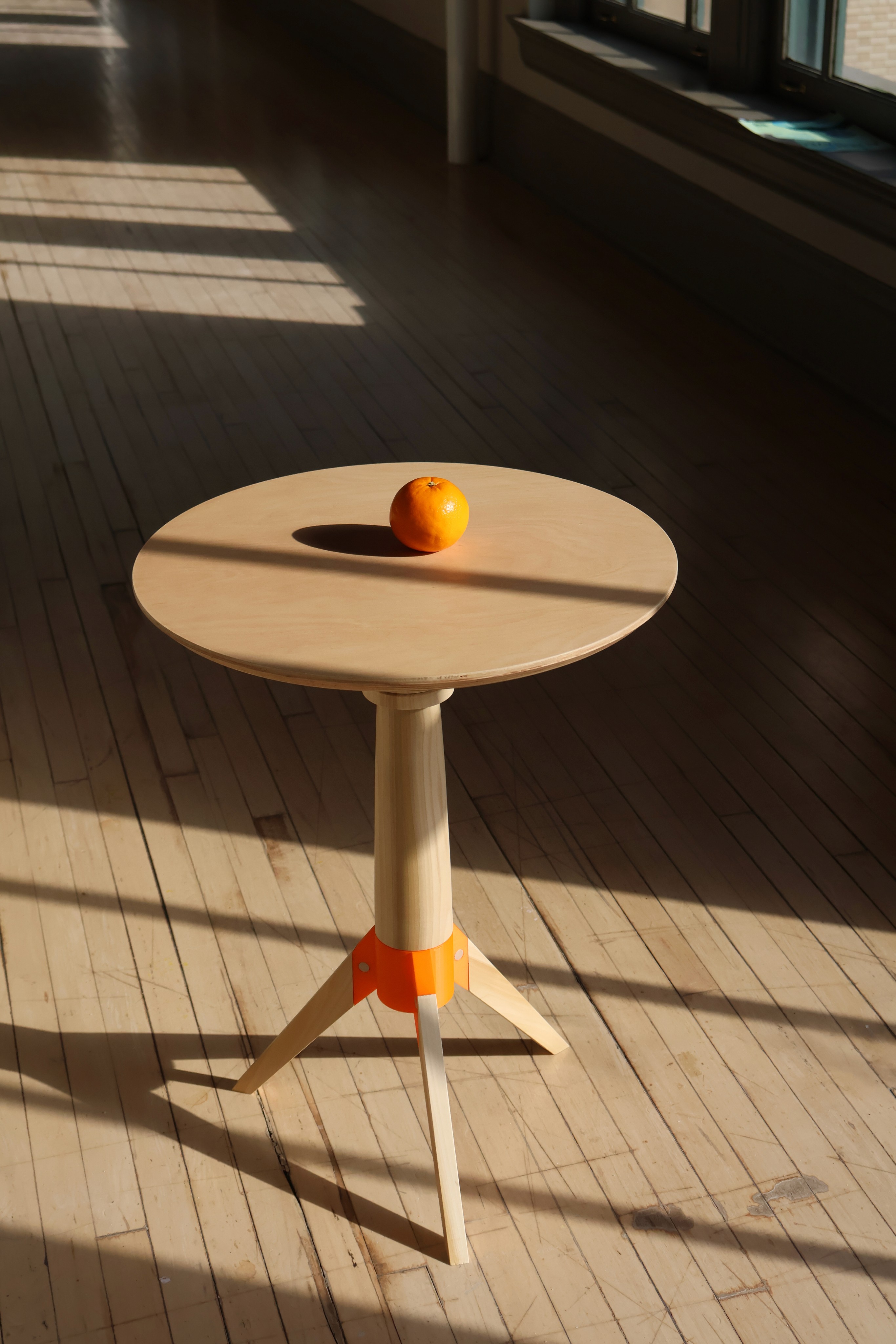
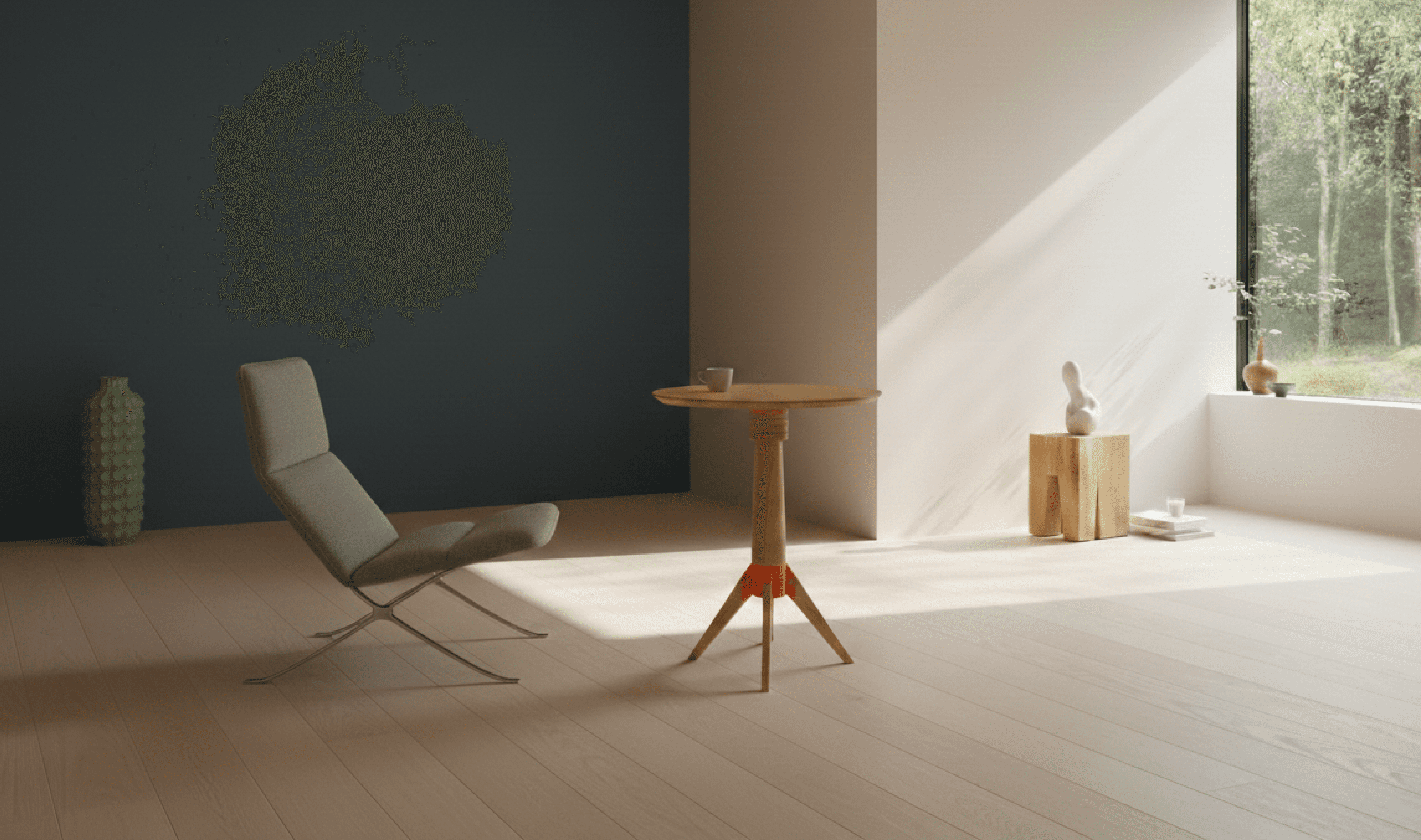
Table in usage
Reflection
Through this project, I developed a deeper understanding of working across both precision-driven processes, such as 3D printing, and more flexible, hands-on techniques like lathe work. I also built new technical skills using tools such as the CNC machine. This experience expanded my approach to making and challenged me to rethink traditional product forms through new material and fabrication methods.
For more information please visit my medium page